Maria Loram
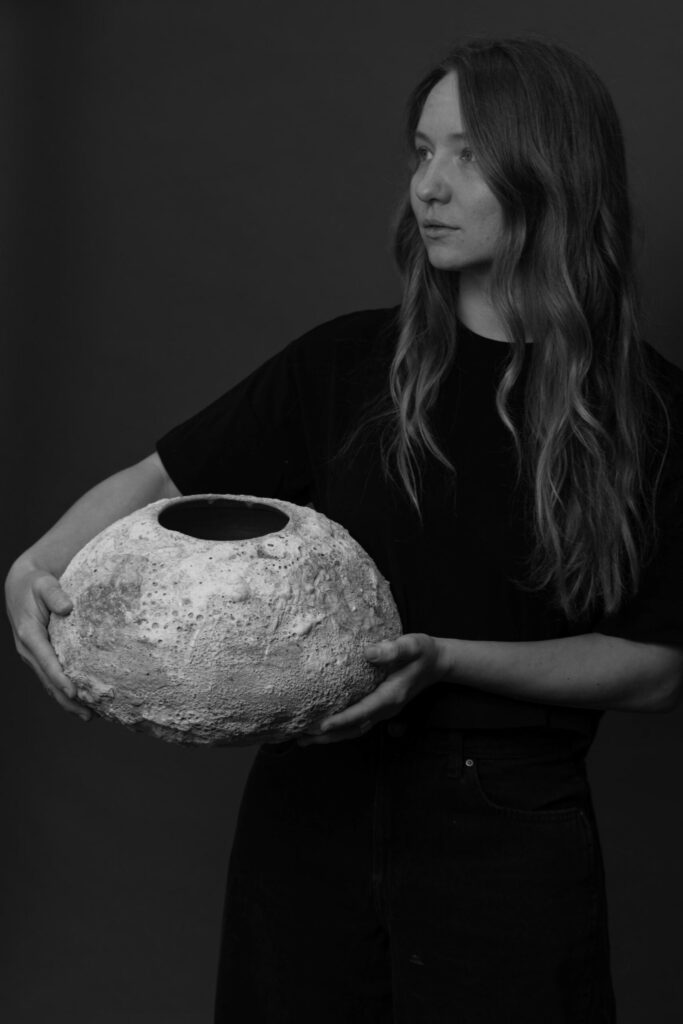
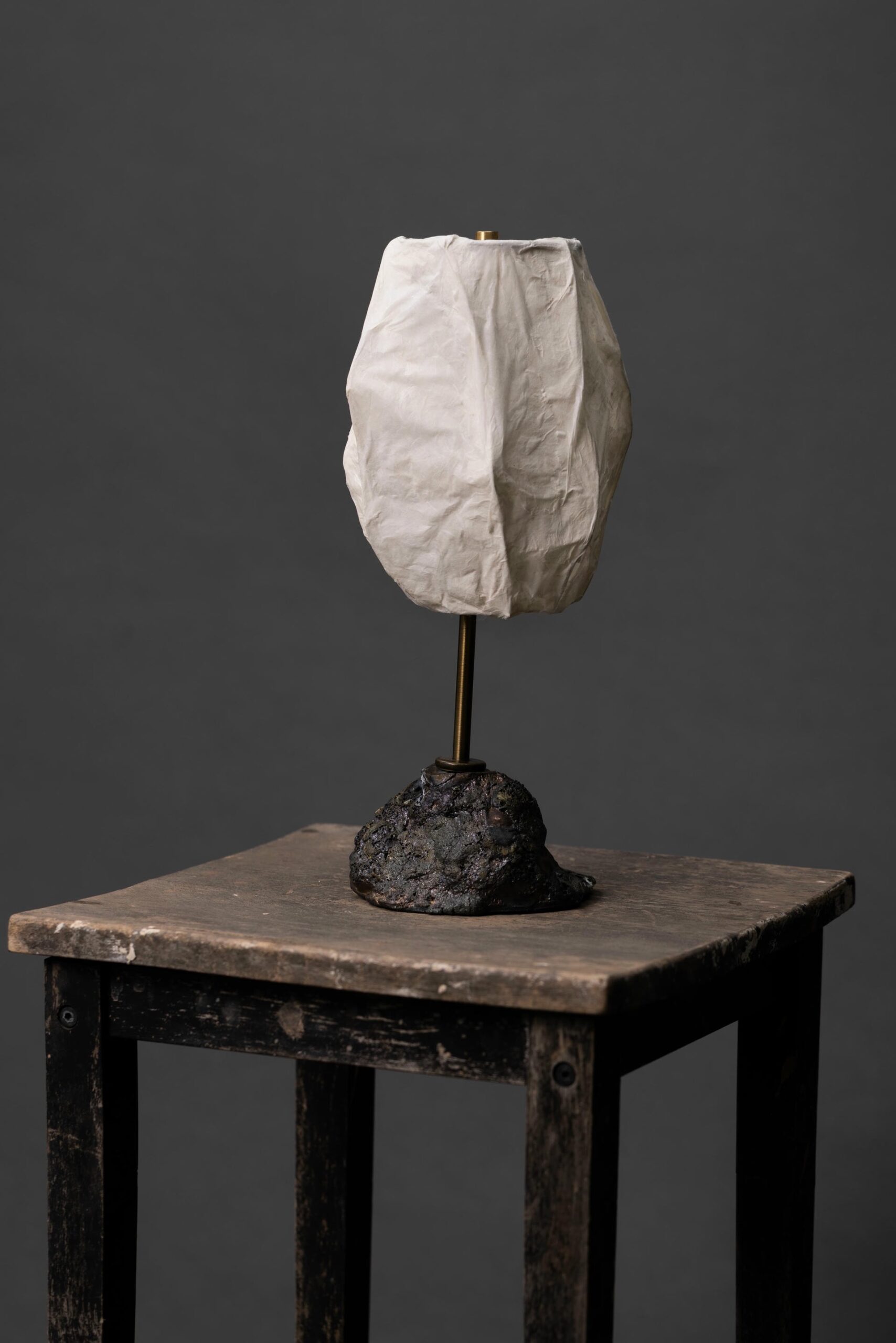
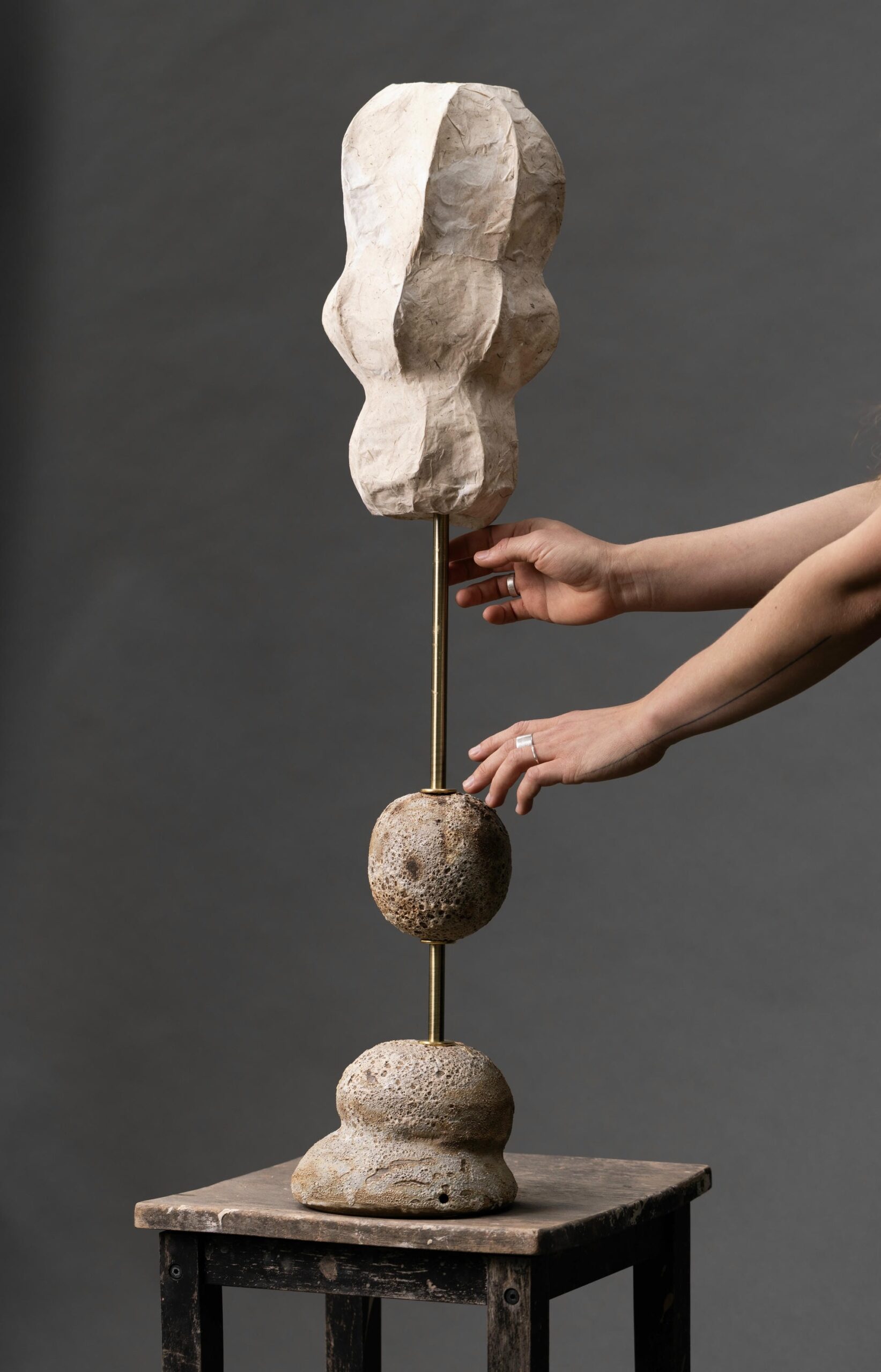
Maria Loram is a ceramic artist based in California whose practice spans collectible vessels, sculptural lighting, and functional objects. Born in Russia, she brings together a multidisciplinary background in science, linguistics, yoga, and visual art, approaching ceramics as both a material investigation and a philosophical inquiry.
Inspired by wabi-sabi aesthetics, Eastern philosophies, and the natural world, Loram creates tactile forms that explore the relationship between the organic and the cosmic. Through an intuitive process of wheel throwing, hand-building, and extensive glaze experimentation, her works balance sculptural presence with functionality, inviting moments of stillness, contemplation, and connection. Her work has been exhibited internationally, including at Paris Design Week, and she has participated in artist residencies across the United States and Europe.
Interview
I was born in the middle of Russia, in a very small village far away from any major city. That is where I spent my childhood. Later, I lived in a few different countries, and about ten years ago I moved to the United States, to Los Angeles.
So I feel that I am from several places at once: from the quiet, rural landscape of my childhood, from the different cultures I encountered later, and from California, where my artistic life truly began to take shape.
One of my first memories connected to making things is of my mother and me creating little clay figurines for the Chinese New Year. Every year, we would make a small collection inspired by the zodiac animal of that year.
If it were the Year of the Rat, for example, we would make many little rats in different poses, each one dedicated to someone in our family or to a friend. I was probably four or five years old. I remember the joy of shaping these tiny characters with my hands, and also the feeling that objects could carry meaning, personality, humor, and connection.
No, not professionally. I discovered ceramics only about four or four and a half years ago.
Before that, I worked as an educator and private tutor. I taught many different subjects, from languages, history, and art to mathematics, chemistry, biology, and physics. I worked with high school and college students, helping them with homework, exams, and deeper understanding.
In a way, that background still influences my work. My artistic practice is very intuitive and material-led, but it is also analytical. I enjoy research, testing, observation, and understanding how things work.
Ceramics came into my life during a period of very deep personal transition. Many things were changing at once: my relationships, my sense of home, my environment, and my understanding of myself.
That period uprooted many old structures, but it also created space. I became more open, more receptive, and more connected to spirituality, materiality, and the need to create with my hands. Ceramics offered me a way to reconnect with myself through the body, through touch, and through the physical world.
It was not a purely intellectual decision. It felt more like a life shift. I entered clay at a moment when I was ready to transform, and the material became part of that transformation.
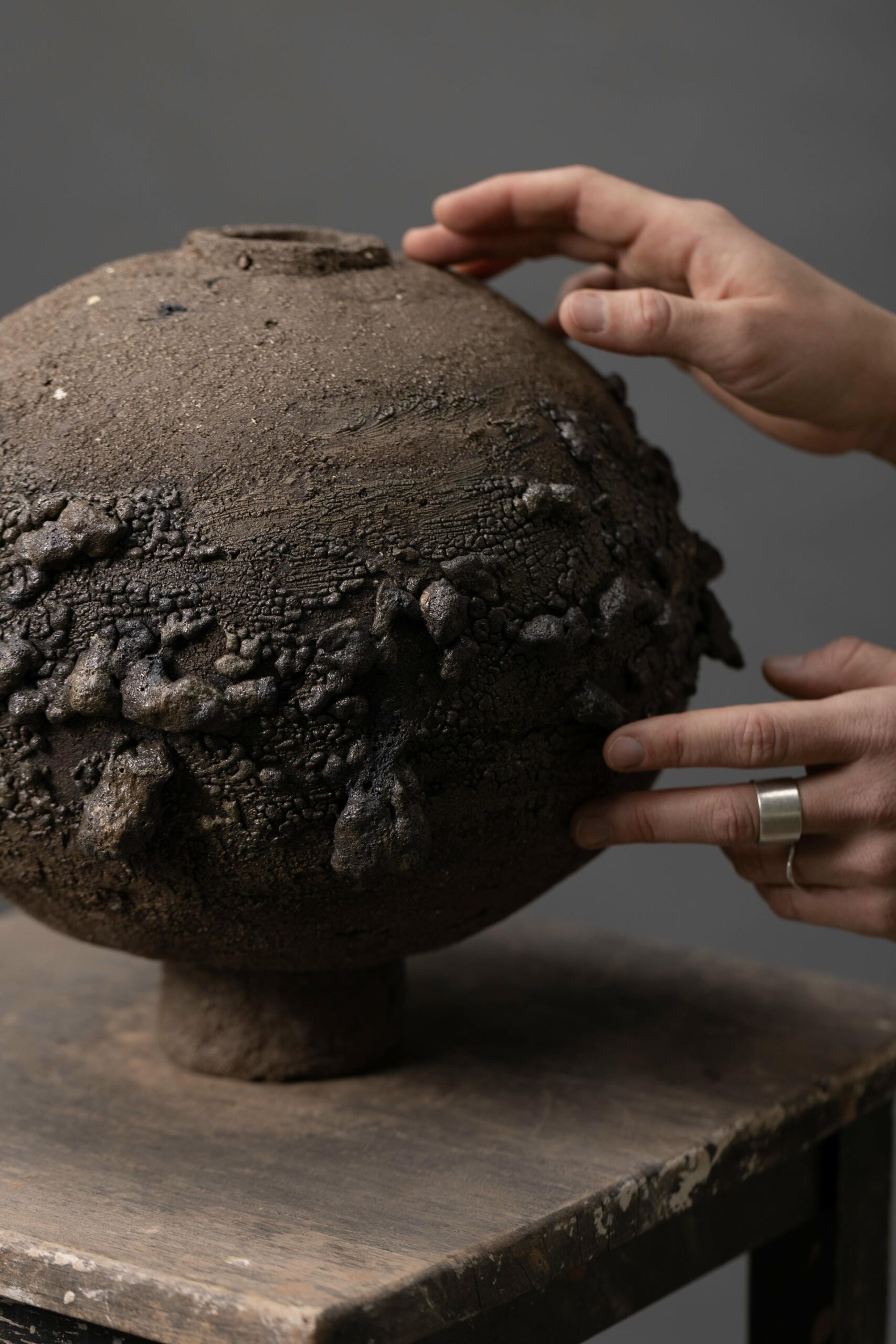
My creative process is very material-led. I am not usually driven by a fixed concept in the beginning. I start with matter itself: with texture, surface, weight, minerals, glaze behavior, and the way a material responds to fire.
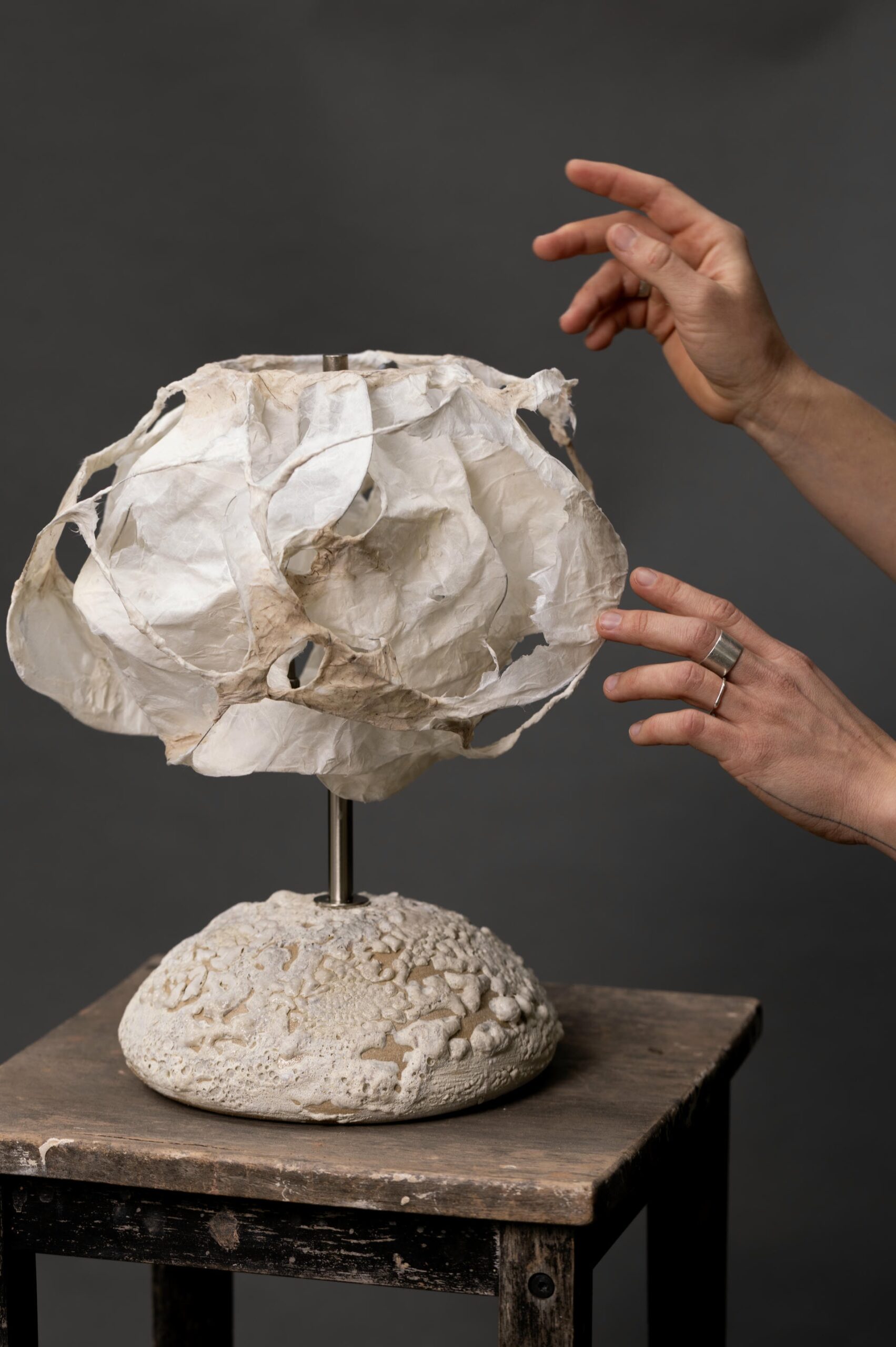
At this stage of my practice, I am especially interested in glazes and in unusual three-dimensional surfaces. I test a lot. I study how each ingredient behaves, how it changes the surface, how it melts, bubbles, crawls, cracks, or transforms. There is a lot of experimentation and research involved. But after all the testing and calculation, there is also surrender. I place the work in the kiln and allow the fire to become part of the creative process.
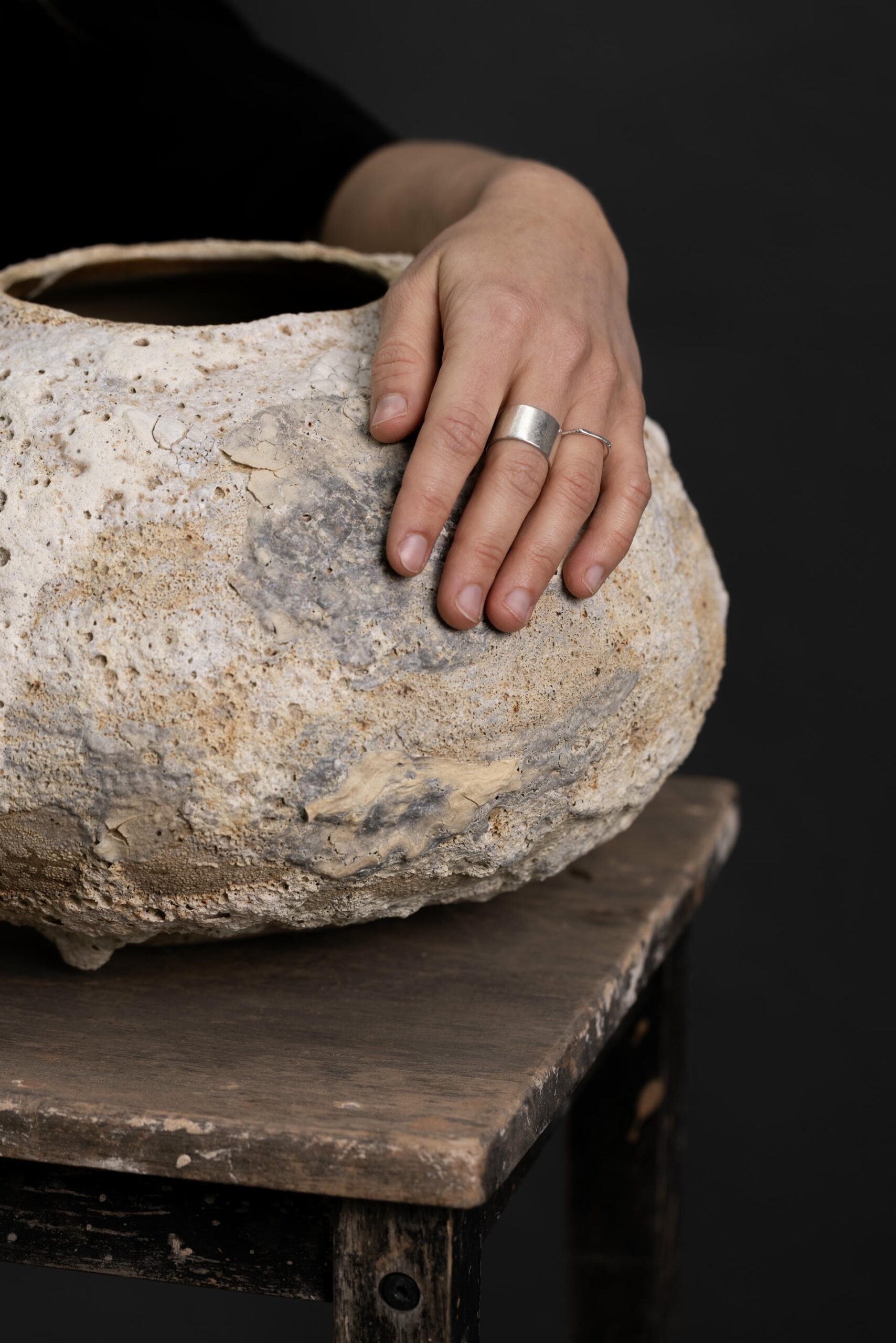
My influences come from many directions. I am deeply inspired by Japanese ceramics, Eastern philosophies, wabi-sabi, and the idea of beauty that is quiet, imperfect, and alive. I am also inspired by natural textures: rocks, earth, erosion, dry landscapes, microorganisms, planets, asteroids, and cosmic surfaces. I am fascinated by both the microscopic and the cosmic, by landscapes that are seen and unseen.
There is also a philosophical layer to my work. Ideas of non-duality, impermanence, and presence are important to me. I think texture has a very special ability to bring attention inward. My forms are usually simple and minimal, while the surfaces are more complex. But they are not loud. They invite quiet observation.
I hope that when someone touches or looks at my work, the object creates a connection to something ancient, primal, and almost otherworldly — something that feels both outside of us and deeply within us.
There is no real typical day in my studio. My schedule changes depending on the season, the projects I am working on, and whether I am preparing for an exhibition, a production series, a course, or a workshop.
Some days are focused on making physical objects: throwing, trimming, sculpting, glazing, firing, or assembling lamps. Other days are dedicated to glaze testing and research. That part of my practice can be very slow and methodical, almost like laboratory work.
I also create educational materials for other ceramic artists, so some days are spent filming, writing, editing, or preparing course content. And, like many artists today, I also spend time photographing work, creating videos, sharing process online, writing newsletters, and communicating with clients, galleries, students, or collaborators.
So my practice exists between several worlds: studio work, research, teaching, content creation, and community. Some periods are very intense, especially before a launch, exhibition, or workshop. Other times are quieter and more reflective. I travel for exhibitions and workshops as well, so every day can look different.
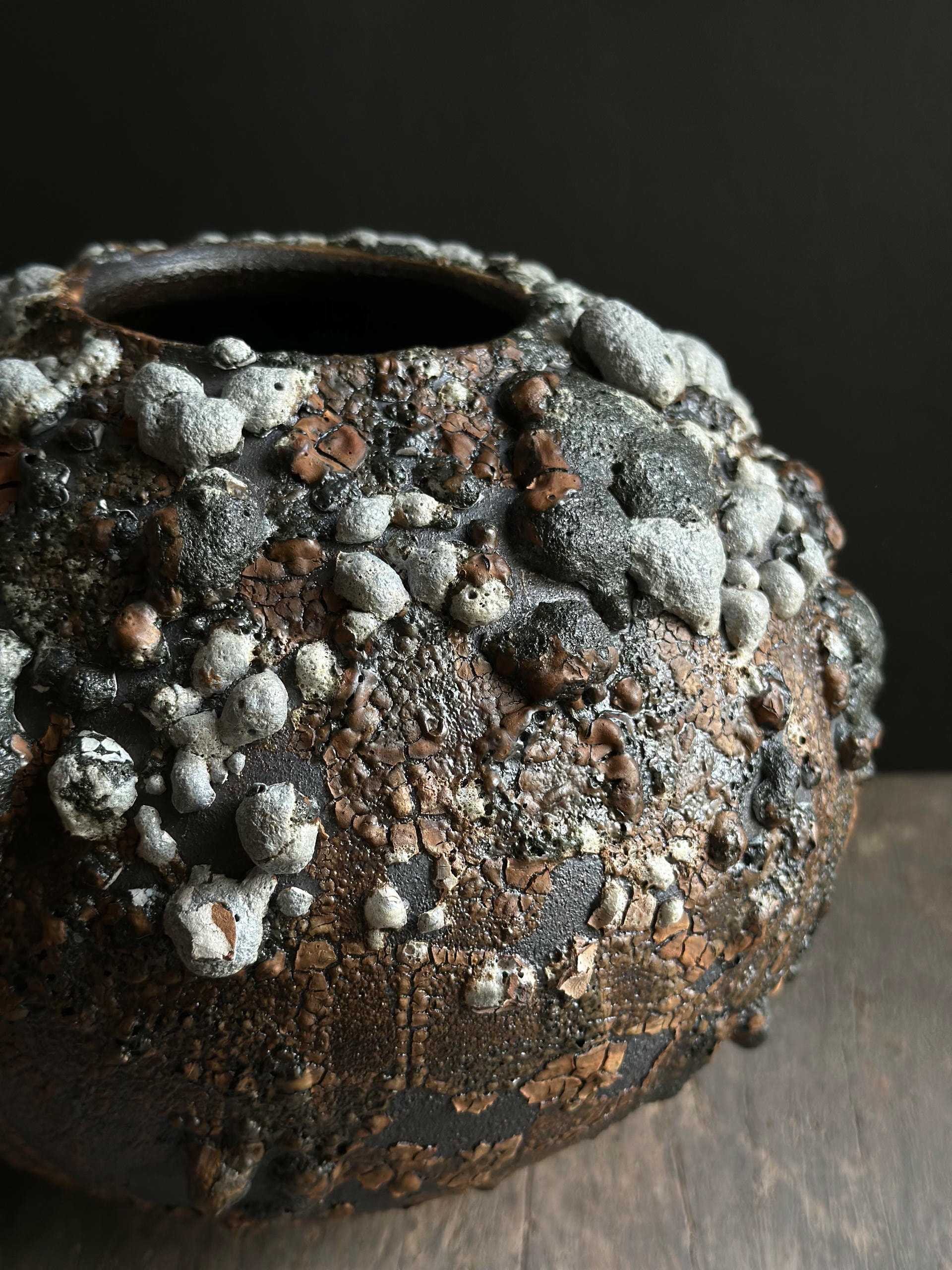
I work with several groups of materials. One important group is natural and locally collected materials: rocks, sands, wild clays, wood ash, dry grasses, tree matter, and other organic or mineral materials.
I am drawn to these materials because they connect the work to place. Each material carries the memory of a landscape. A rock or clay from one location will behave differently from a material collected somewhere else, and that gives the surface a unique quality that cannot be fully replicated with commercial materials.
There is also a sustainability aspect. I am interested in using materials that already exist around us, materials that can be recycled, reclaimed, or gathered respectfully. This makes the work feel more connected to the environment and less separated from the world it comes from.
At the same time, I am very interested in glaze chemistry, which requires a more specific set of ceramic materials. In many of my signature pieces, I use materials that create highly textured, bubbly, cratered, or volcanic surfaces. One of them is silicon carbide, which I use to create special-effect glazes with strong three-dimensional surfaces.
So my material world exists between the natural and the technical: foraged earth materials on one side, and carefully calculated glaze chemistry on the other.
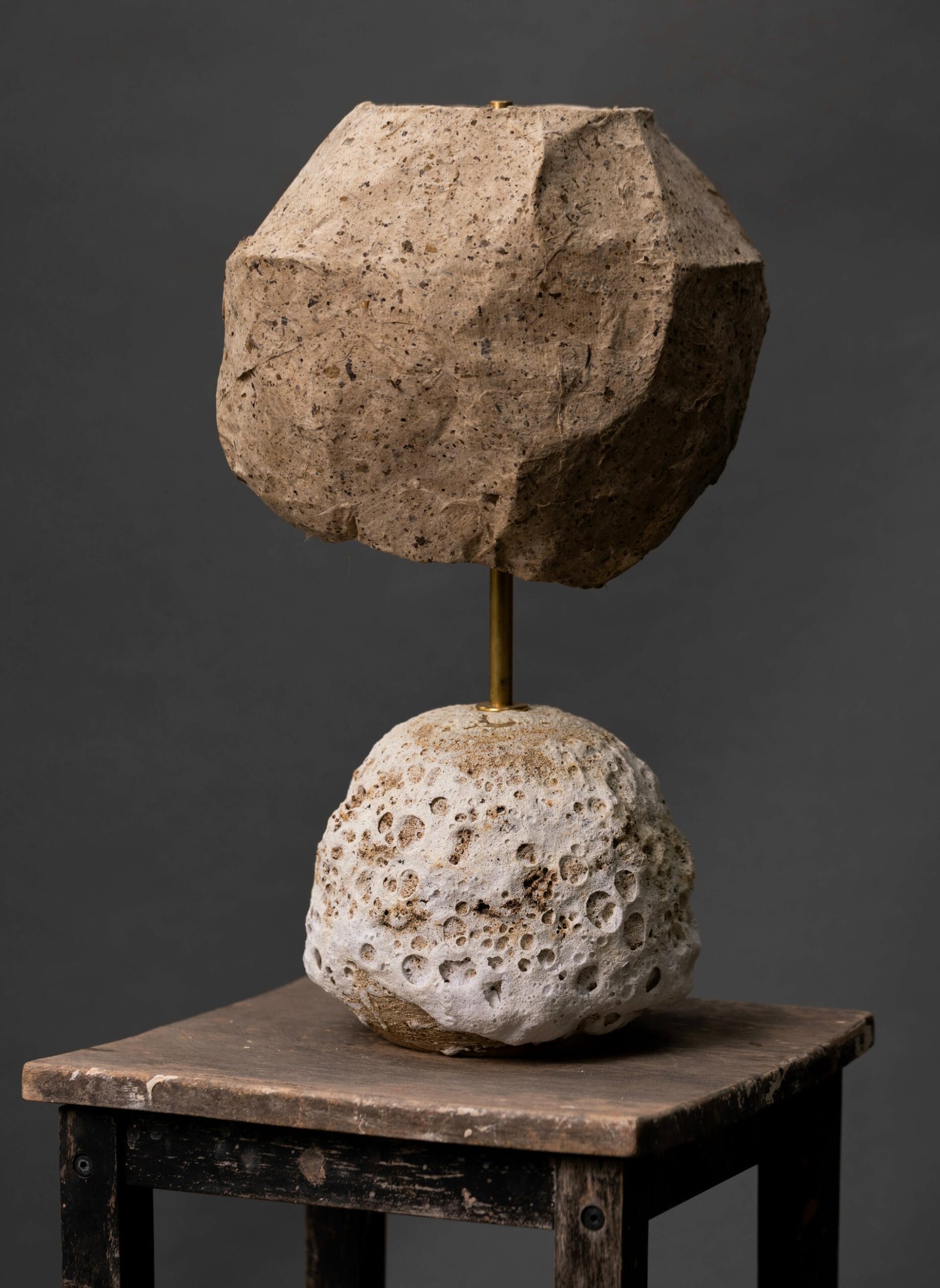
I would place my work somewhere between brutalism, wabi-sabi, Japandi, and avant-garde design.
There is a certain rawness and material honesty in my work that connects to brutalism, but there is also softness, silence, and imperfection that come from wabi-sabi and Japanese aesthetics. I am drawn to simple forms, natural tones, and quiet objects, but I also like when the surface becomes unexpected, almost alien or otherworldly.
So I would not define my work through one movement only. It lives somewhere between minimalism, earthiness, sculptural design, and experimental material research.
The technical side of my work is very important. Many of my surfaces require extensive glaze testing, calculation, and adjustment. I am fortunate that I am comfortable with mathematics and chemistry, because glaze development often feels like a combination of studio practice and laboratory work.
I work with glaze formulas, ratios, melting behavior, firing temperatures, application thickness, and the interaction between clay bodies and surfaces. Small changes in one ingredient can completely alter the final result. A glaze can become more fluid, more matte, more bubbly, more cratered, or more stable depending on the balance of materials.
This part of the process may not always look like “art” from the outside, but for me it is deeply creative. The technical research allows me to build surfaces that feel alive and unusual, and to create textures that are difficult to achieve by accident alone.
My goal is not only to make an object, but to develop a surface language. The chemistry, the firing, the form, and the material all work together to create something that feels both controlled and unpredictable.
I would say: follow the direction that feels most alive to you.
It is important to develop a style and a language that genuinely come from your own curiosity, even if at first they do not seem to match exactly what the market is asking for. I think artists need to pay attention to that inner spark and follow it while it is present.
Creativity comes in waves. Energy, clarity, opportunities, and even success can also come in waves. But if you keep working consistently, stay honest with your own vision, and continue developing your craft, things begin to take shape.
So my advice would be to believe in your work, keep going all the way, and not abandon the quiet voice that tells you what is truly yours.
This is difficult for me to answer through specific names, because my influences are very broad and constantly changing.
I am inspired by many designers, artists, ceramicists, architects, and makers, and I often discover new references that shift my perception. Some influence me through form, some through material, some through philosophy, and some simply through the courage of their work.
But more than any single designer, I feel influenced by materiality itself: by natural surfaces, ancient objects, Japanese ceramics, architectural spaces, and the feeling of quiet, sculptural presence.
I appreciate many contemporary designers working at the intersection of art, object, and space, especially those who treat design not only as function, but as atmosphere and presence.
I am drawn to designers who work with natural materials, imperfect surfaces, raw textures, and strong sculptural forms. I am especially interested in work that feels timeless rather than trend-driven.
For me, the most powerful contemporary design often feels both ancient and new at the same time.
I am inspired by a very wide range of contemporary artists, and the list is always changing. There are many artists whose work I admire, including people working in ceramics, sculpture, painting, installation, architecture, and design.
I also feel deeply inspired by other artists working in a similar language to mine. There is a quiet dialogue between us, even when we never speak directly. We learn from each other, observe each other’s experiments, and absorb what is happening in the larger field.
But ultimately, I would say my deepest inspiration comes from nature and life itself: from rocks, deserts, oceans, microorganisms, planets, decay, transformation, silence, and the mystery of matter.
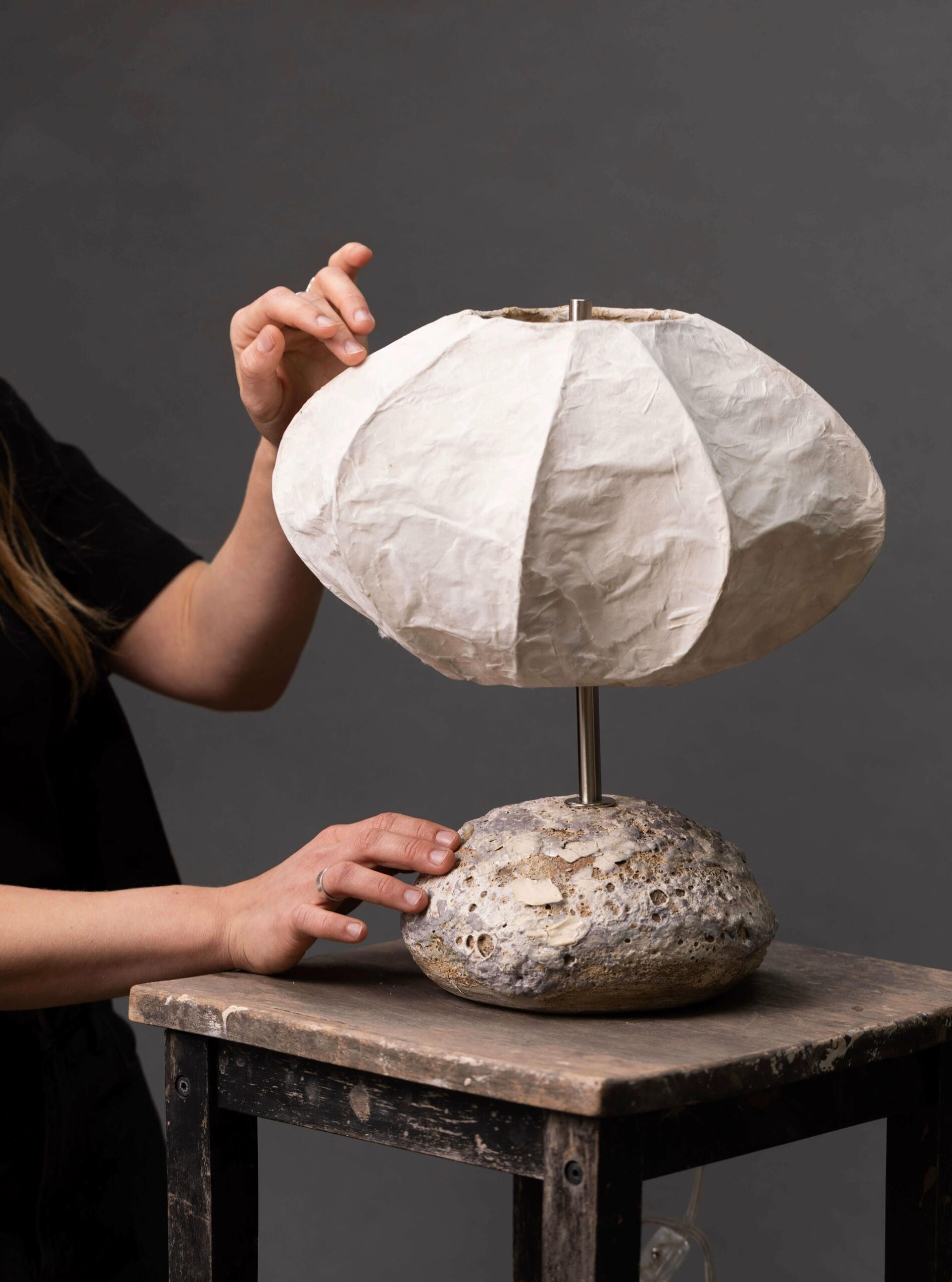
A quiet bridge between earthbound matter and the cosmic unknown.
I think that is all for now. Thank you for the opportunity to share more about my work and process.
“I entered clay at a moment when I was ready to transform, and the material became part of that transformation.”
The Questions
(The Proust Questionnaire is a set of questions answered by the French writer Marcel Proust.
Other historical figures who have answered confession albums are Oscar Wilde,
Karl Marx, Arthur Conan Doyle, Stéphane Mallarmé, Paul Cézanne…)
Embracing the present moment.
Losing creative freedom.
Resistance to my own path.
Victimhood mindset.
I do not really have role models.
Allowing myself to live life my own way.
Peaceful and accepting.
Talent.
Stability.
Intuition and flow.
“Like” and “kind of.”
A better memory.
I would soften my fear responses.
The ability to create freely.
A being on another planet.
Where I am now.
My journals.
Apathy and resistance to it.
Living my life.
Focused determination.
Their ability to accept me as I am.
Too many to name.
I do not have one.
I do not identify with one in particular.
People who are free.
Maya, Alisa, Kira.
Uncertainty, although it teaches me a lot.
I do not have one.
Painlessly, surrounded by people I love.
Reality is the mirror of the self.
“My goal is not only to make an object, but to develop a surface language.”
SHARE :