Minseon Kong
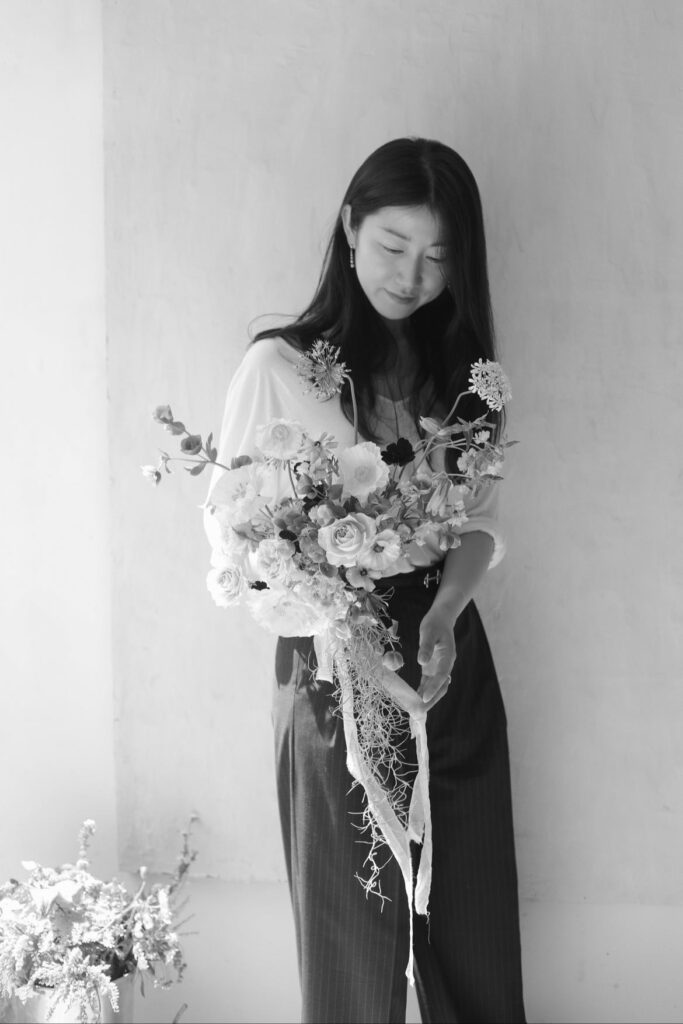
Minseon Kong is a Seoul-based floral artist and spatial director. Having studied art from an early age, she majored in Fine Art before completing a master’s degree in Visual Design. Grounded in a painterly sensitivity and a structured understanding of design, she now works with flowers as a medium through which she composes spatial environments.
Through her brand Midsummer, Kong interprets the nuances of each season with subtle precision. Rather than treating flowers as decorative elements, she approaches them as materials that carry time and atmosphere. With restrained structures and carefully considered negative space, she creates scenes that are quiet yet distinctive.
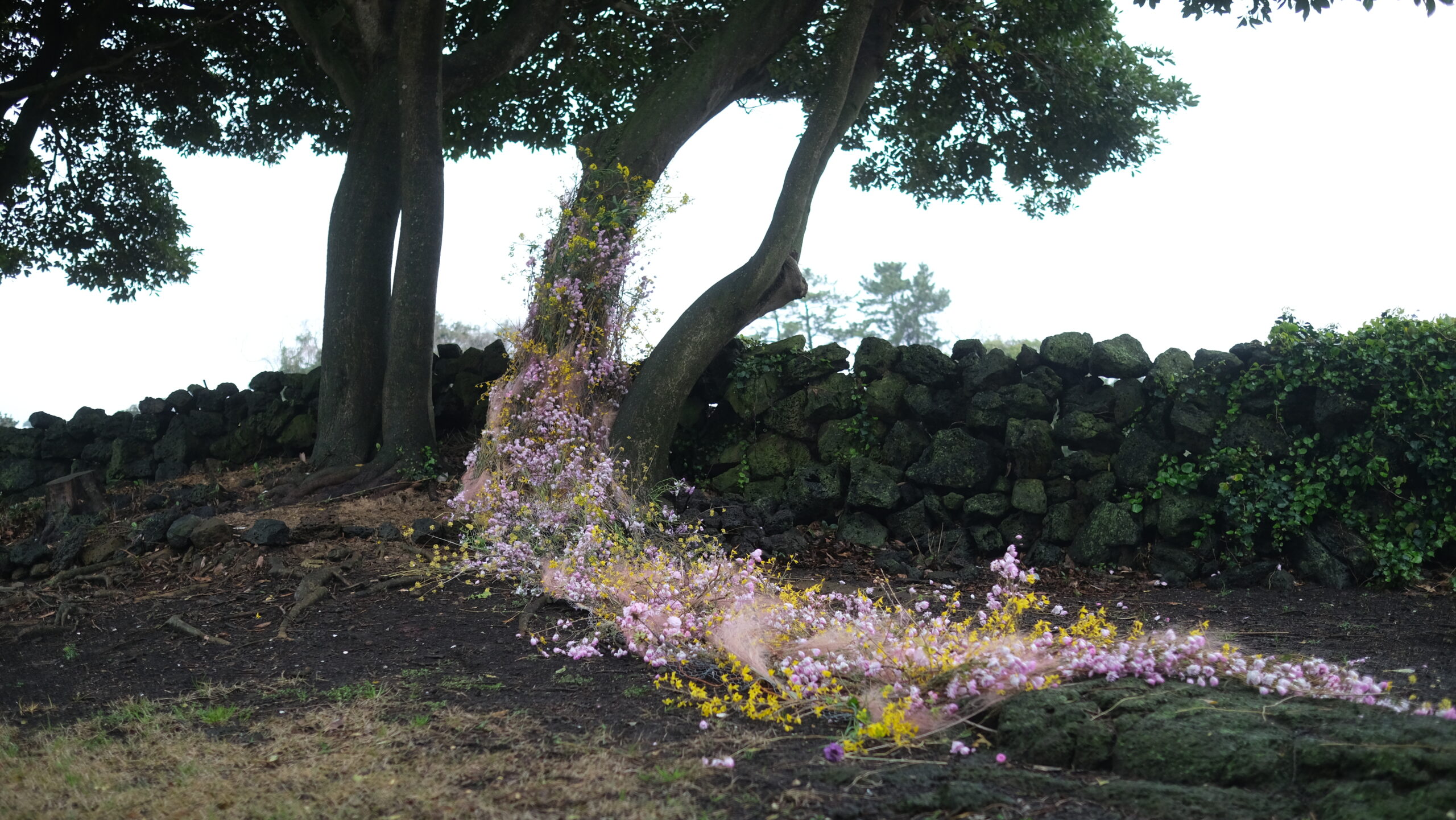
Her practice centers on introducing a minimal structure to nature. Within her installations, intention and chance, order and seasonality coexist, forming moments where natural presence and spatial composition come into delicate balance.
Interview
I was born in Korea, and I am currently based in Seoul.
I grew up studying art from an early age. Drawing was part of my daily life, and through it I naturally learned to observe form and color. That early experience shaped the way I look at structure and balance today.
Yes. I studied fine art as an undergraduate and later completed a master’s degree in visual design. Through these experiences, I developed a deeper understanding of structure and visual order. Although the medium has changed, my approach to form and composition has remained consistent.
While working within two-dimensional compositions, I gradually felt the need to expand into space. Flowers became a natural medium for this transition. They are organic and ephemeral, yet they possess a strong sculptural presence.
I begin by reading the space — observing the direction of light, the flow of movement, and the empty areas that define it. I then adjust color and texture, balancing tones through a painterly sensitivity while structuring spacing and height through a design-oriented mindset.
Flowers inherently embody time and seasonality. Some bloom briefly, others reveal their strongest lines only during specific moments of the year. For this reason, I do not simply select what is visually beautiful; I prioritize materials that most accurately express the essence of the season.
Ultimately, my work is about how to translate the air and atmosphere of a particular season into space.
My day begins at the flower market. Selecting materials is already part of the creative process — reading the season, checking their condition, and removing what feels unnecessary. In the studio, I often spend more time refining and subtracting than adding. I focus less on what to include and more on what to leave behind.
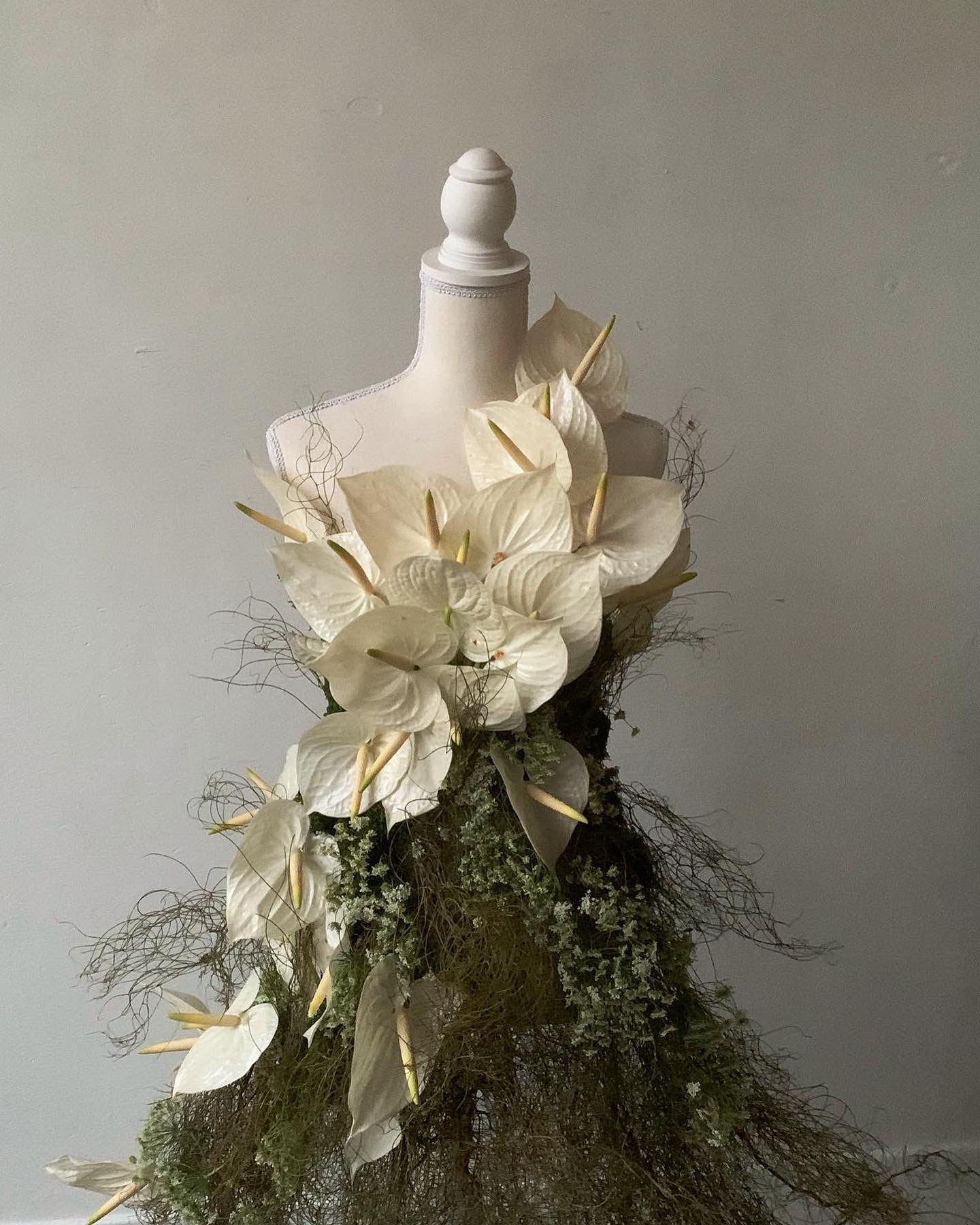
Flowers are already complete forms. Rather than transforming them excessively, I prefer to preserve their natural character while introducing subtle structural elements. Seasonality and temporality remain central to my practice.
Precision in spacing, density, and height defines my work. Though the compositions may appear simple, every element is carefully calculated. The balance I learned through fine art and the structural clarity developed in visual design operate simultaneously.
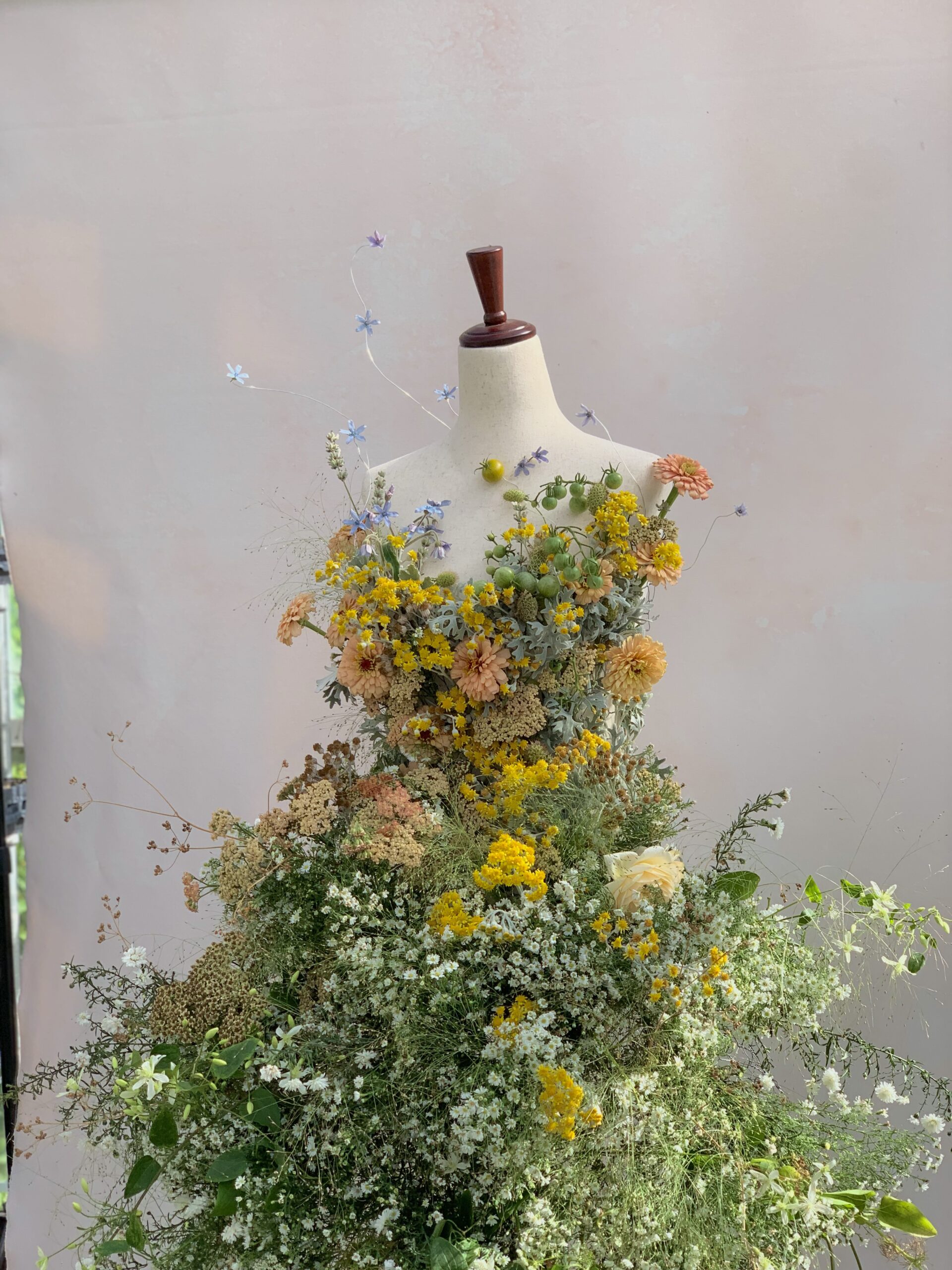
Before focusing on form, I would encourage them to understand structure. Rather than constantly adding, learning how to subtract is equally important.
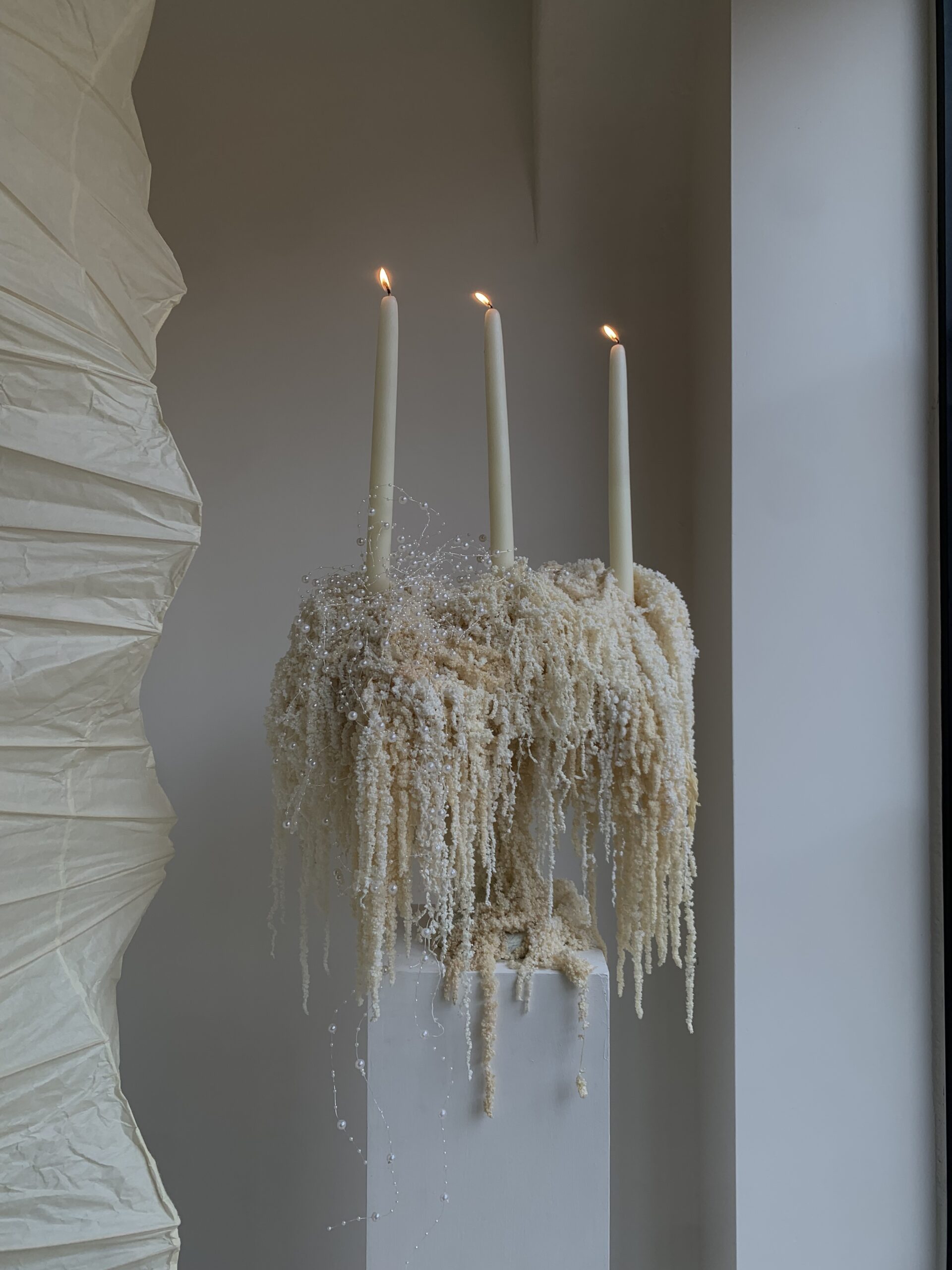
The meeting point between season and structure.
Flowers are ephemeral, yet the air and sensation they create remain in memory. I believe my work is about shaping that memory.
If I had to define it, I would describe it as a nature-oriented sculptural practice. I do not aim to control flowers artificially; instead, I respect their inherent qualities and build a structure around them. My work is less about constructing form and more about revealing the flow of time and season within space.
Georgia O’Keeffe has been an important influence. She did not treat flowers as decorative subjects, but magnified them to reveal their structure and presence. Her approach — interpreting nature through form rather than sentiment — deeply resonates with my own perspective.
Fashion feels closely connected to contemporary life, which is why fashion designers often come to mind first. I admire The Row and Sophie Buhai. Both approach design with restraint, emphasizing proportion, structure, and sculptural clarity over ornamentation. Their minimal yet powerful presence parallels my own approach to flowers — not as decoration, but as material for shaping spatial density and balance.
Giorgio Morandi has inspired me profoundly. He transformed ordinary, everyday objects into poetic compositions through muted tones and careful spacing. His restrained palette and quiet atmosphere create a subtle yet persistent tension. Similarly, I work with flowers — a familiar material — but focus on the relationships between elements, the intervals, and the density that define the space.
“Flowers are ephemeral, yet the air and sensation they create remain in memory. I believe my work is about shaping that memory.”
The Questions
(The Proust Questionnaire is a set of questions answered by the French writer Marcel Proust.
Other historical figures who have answered confession albums are Oscar Wilde,
Karl Marx, Arthur Conan Doyle, Stéphane Mallarmé, Paul Cézanne…)
A peaceful morning.
Losing sensitivity.
Excessive perfectionism.
A superficial attitude.
Someone who happily continues their work for a long time.
Using beautiful flowers without hesitation.
Quiet focus.
Showiness.
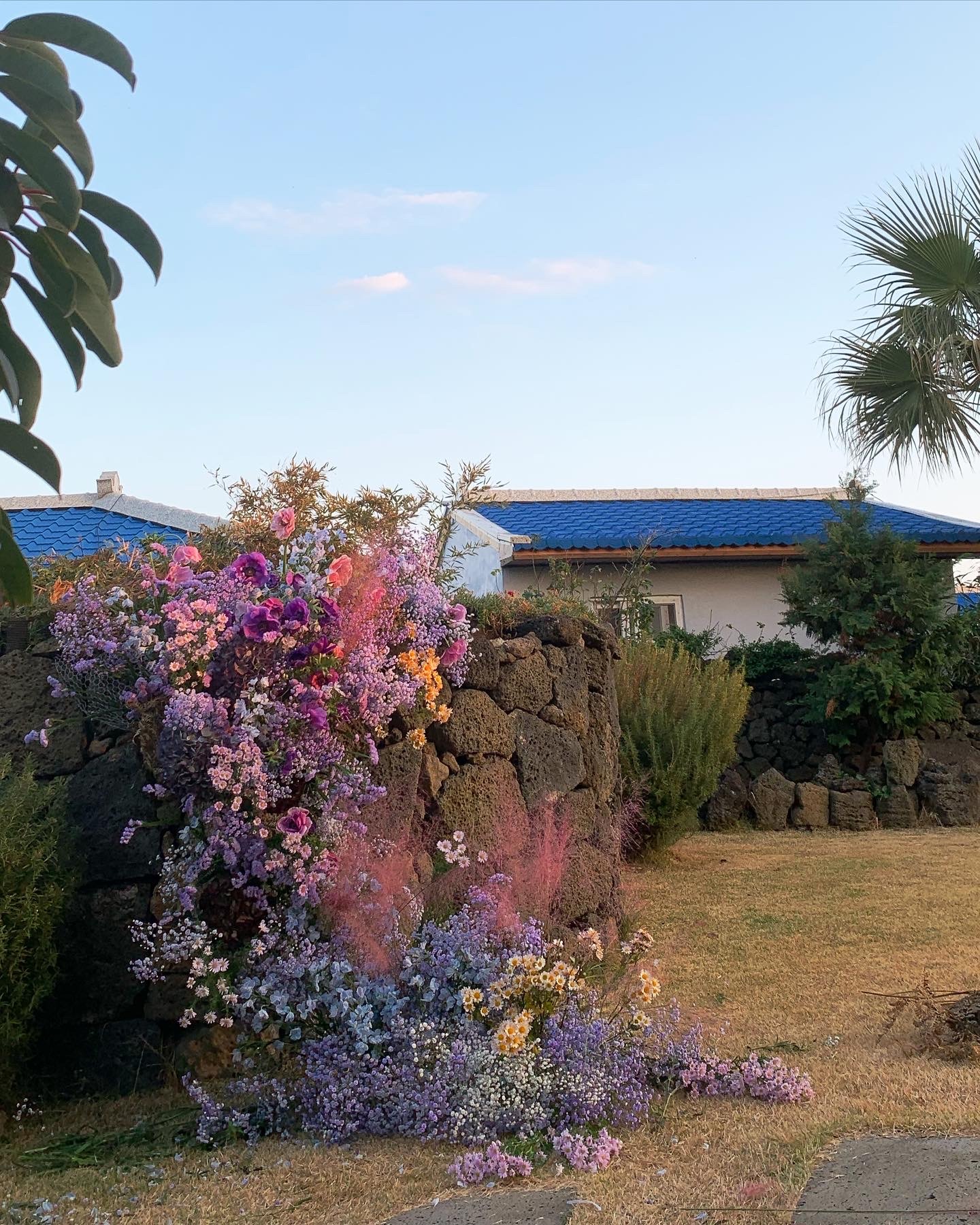
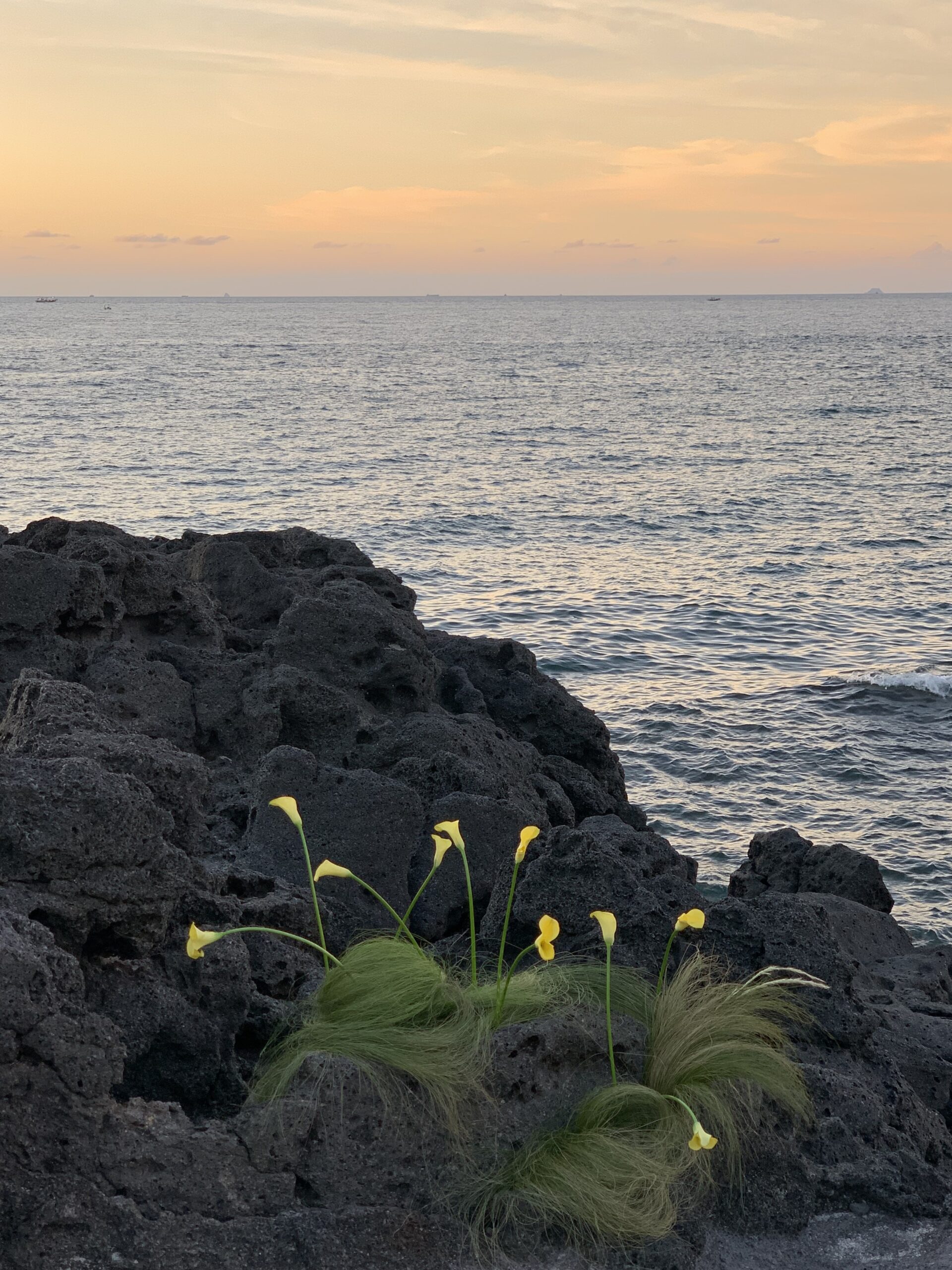
A sense of balance.
A sense of balance.
“Let’s adjust the tone.”
The ability to work on a larger spatial scale.
Reading the seasons accurately.
I would prefer not to be reborn.
Sensitivity.
Live in the moment.
“Before focusing on form, I would encourage them to understand structure. Rather than constantly adding, learning how to subtract is equally important.”
SHARE :