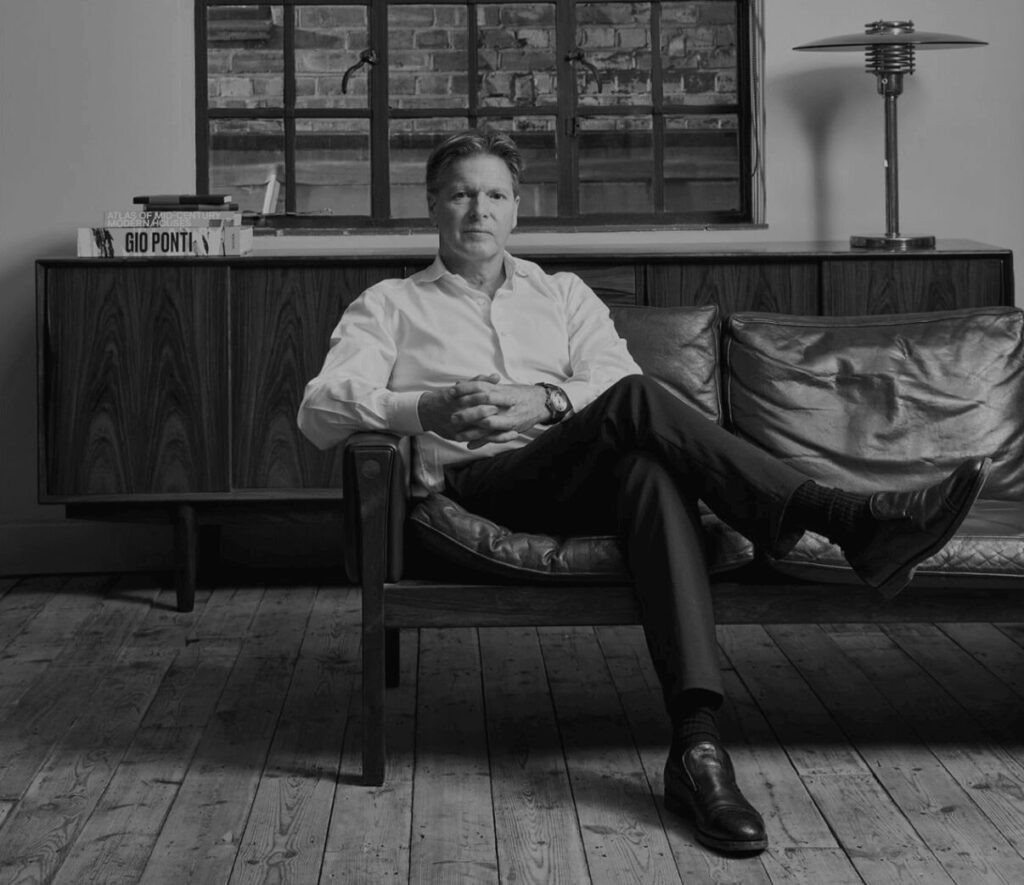
Richard Parr
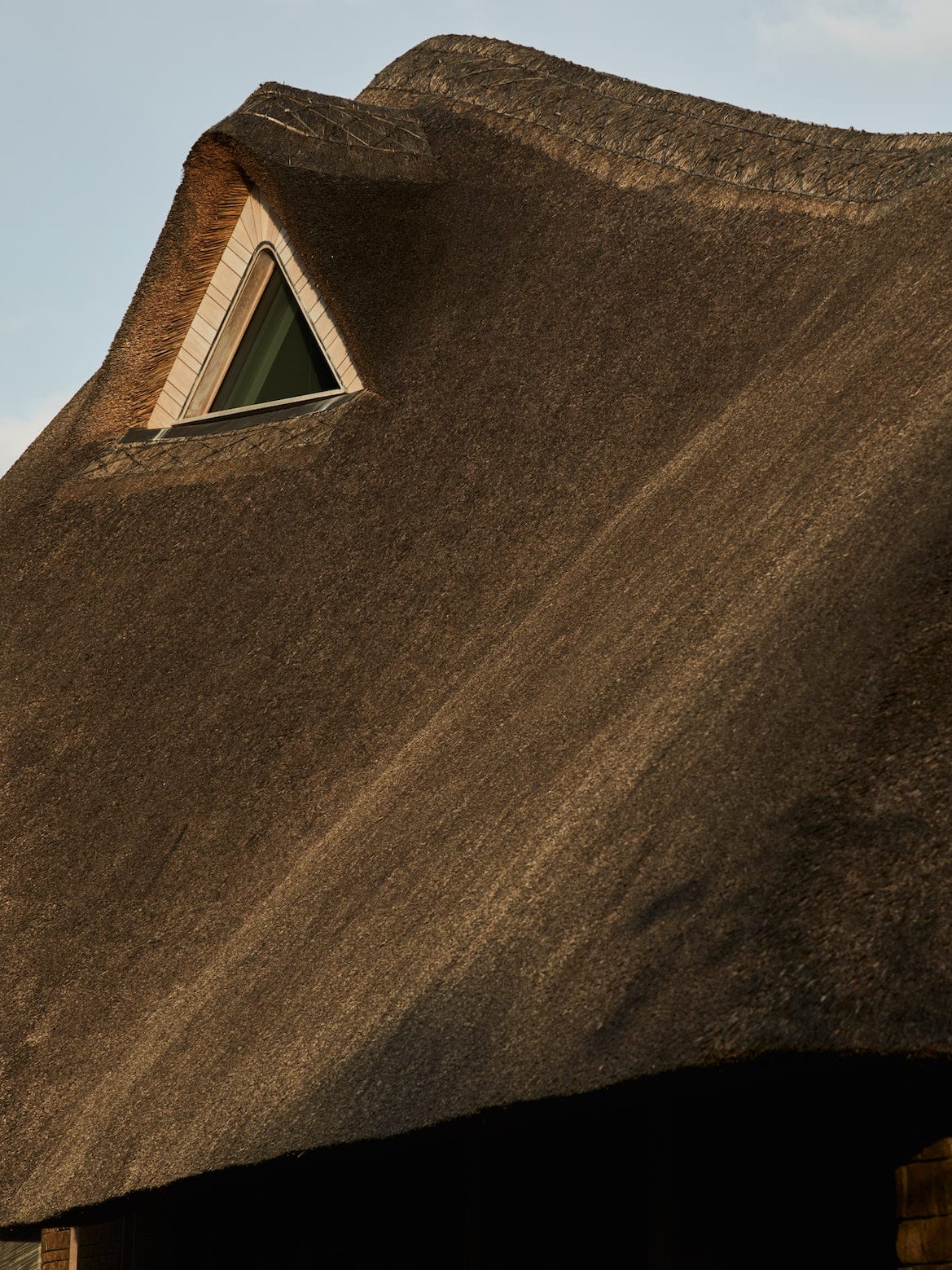
Richard Parr is the founder of Richard Parr Associates (RPA), a RIBA-chartered architecture and design practice established in 1994, with studios in London and the Cotswolds. Known for its thoughtful approach to contemporary and historic residential and hospitality projects, the practice creates timeless spaces that balance luxury, comfort, craftsmanship, and contemporary design intelligence.
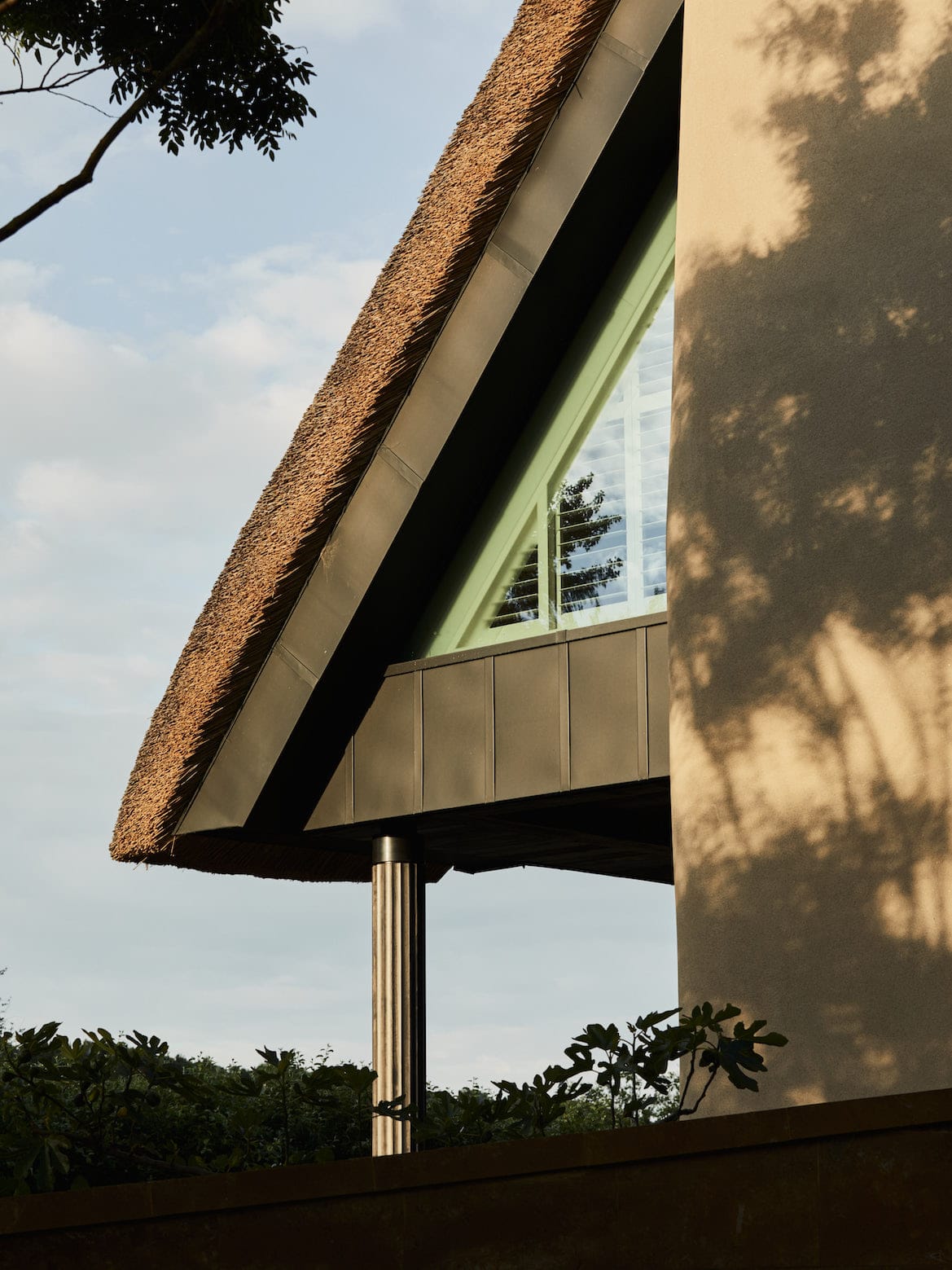
Led by Richard Parr and a multidisciplinary team of architects and designers, RPA’s work ranges from contemporary new builds to extensive restoration projects, including the award-winning Farmyard at The Newt. Rooted in a quiet, modern traditionalist sensibility, the studio places longevity, locality, and human experience at the heart of its architecture.
“Ultimately, I believe that an interior should tell a story – that it be brought to life.”
INTERVIEW
It’s difficult to say. I think I was drawn to ‘design’ from a very early age, but I wouldn’t have called it that. We’re all born with this impulse to make marks. I’m referring to those first precious moments of putting pen to paper, scribbling, and seeing what happens. I suppose I never stopped! As for the serious business of ‘design’, and an awareness of design quality, this came when I discovered Italian design in the 1980s. England was pretty hidebound and nostalgic by comparison, but I couldn’t get enough of what was coming out of Italy…
I would pre-order magazines from Milan and devour them in one sitting.
There have been a number of defining moments. Opting to study at the AA was the first, it was a wonderful environment in which to think and explore freely. The next was landing my first job in Spain, working in a contemporary idiom, set against the backdrop of historic Seville and Madrid. The third was in finding the self-belief necessary to establish my own studio.
Finding the right mix of talent and energy, and pairing that with an alignment of values. We like to find people with potential in the industry, but we employ largely on character and evidence of commitment. The rest can grow.
Instilling a cooperative attitude and a supportive studio culture – from top down to the bottom up. Guiding and nurturing young talent is a privilege for me personally, and I find it tremendously satisfying seeing growth in others. As the head of a studio, I depend on everyone else – without the support of our team we couldn’t deliver the projects that we do. Collaboration, therefore, is key, always.
Clarity of thought is essential – I start by finding one key idea. There are so many layers and complexities that later unfold and weave their way into (or occasionally corrupt) a project that holding onto the essence of the original idea is crucial. That one clear thought, the kernel, might manifest itself in the first sketch, and it will, in many cases, define everything that follows.
It always starts with a sketch – a simple scribble. It’s the very first thing we present to the client.
The second step is finding the appropriate reference, often a piece of art. Contemporary art is a huge part of my life, and I often find that an artist’s message can more powerfully embody and illustrate our thinking. I like to keep presentations very visual. My own style of sketching is full of implication or suggestions rather than precise detail. I find that way I can lead a client in gently. As we do this, colours, materials, words, and phrases are added. The concept is further defined by a brief, organization charts, circulation flows, and such, and only then do we start to digitalise the project. We use renders and 3D modelling, of course, but we like to hold back on this until the idea is agreed upon with the client.
We summarise this as Modern Traditionalism. We always look forward, and so our thinking and style are modern in that sense, but we see our projects as legacies that must stand the test of time. I believe that we have to know where we have come from in order to go forward. In our work, the past is not rejected but reframed to allow opportunities for addition, reinvention, and future-oriented design. What better way to celebrate our shared heritage?
‘Design with Beauty, Build in Truth.’ It’s the AA school motto. I don’t usually go in for school mottos, but this rings true for me. Honesty is paramount.

I cannot pick a favourite because I honestly do not have one. As a large proportion of our work comes from residential commissions, the combination of the project and the client relationship is a deeply personal one. It’s a unique journey, so I couldn’t and wouldn’t want to choose.
Since it’s not a private house, I will say The Newt in Somerset has been a very special project. We are now into nearly a decade of designing for them. What I love most is the relationship that has evolved with the client, and the energy of their vision and style is palpable. When we began what is now known as “The Farmyard at The Newt” there was no defined brief, we evolved that together with the client and in doing so reinvented the English Country Hotel.

There are many often contradictory schools of thought when it comes to interior design. As both architects and designers, we believe first and foremost that the spatial design is architecturally defined, and this structure supports subsequent design decisions. Ultimately, I believe that an interior should tell a story – that it be brought to life. Life is an ongoing journey with a corresponding narrative. When designing homes for our clients, we want their lives to make some mark on the living spaces.
If I were afforded another tip, then it would be the provision of contrast. It helps to have a little friction! A recipe is always better with a little spice thrown in, so don’t be afraid to juxtapose.
To think of all the things that someone else can do better than me and then find the right people to do them. This small piece of advice not only inspired my choice of business partner but is the governing principle upon which the wider team is built.
Work work work. Be curious and learn from looking. Find every opportunity to fill your mind. Oh, and travel! I have been fortunate enough to visit many places across the globe over the years. Each trip comes with unforeseen challenges and new discoveries. It teaches one to have an open mind.
Not all situations, jobs, or projects go the way we want them to, so it’s key to learn from the bad experiences as well as the good. There is always something useful to take from life, to inform what you do next.
How to run a business.
I would recommend something not strictly design-related. My travels in India are integral to my work and inform not only my aesthetic awareness but also my conduct – the way I hope to go about it. It’s an astounding place, and I count myself very lucky to have friends in that part of the world.
With this in mind, I would recommend A Suitable Boy by Vikram Seth. It is not a short book, but again, reading – like design, architecture, and art – entails commitment.
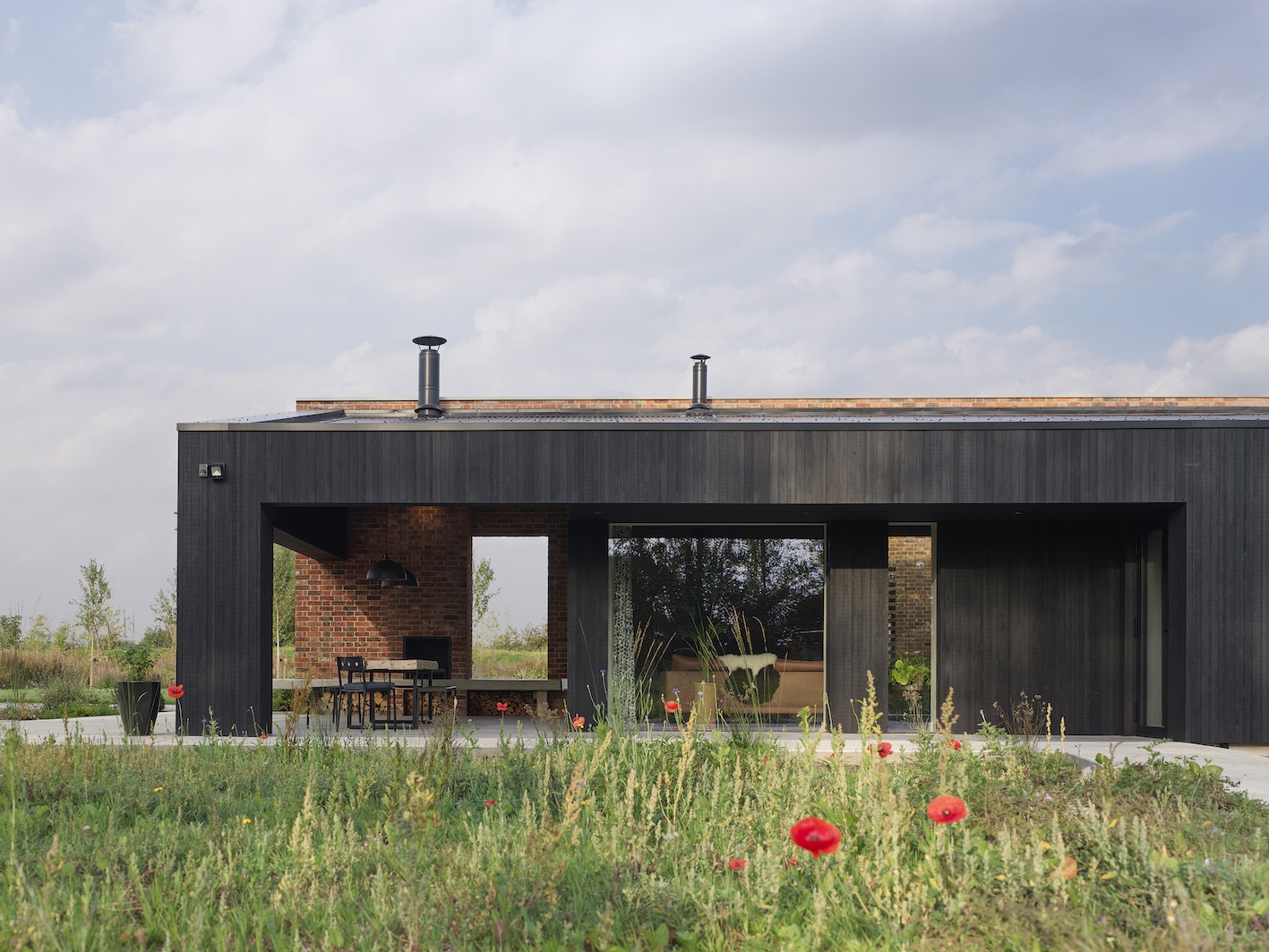
We have a series of new country houses in the works, each one unique, exciting, and self-consciously exploratory, but always integrated into its context. Respect for Genius Loci is paramount, especially when working in the countryside. We are working on a number of existing buildings, and while we maintain a degree of respect for heritage and tradition, we are increasingly approaching these projects with an eye to reimagine and elevate.
When thinking about Interior Design also, we ought always to bear in mind where materials come from, and how they got here – the processes they have undergone to become design objects, to become desirable. Design isn’t about keeping things as they are, it’s about material and spiritual improvement. Up-cycling is a great philosophy. It’s a form of ‘sustainable’ practice that results in a product of higher quality or value than the original. Whatever we design, let’s aim always to make it better than what was there before.
On a final note, considering ‘luxury’ – in our work, we seek to give it fresh meaning. This new luxury is not exotic or imported, it is often the responsible repurposing of what we already have around us – those fine things which have lost their sheen, their original purpose. This ‘bricolage’ mentality is something I find very exciting.

Thank you so much Richard, for this lovely interview!
Share article :