Tina Bobbe
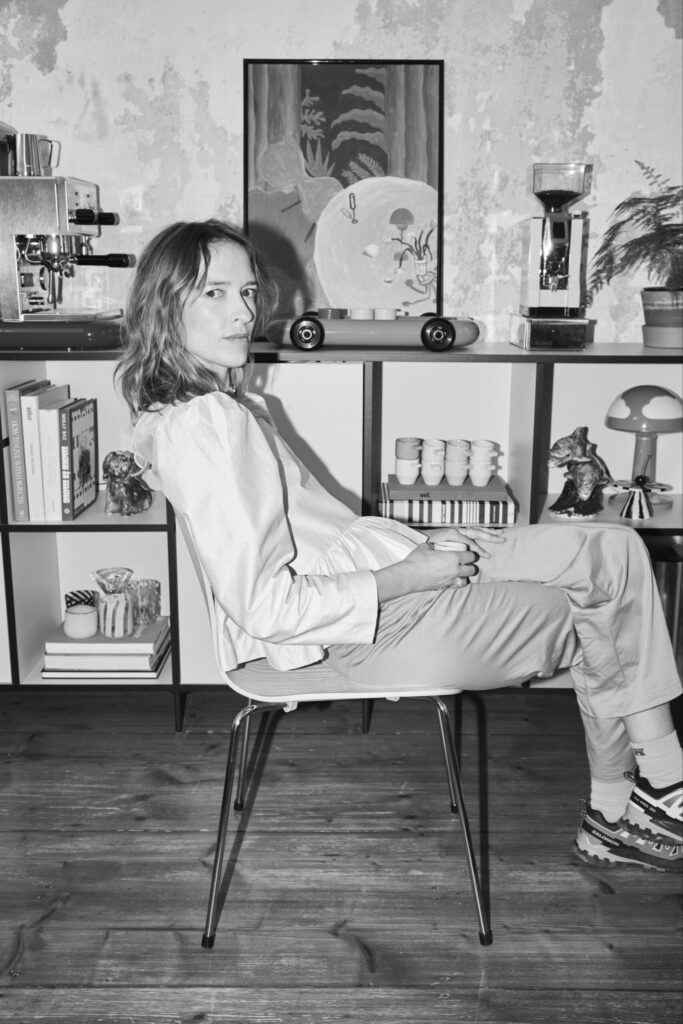
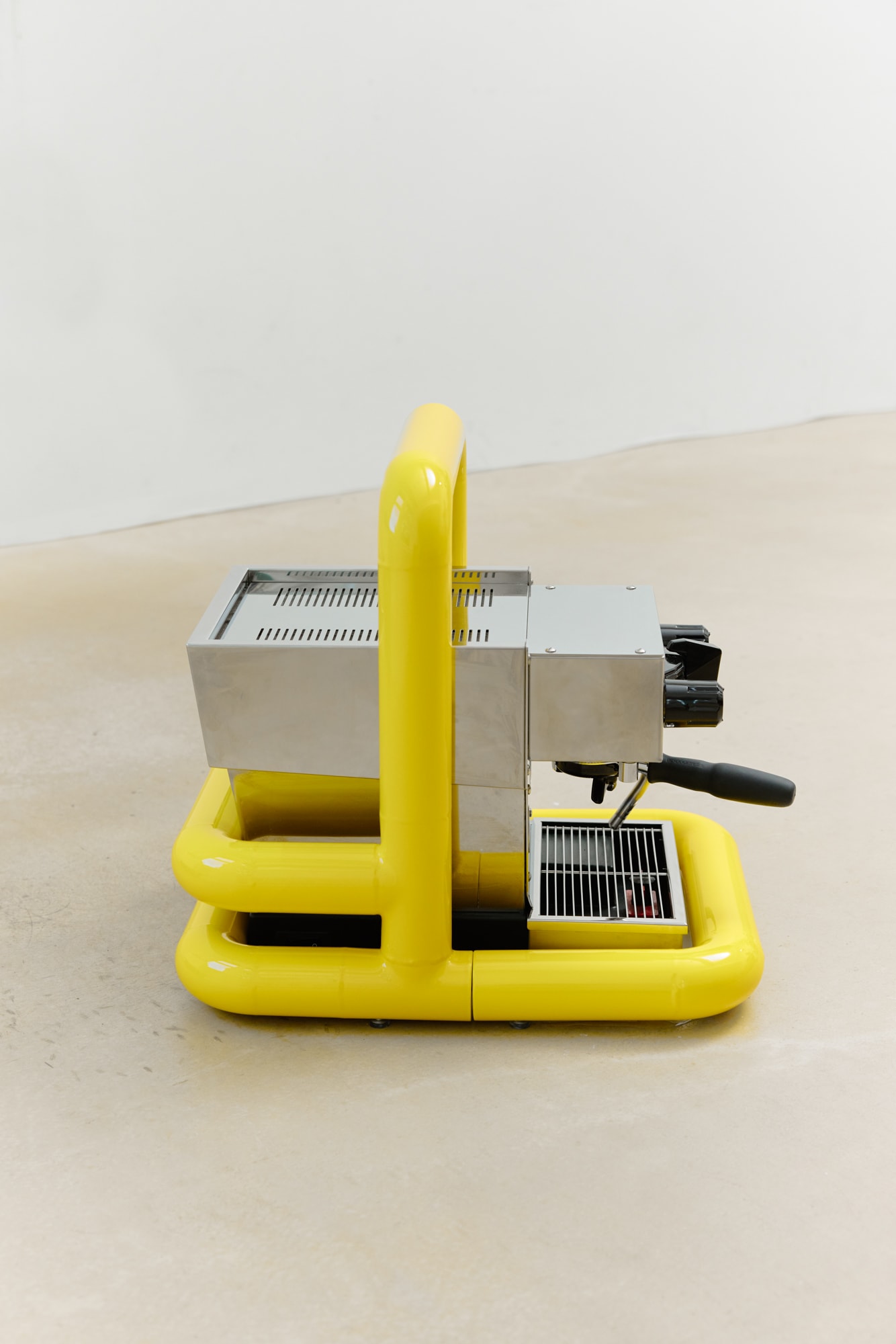
Tina Bobbe is a German designer whose practice explores the transformation of everyday objects into expressive sculptural forms. Working at the intersection of industrial design and collectible design, she is particularly known for reimagining coffee-making objects through a playful yet striking visual language that elevates functional rituals into bold artistic statements.
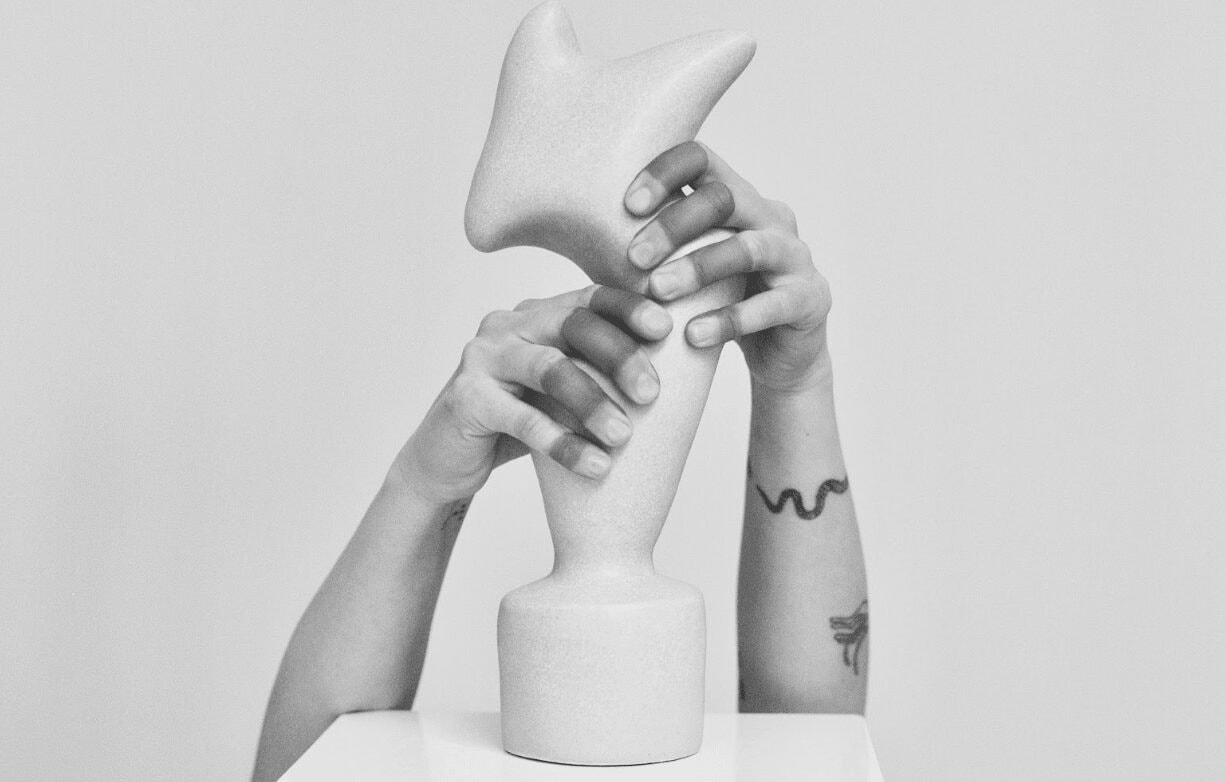
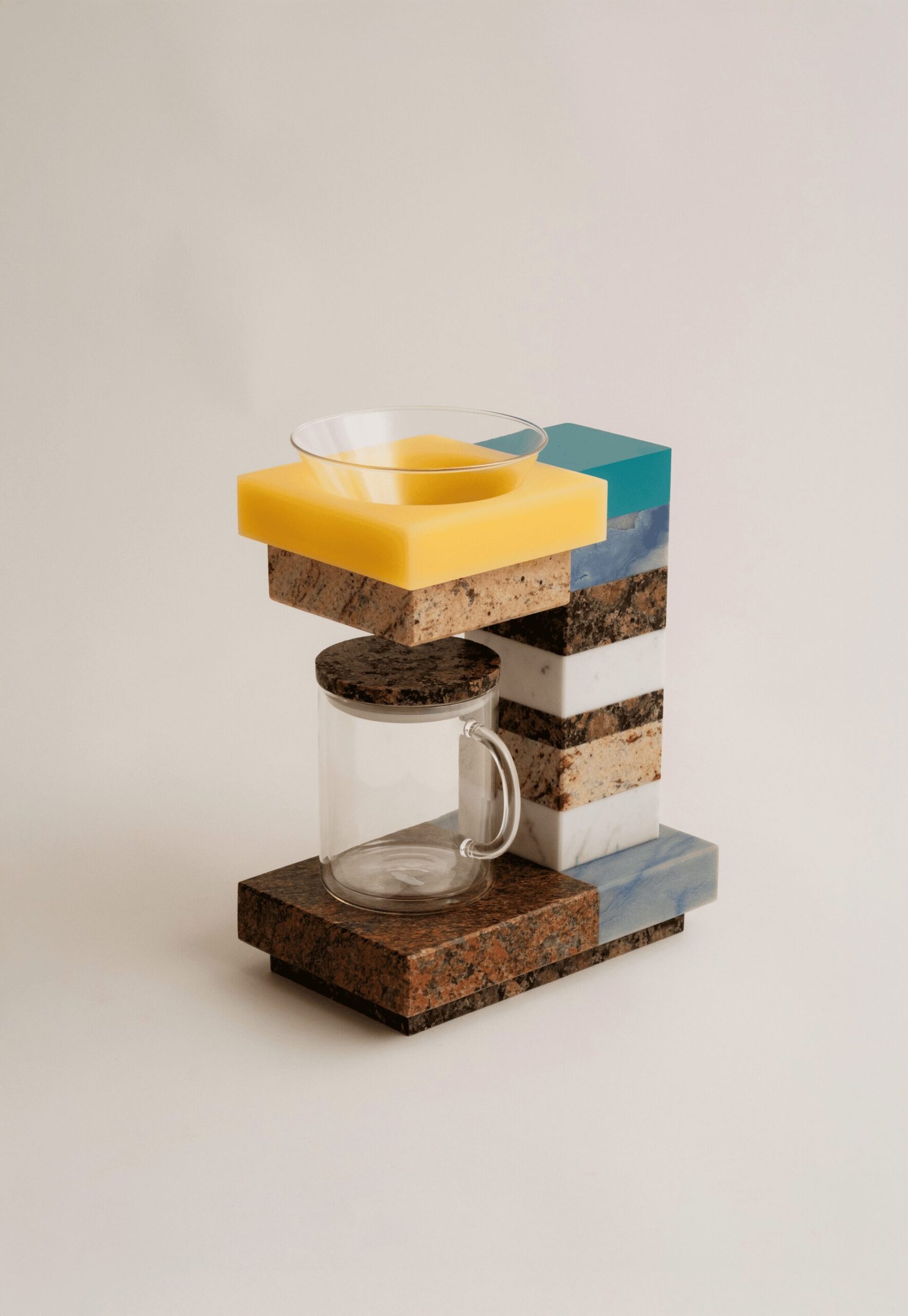
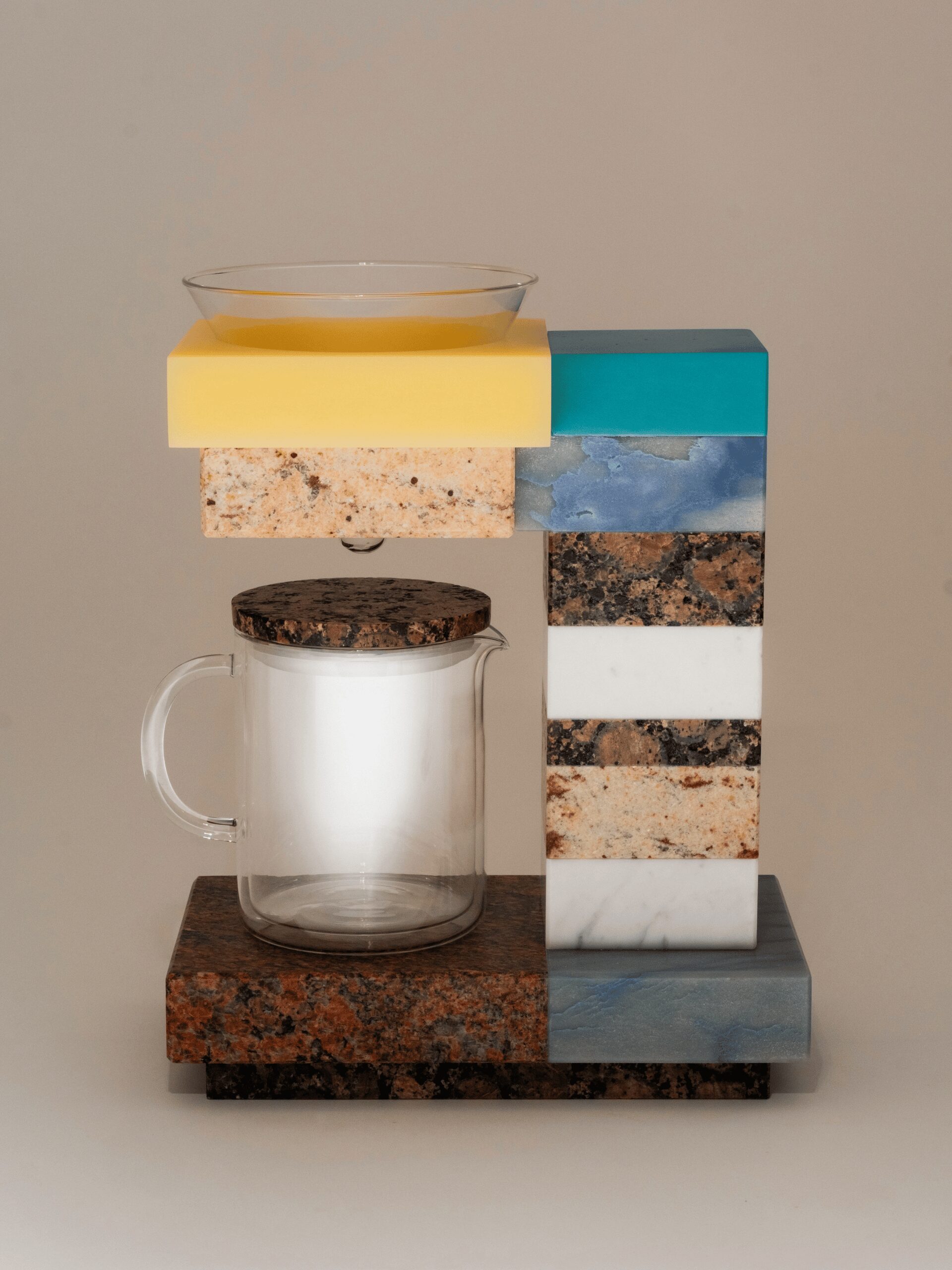
Her recent work, Stone Drip, continues this exploration through stacked layers of natural stone and resin, combining vivid contrasts, geometric precision, and tactile materiality. Through these pieces, Bobbe examines the emotional relationship between people and the objects that shape daily life.
Born in East Germany in 1989, Bobbe studied mechanical engineering and industrial design in Berlin and Dresden. Before establishing her independent practice, she worked as a scientific design researcher and pursued a PhD focused on the design of objects for communicating technology.
Interview
I was born in the former East Germany, but my family moved to northern West Germany when I was very young. That is where I grew up.
My first memory is the moment I realized that my art was being taken seriously. As a child, I participated in an exhibition at a local community center where life-size portraits created by a group of children were presented as artworks.
Yes, although in a completely different direction at first. After studying engineering and design, I worked in design research for nearly a decade while pursuing my doctoral degree. I loved that time: teaching students, conducting research, and working within an interdisciplinary team. It still informs my practice today, encouraging play while maintaining a systematic way of working.
I’ve always been fascinated by objects. Over time, I approached them from different perspectives: first from a technical point of view during my studies, then from a theoretical one. Today, I look at them primarily from an emotional perspective.
My creative process begins rather subconsciously with a vague idea that develops in my mind. I carry a notebook and pencil with me everywhere and draw constantly. Inspiration can come from many places: a museum visit, or a sand toy on a playground. Once the concept is defined, the process becomes very systematic: building 3D models, researching materials, and communicating with potential producers.
I am a mother of two young children, so my daily life is structured around them. I wake up early to take my seven-year-old to school, then walk to my studio and begin the day at my desk. Some days I visit producers, or pack and ship objects. In the early afternoon, I pick up my three-year-old from kindergarten, and we spend the afternoon together. Once the children are asleep, I often return to work — usually focusing on the more creative parts of my practice.
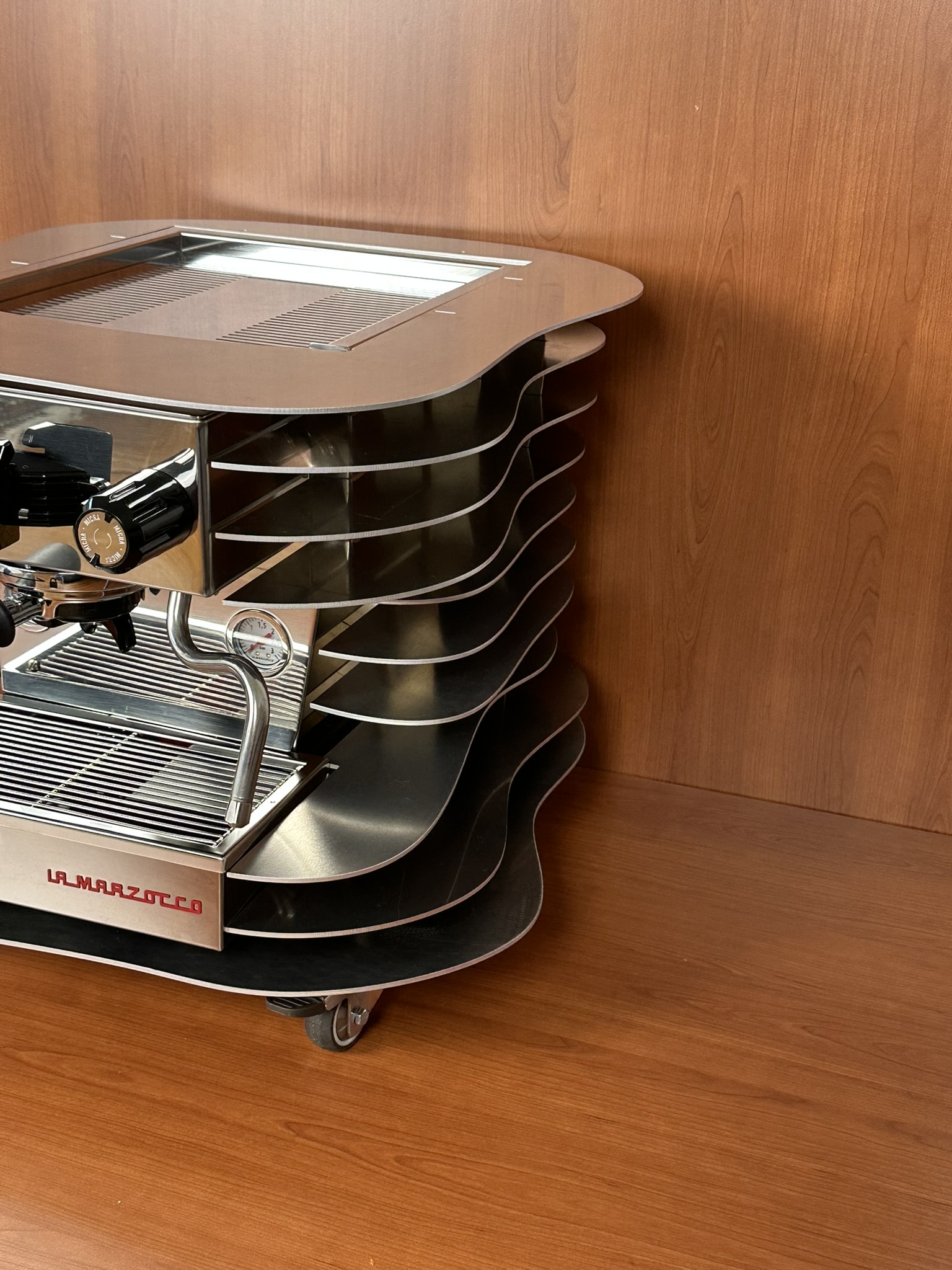
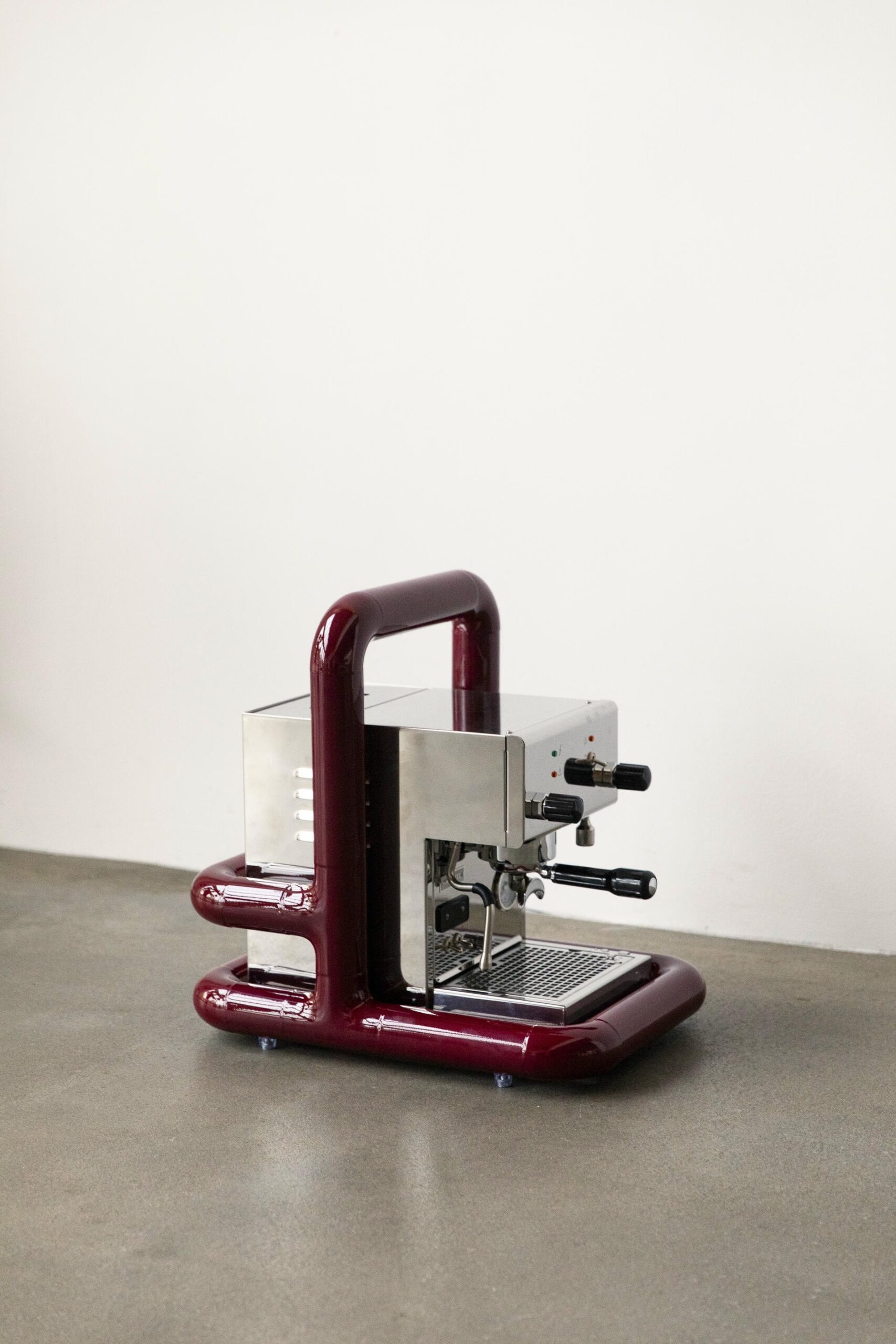
Now, most of my objects are made of steel, which makes them heavy and expensive. In the beginning, many people tried to convince me to switch to 3D printing. But I love the durability and honesty of steel. These objects are made to last.
One aspect I love about my metal objects is that the weld seams remain visible instead of being polished away, which would normally be standard. My welder calls it “retro.” I appreciate the honesty it gives the objects.

Topo Frame © Tina Bobbe

Stone Drip © Sabine Boger
It may sound easier than it is: do what genuinely excites you and trust your instincts. Don’t create things because you think others will like them. Create what you like.
My work strongly resonates with Memphis and postmodern design. I’m drawn to their questioning of functionality, their playful approach, and their refusal to take design too seriously.
From the postmodern Memphis era, I especially admire Ettore Sottsass and Martine Bendin. My work is also influenced by Ingo Maurer, Cini Boeri, and Marianne Brandt.
I strongly appreciate designers, such as Joris Poggioli, Sabine Marcelis, and Sam Stewart.
I love the paintings of Kate Florence and the music of Mine.
Celebrating unapologetic presence.
“Do what genuinely excites you and trust your instincts. Don’t create things because you think others will like them. Create what you like.”
The Questions
(The Proust Questionnaire is a set of questions answered by the French writer Marcel Proust.
Other historical figures who have answered confession albums are Oscar Wilde,
Karl Marx, Arthur Conan Doyle, Stéphane Mallarmé, Paul Cézanne…)
Watching sunsets with the people I love.
Losing curiosity.
Prioritizing sleep a little too much.
Lack of kindness.
My children, for their ability to live fully in the present moment.
My skincare routine.
Being in an exciting in-between phase of my life.
Constant productivity.
Emotional Intelligence.
Creative fearlessness.

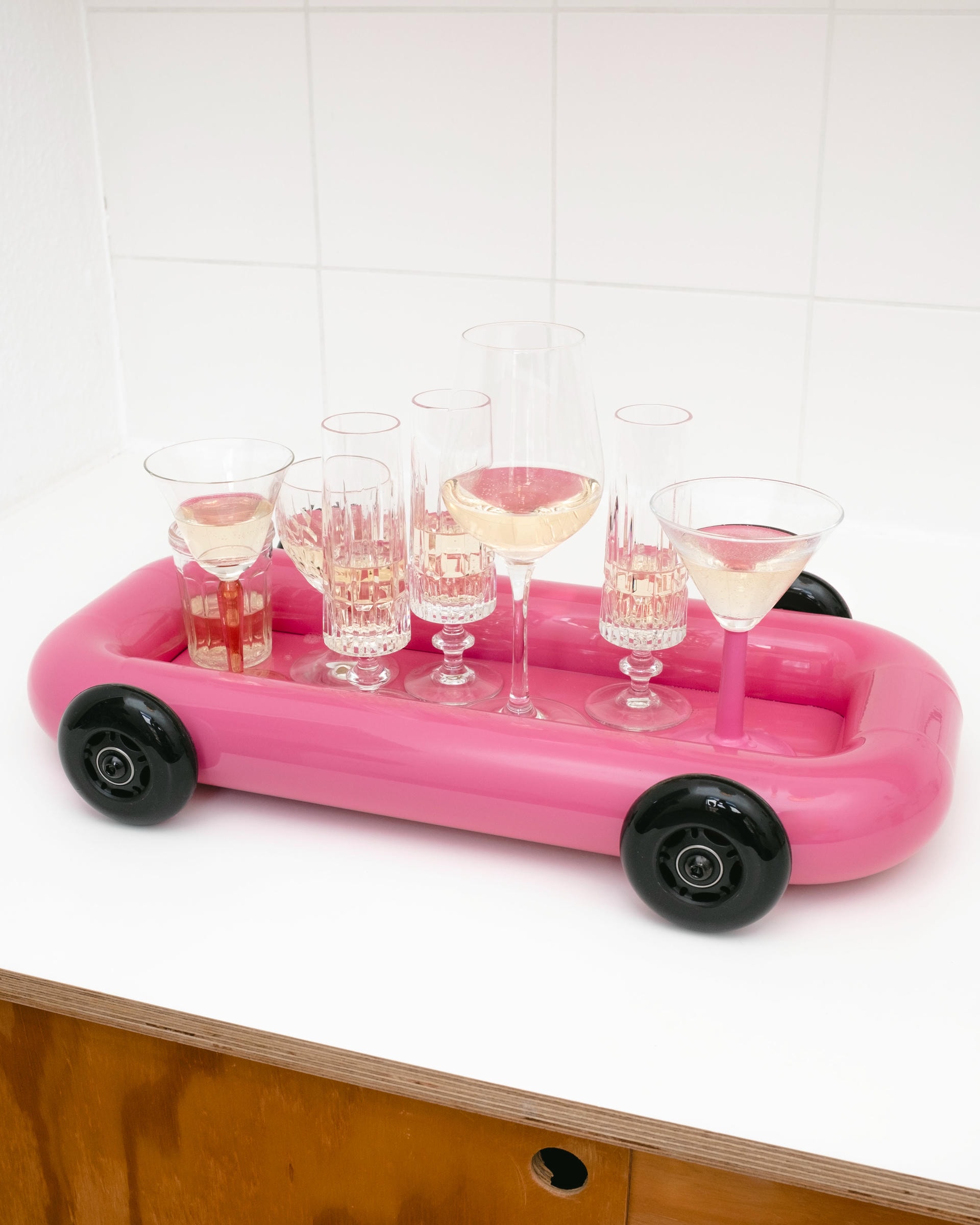
Pipe Tray © Sabine Boger
Probably my kids’ names.
Mastering all kinds of craftsmanship to build my objects entirely myself.
Worrying less.
Building a practice that feels mine authentically.
An object people don’t need, but would never want to live without.
Somewhere warm, with sunsets and people I love close by.
My family.
Losing curiosity.
Designer.
Decisiveness.
Their existence.
Max Frisch and Christian Kracht.
Rose Dewitt Bukater and Jack Dawson.
Martine Bendin.
My grandparents.
Probably my kids’ names.
Everything Trump represents.
Je ne regrette de rien.
Old, curious and mentally awake.
Stay curious, stay kind.

Pipe Frame Mini © Alexander Fischer
“Celebrating unapologetic presence.”

Stone Drip © Sabine Boger 
Pipe Frame Mini © Tim Sonntag
SHARE :