Heakyoung Jang
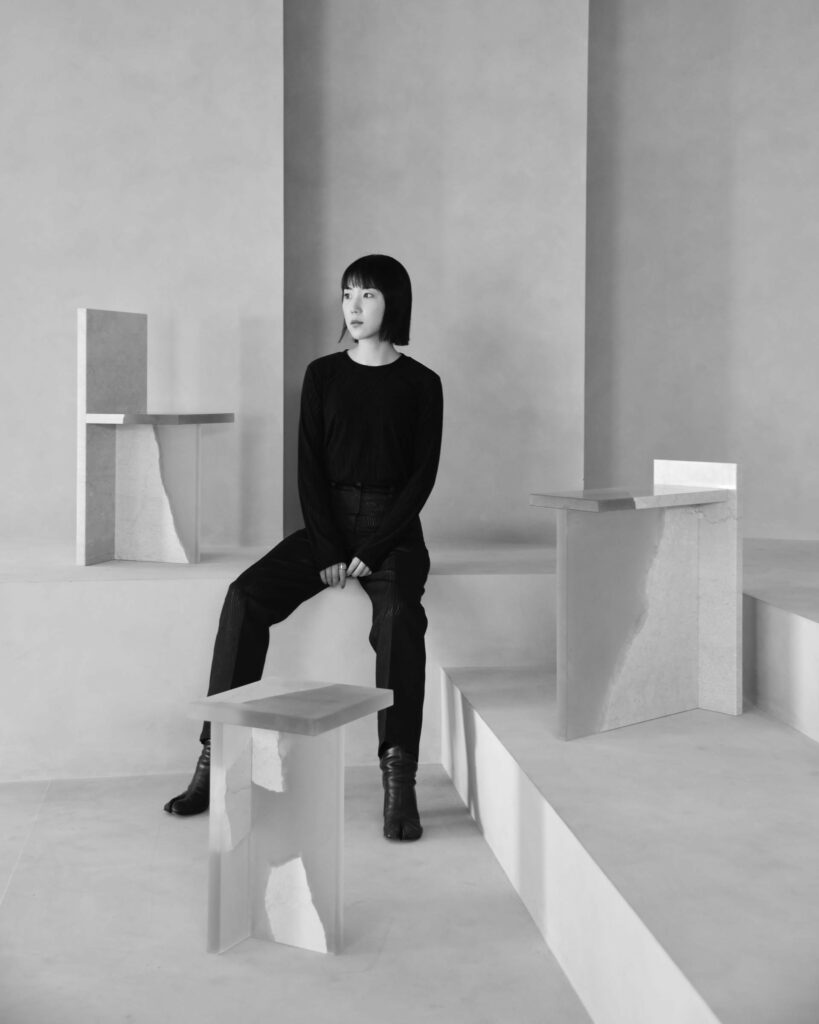
Heakyoung Jang is a South Korean designer and the founder of FICT STUDIO, an independent design practice established in 2016. Inspired by the phrase “From Craft to Industry,” the studio explores the flow and intersections between craft and industry, examining how traditional knowledge and contemporary production can coexist and inform one another.
Drawing on her background in industrial design, Jang investigates the cultural, emotional, and material dimensions of craft, viewing it as more than a set of techniques or processes. Through material experimentation and process-based research, her work reinterprets traditional values within a contemporary context, creating objects that explore the relationship between materiality, technology, memory, and time. Conceived as both a studio and an experimental platform, FICT STUDIO demonstrates how craft and design can generate new forms of meaning and relevance within contemporary culture.
Interview
I was born and raised in Seoul, South Korea.
I grew up naturally surrounded by art. I spent my childhood drawing, making small sculptural objects, and attending art schools and studios where I received a classical arts education. Those early memories continue to form the foundation of my practice today.
Yes. My career began with my university graduation project, after which I established my independent studio. Since then, I have been working continuously within the space between art and design.
I am often inspired by a sense of absence—by things that are overlooked, undervalued, or slowly disappearing. Many of my projects begin with a desire to re-examine such materials and reinterpret their significance. I’m drawn to the narratives embedded within materials, and transforming those stories into sculptural form is a central part of my process.
My work begins with exploring the latent potential of materials. I test their physical qualities and limitations, searching for the moment when they naturally reveal their preferred forms or structures. Because the results of research and experimentation guide the final shape, the sculptural language arises organically from an understanding of the material itself.
My studio consists of two separate spaces: a clean room for digital work and rendering, and a tough room where the physical making happens. I usually spend my mornings in meetings, responding to emails, or conducting research and digital tasks. The afternoons are dedicated to hands-on fabrication. My day finds its rhythm by moving between these two environments.
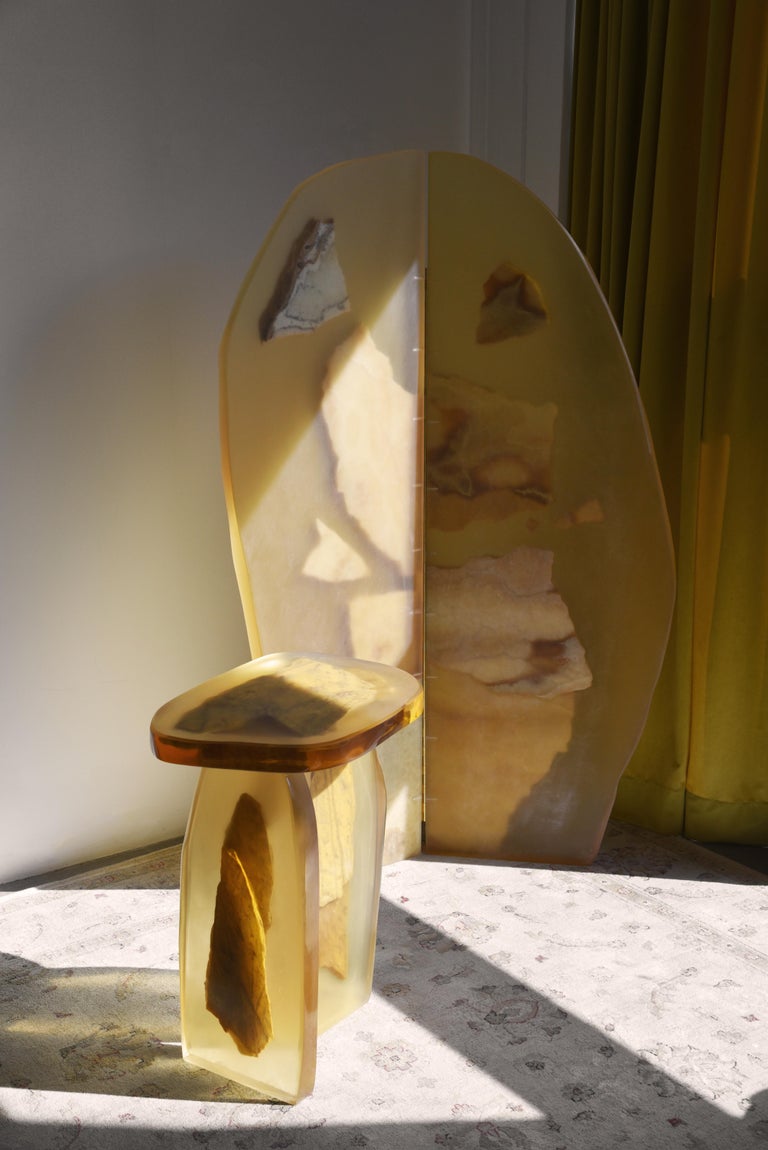
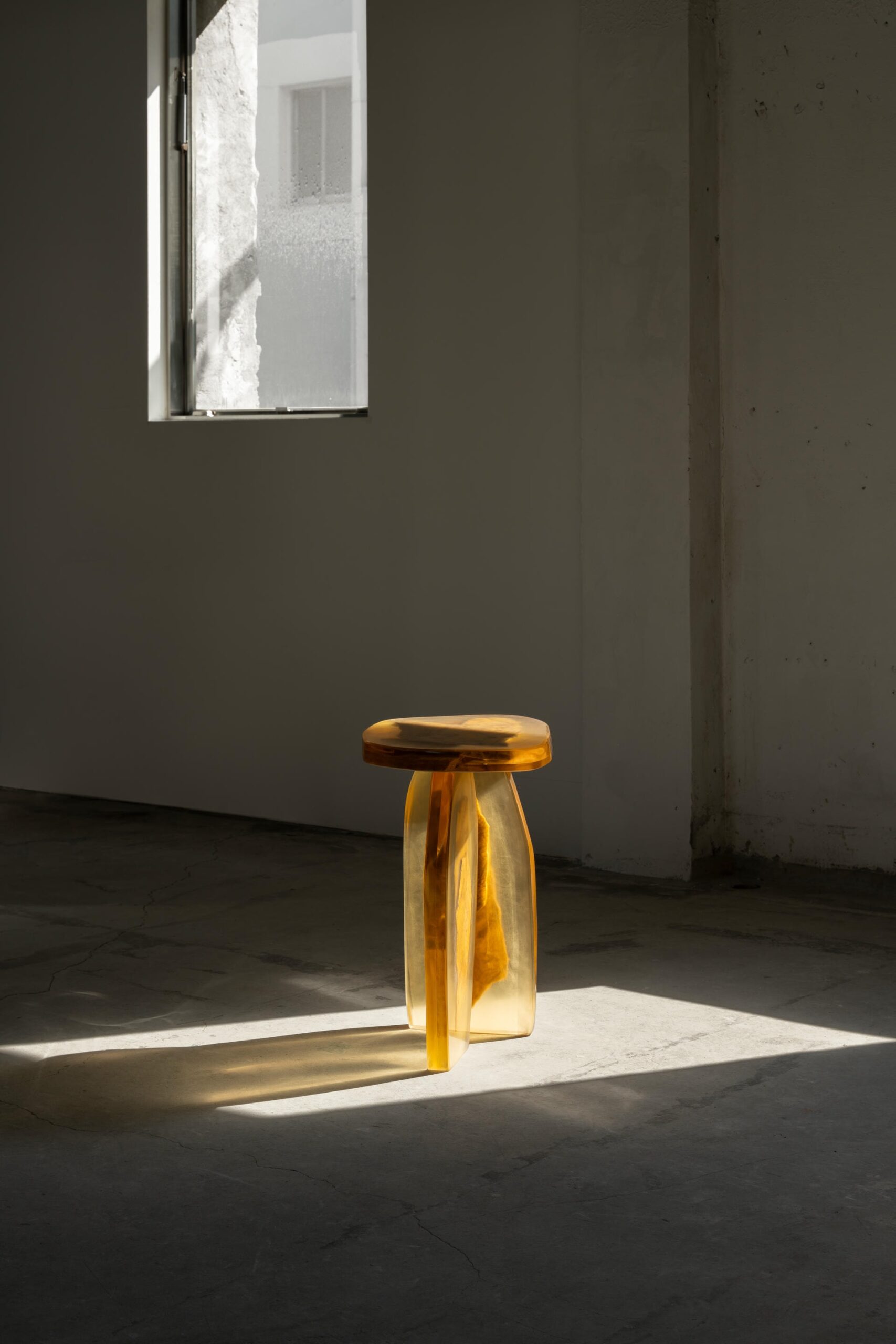
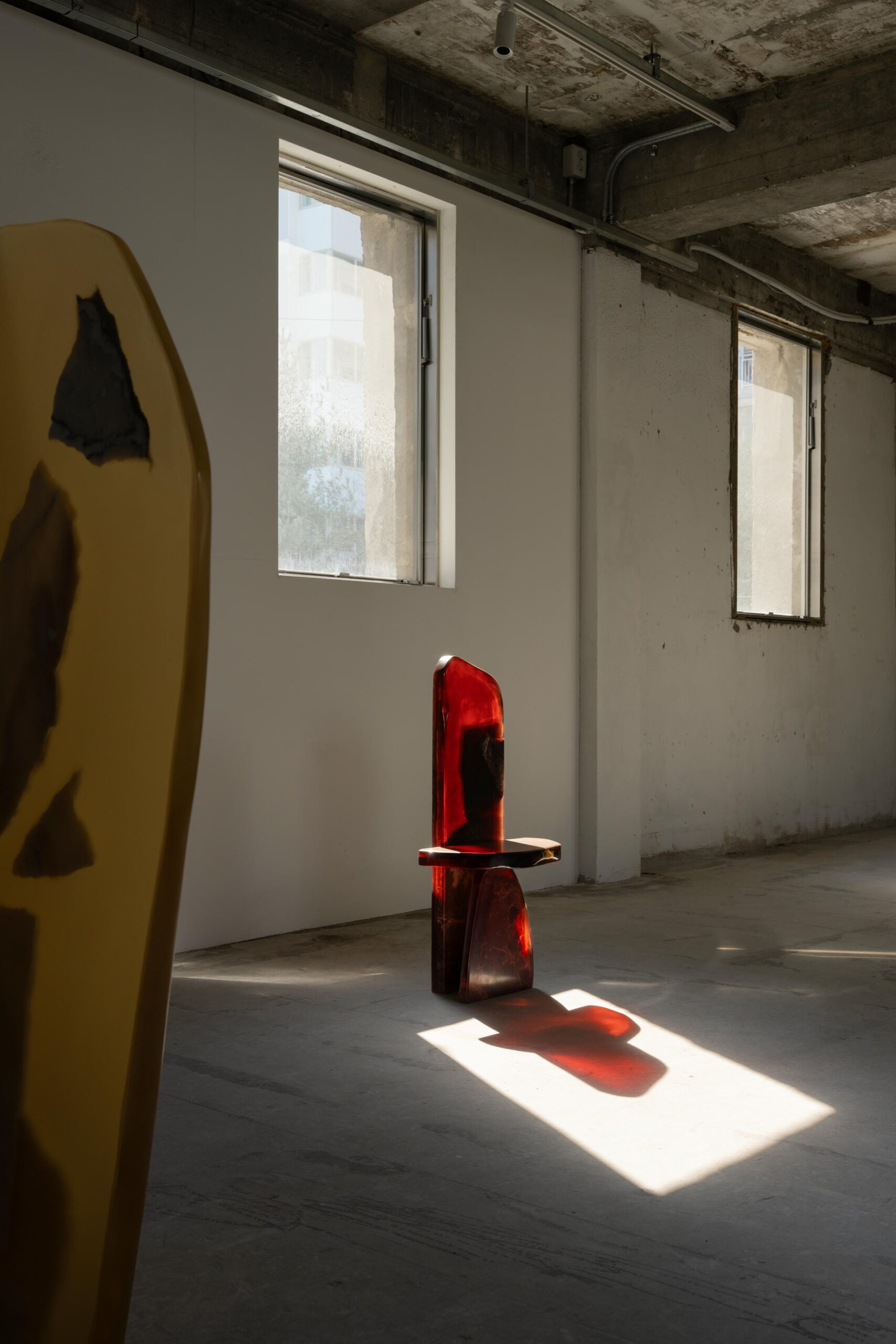
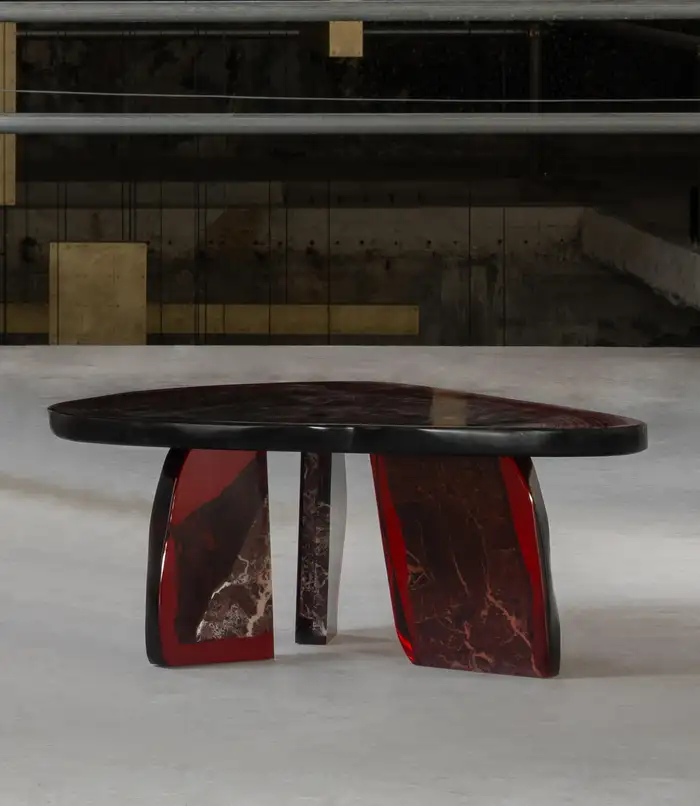
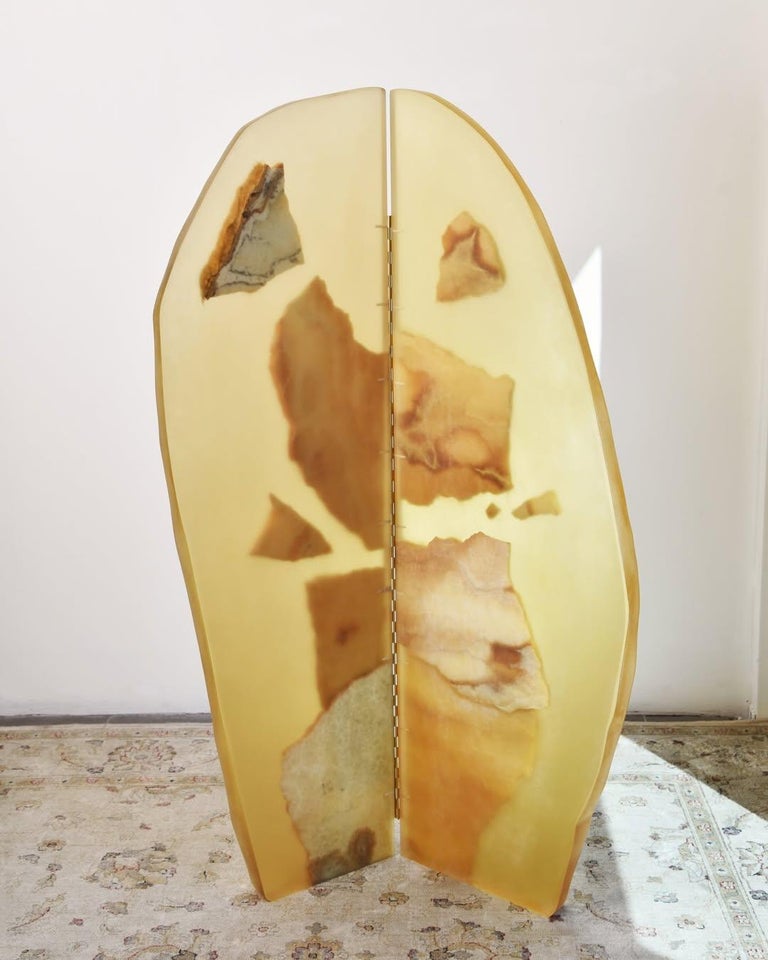
I often work with resin because of its remarkable openness and adaptability. It pairs well with a wide range of materials, softening their limitations and amplifying their strengths. New resin technologies and products are constantly emerging, which allows the expressive possibilities of my work to keep expanding.
The technical foundation of my work lies in creating stable coexistence between materials of different natures. Mother-of-pearl, resin, and ceramics each possess their own unique physical qualities. I carefully design the internal structure and bonding methods so that these natural and synthetic materials meet harmoniously without losing their individual character. This point of equilibrium defines the sculptural identity of my pieces.
Don’t rush. A sculptural language doesn’t form overnight. It takes countless experiments and failures to understand what you’re truly seeing and feeling.
Especially when working with materials, it’s important to listen to the direction the material itself suggests rather than trying to control it completely. If you endure that slow, accumulative process, your own world will eventually emerge with clarity and authenticity.
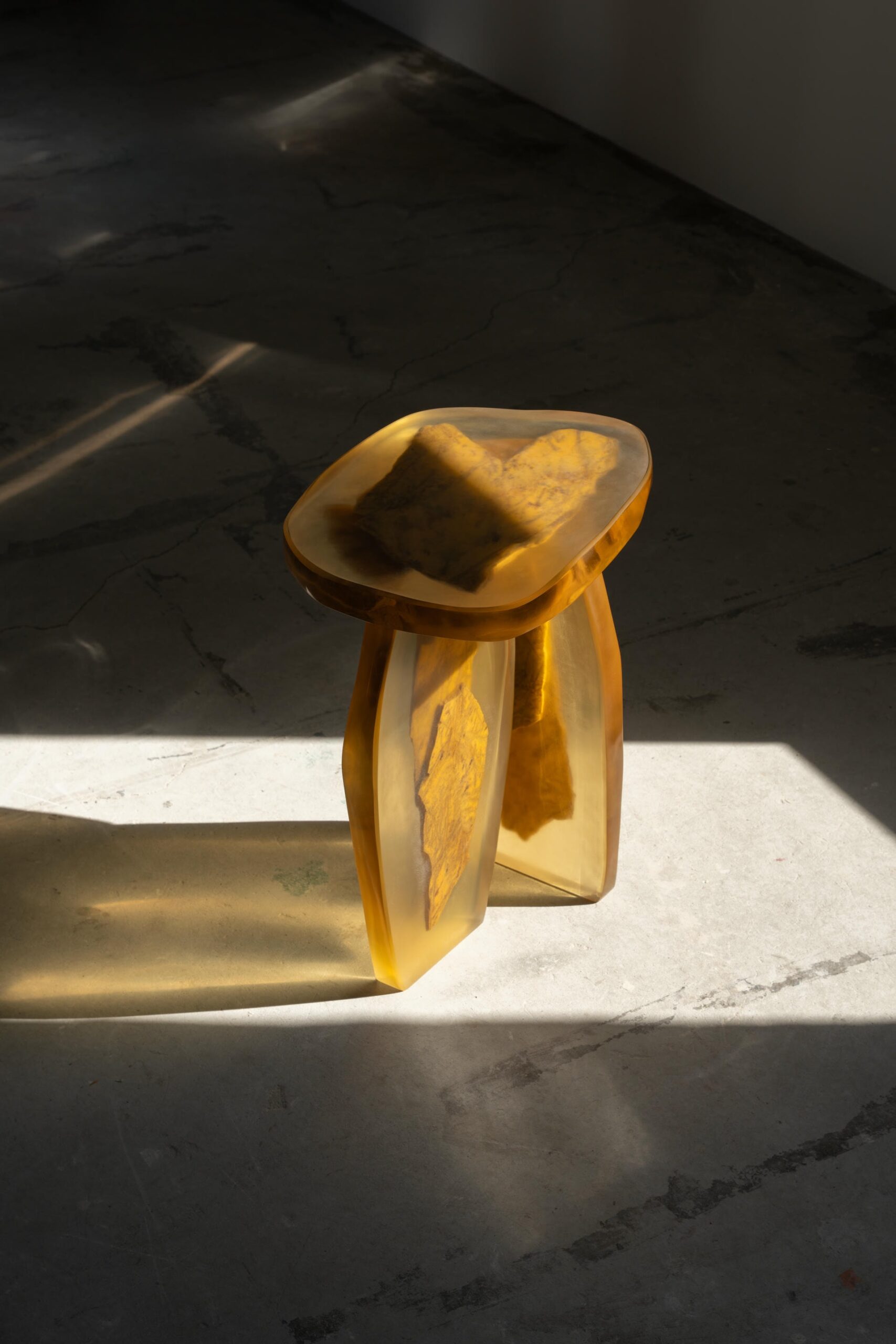
My work sits at the intersection of emotional minimalism, material-driven design, and collectible/ contemporary sculptural design. I eliminate unnecessary elements while focusing on revealing the hidden sensory qualities of materials. I aim for pieces that are more sculptural than functional—works that create a specific presence or atmosphere within a space.
I have been strongly influenced by the works of Ronan Bouroullec, Gaetano Pesce, Vincenzo, Peter Alexander, Craig Kauffman, and Helen Pashgian.
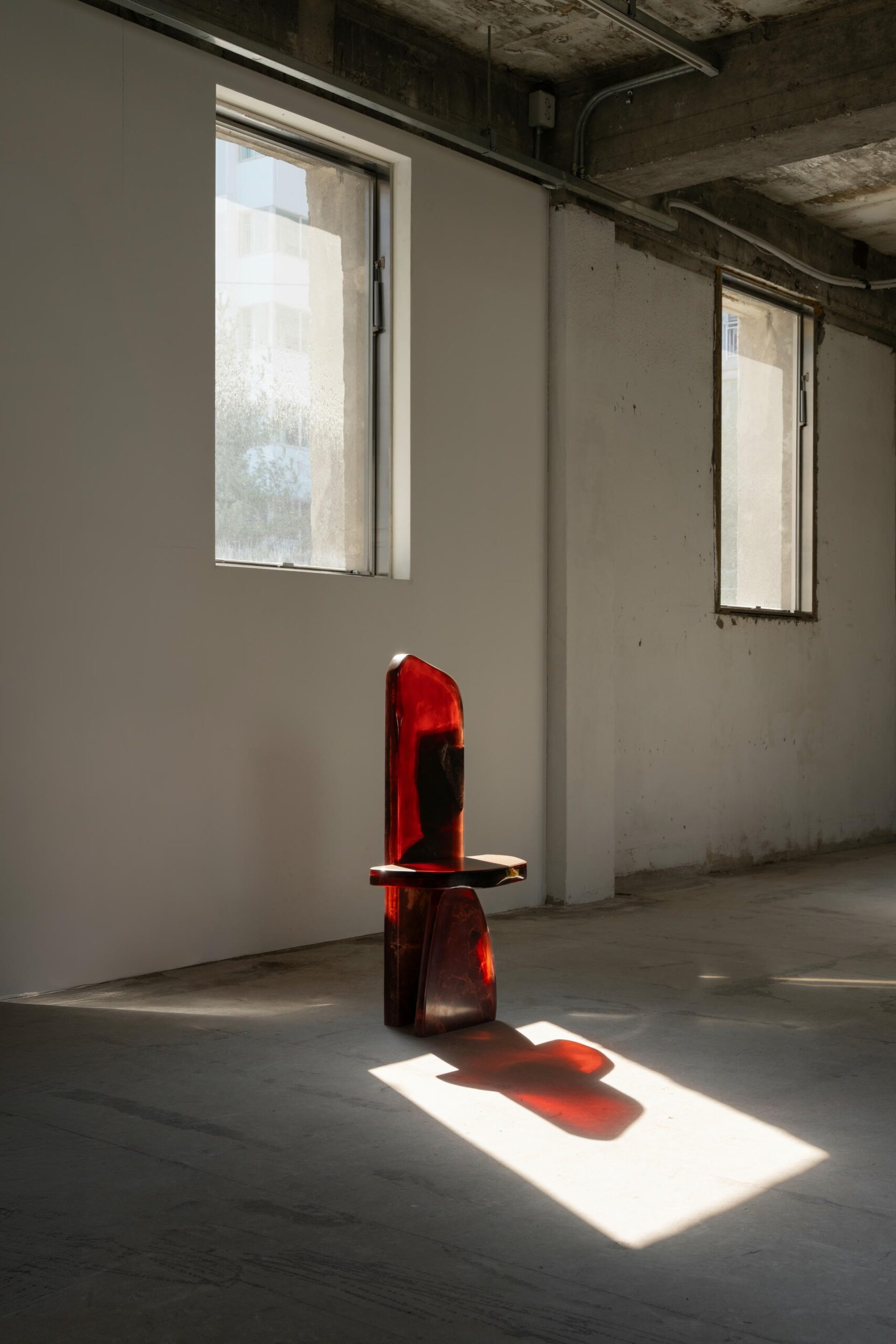
I draw inspiration from a wide range of contemporary designers, including Rick Owens, Faye Toogood, Max Lamb, Dimore Studio, Marcin Rusak, and Natural Material Studio.
The works of Isamu Noguchi, Lee Ufan, Ha Chong-hyun, Richard Serra, and Roni Horn have had a lasting influence on my sculptural sensibility and approach.
Material-driven sculptural work rooted in emotional minimalism.
My work always begins with exploring the “in-between”—the point where contrasting qualities meet and quietly form a sense of balance. When nature and the artificial, matter and light, solidity and fluidity coexist within a single form, I feel the work’s identity truly emerges.
This interview has been a meaningful opportunity to reflect on my practice. I hope it contributes to an ongoing conversation about the expanding possibilities of contemporary design and helps create deeper connections within this field.
“Craft holds the potential to evolve as a unique and invaluable resource that harmonizes with modern society.”
The Questions
(The Proust Questionnaire is a set of questions answered by the French writer Marcel Proust.
Other historical figures who have answered confession albums are Oscar Wilde,
Karl Marx, Arthur Conan Doyle, Stéphane Mallarmé, Paul Cézanne…)
A quiet fullness.
Stagnation.
Overthinking.
Insensitivity.
Helen Pashgian.
Health.
Focused.
Conformity.
Honesty.
Intuition.
“좋아요.” / “Great.”
Wit.
Impatience.
Finding my own language.
A plant.
Studio.
Not attached to objects.
Meaninglessness.
Studio.
Sensitivity.
Honesty.
Han Kang.
Bella Baxter from Poor Things.
None.
Craftspeople.
River.
Chaos.
Timidity.
Peacefully.
Form is a record of sensation.
“My work explores how tradition and modernity can intersect through materiality, technology, and time.”
SHARE :