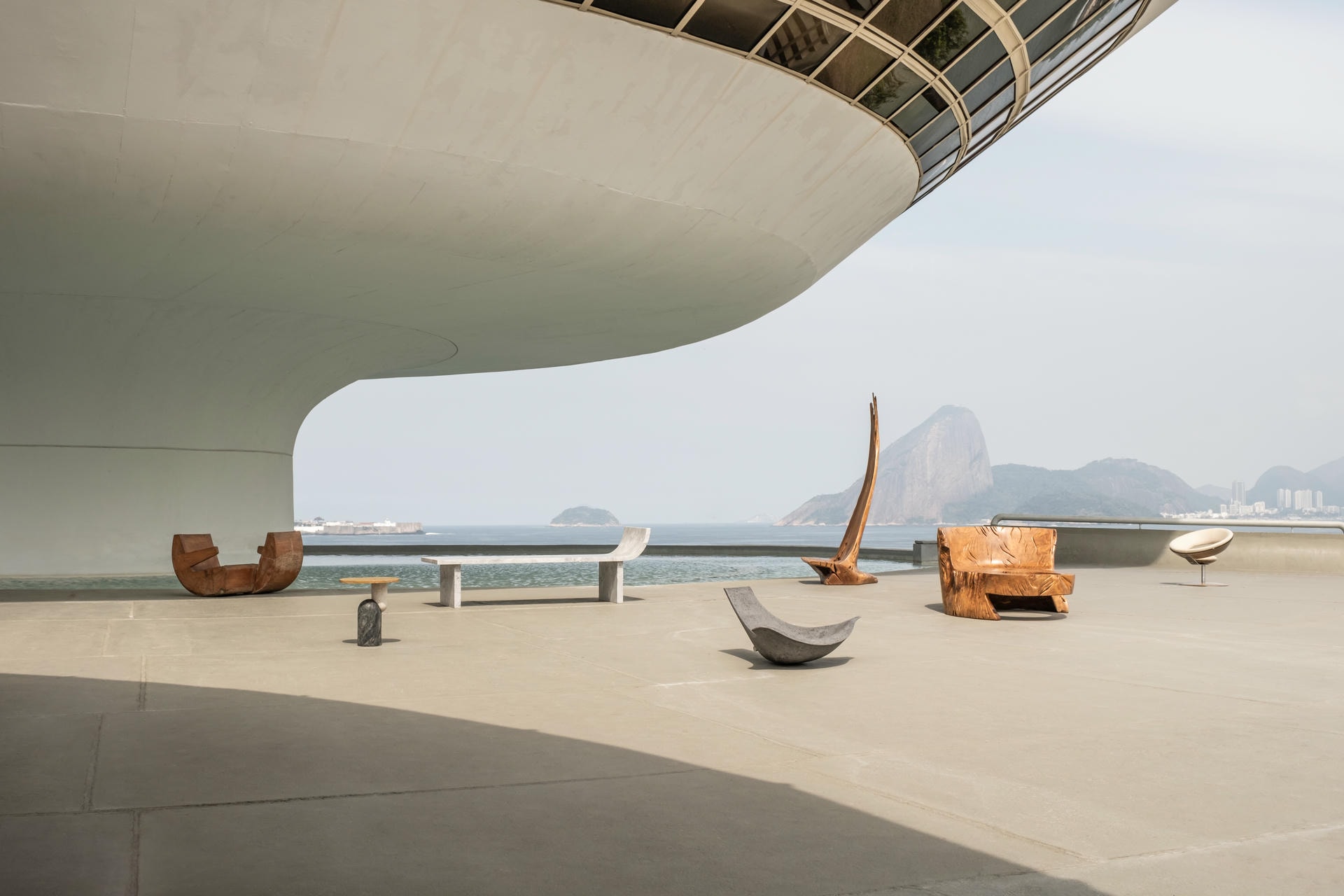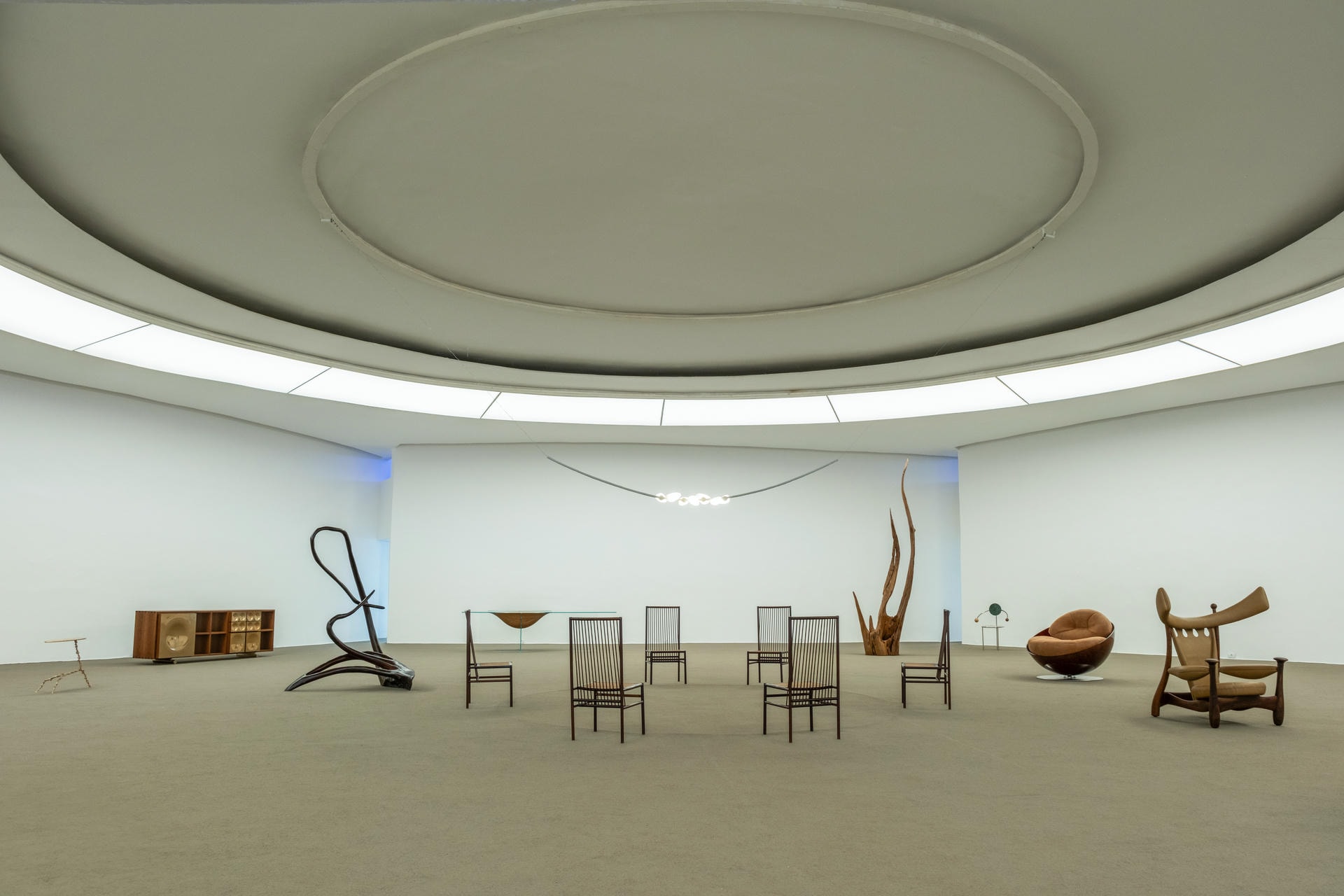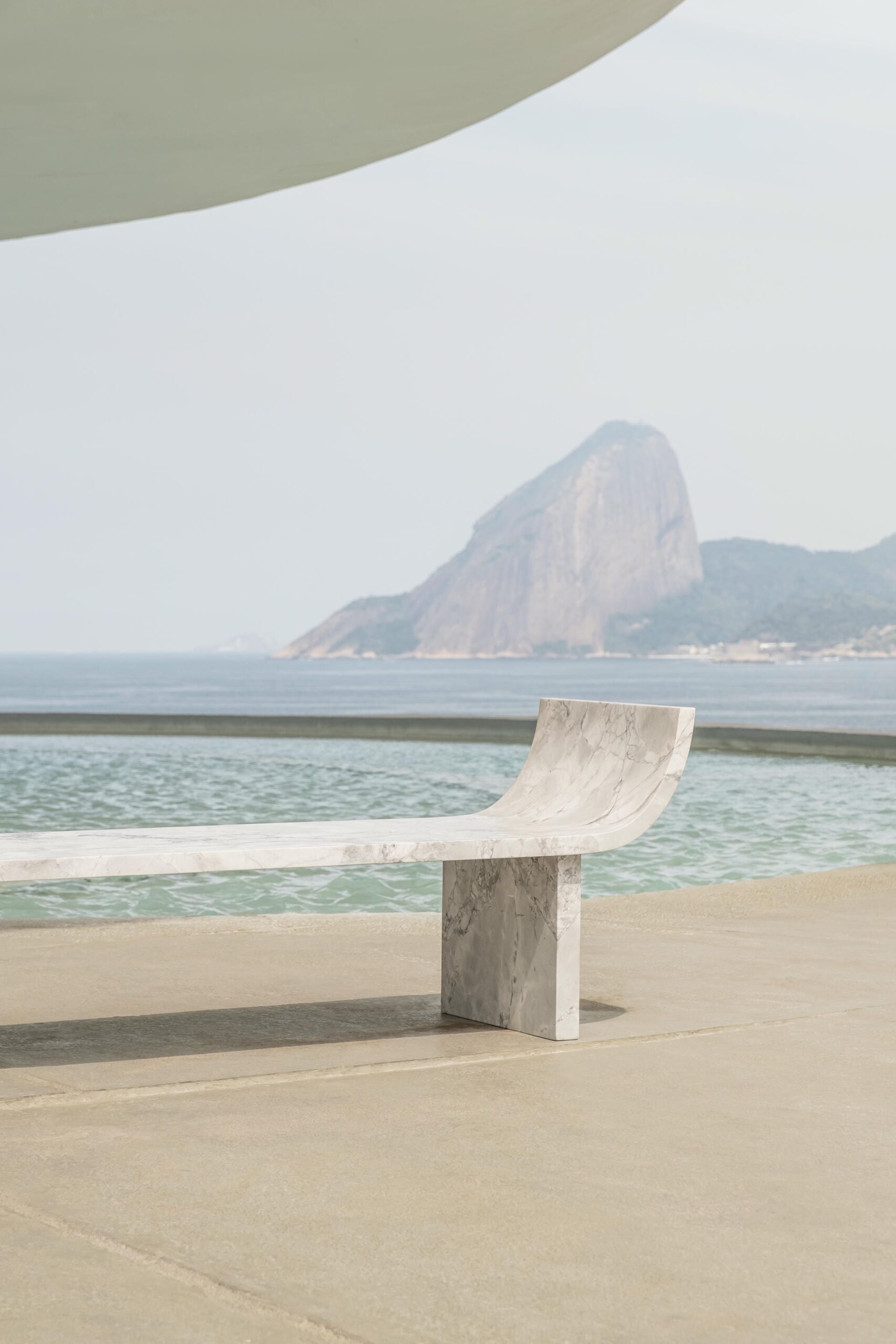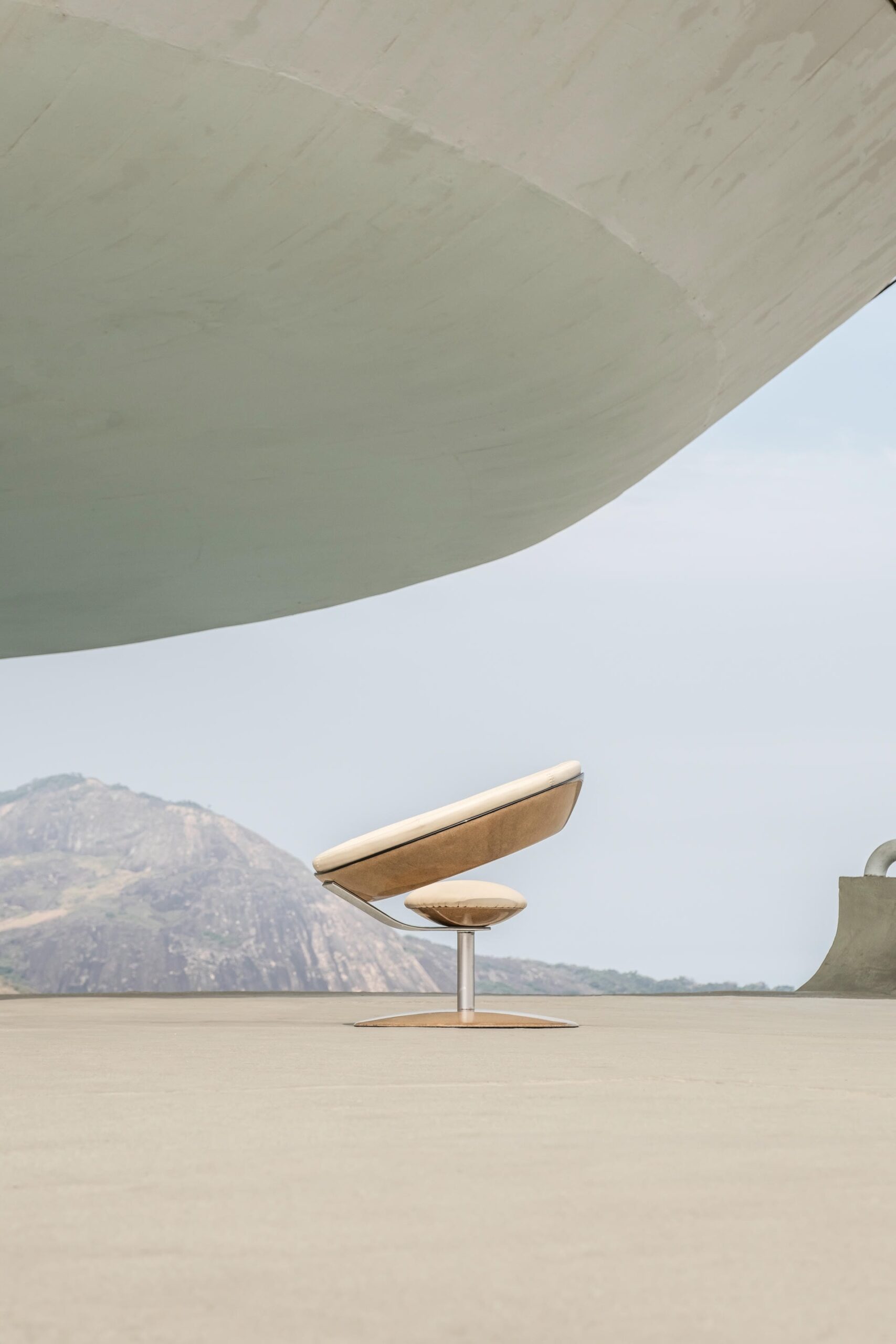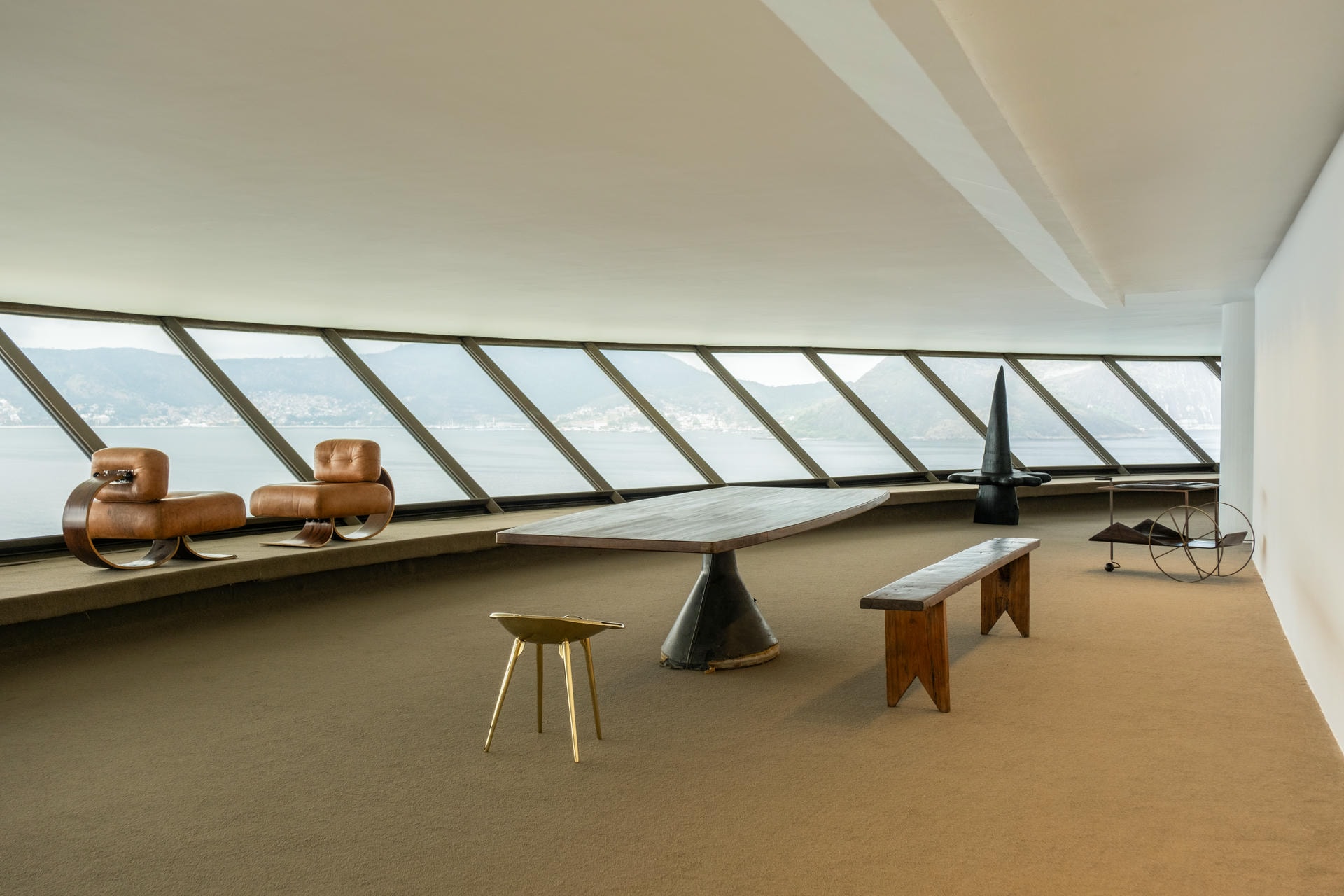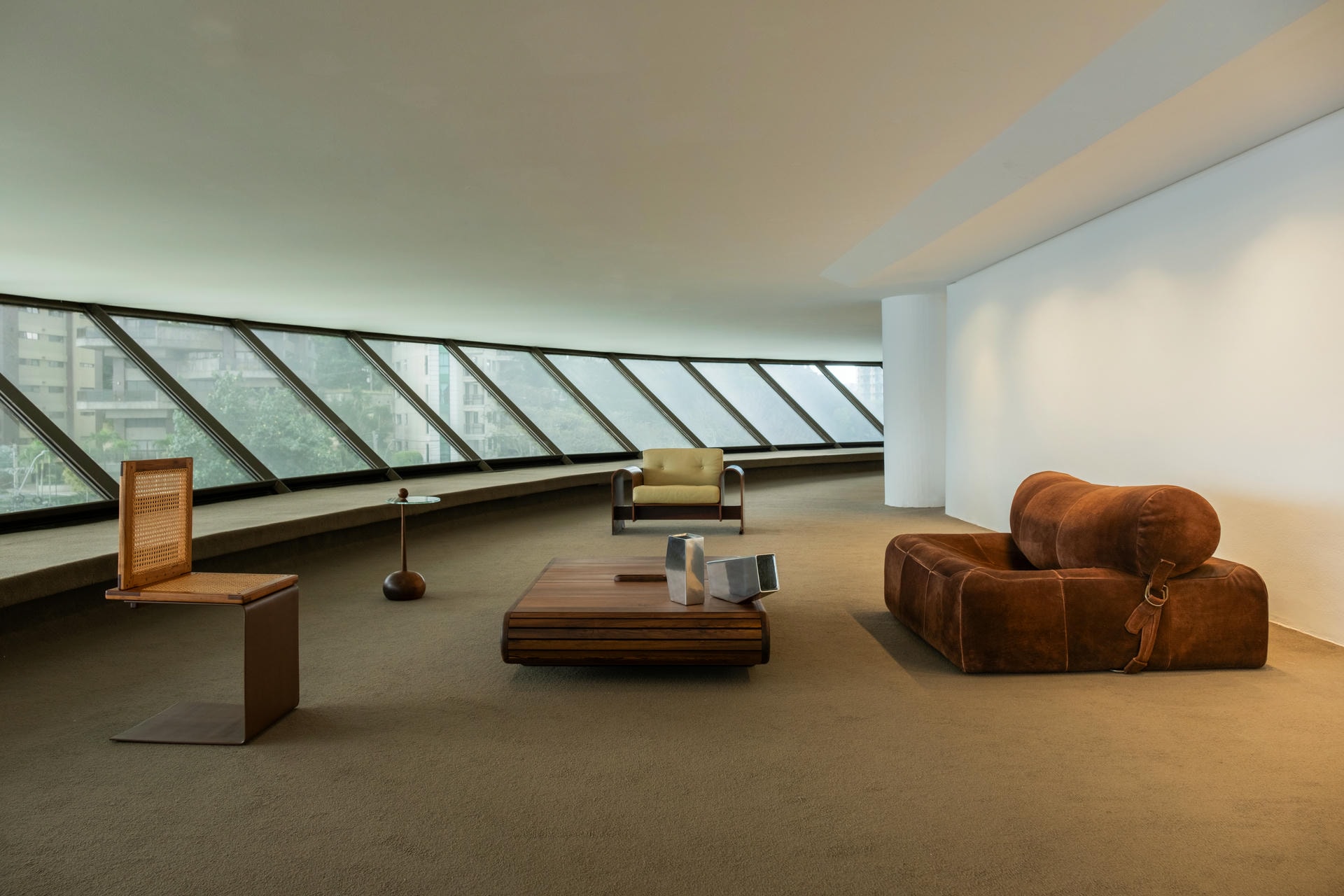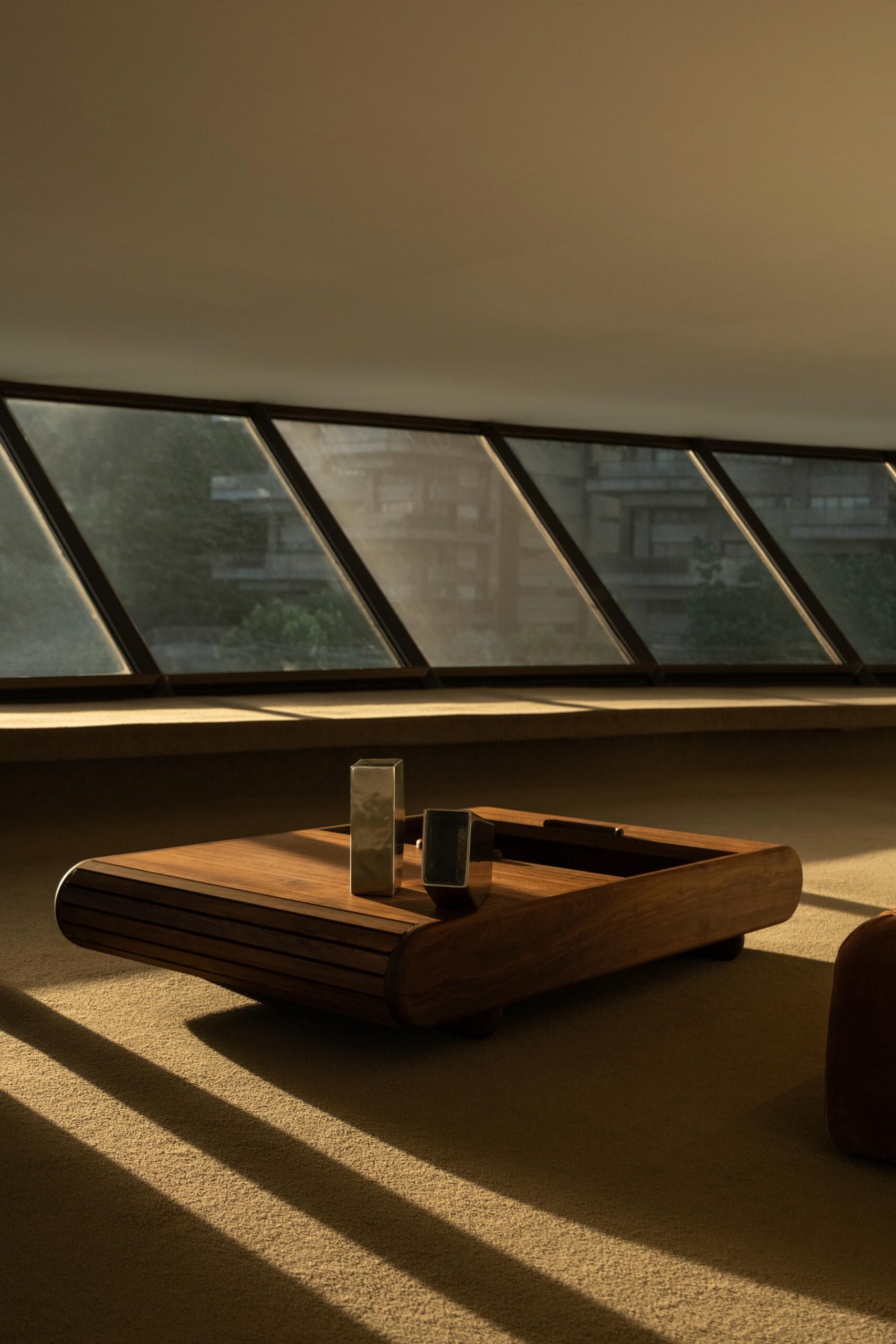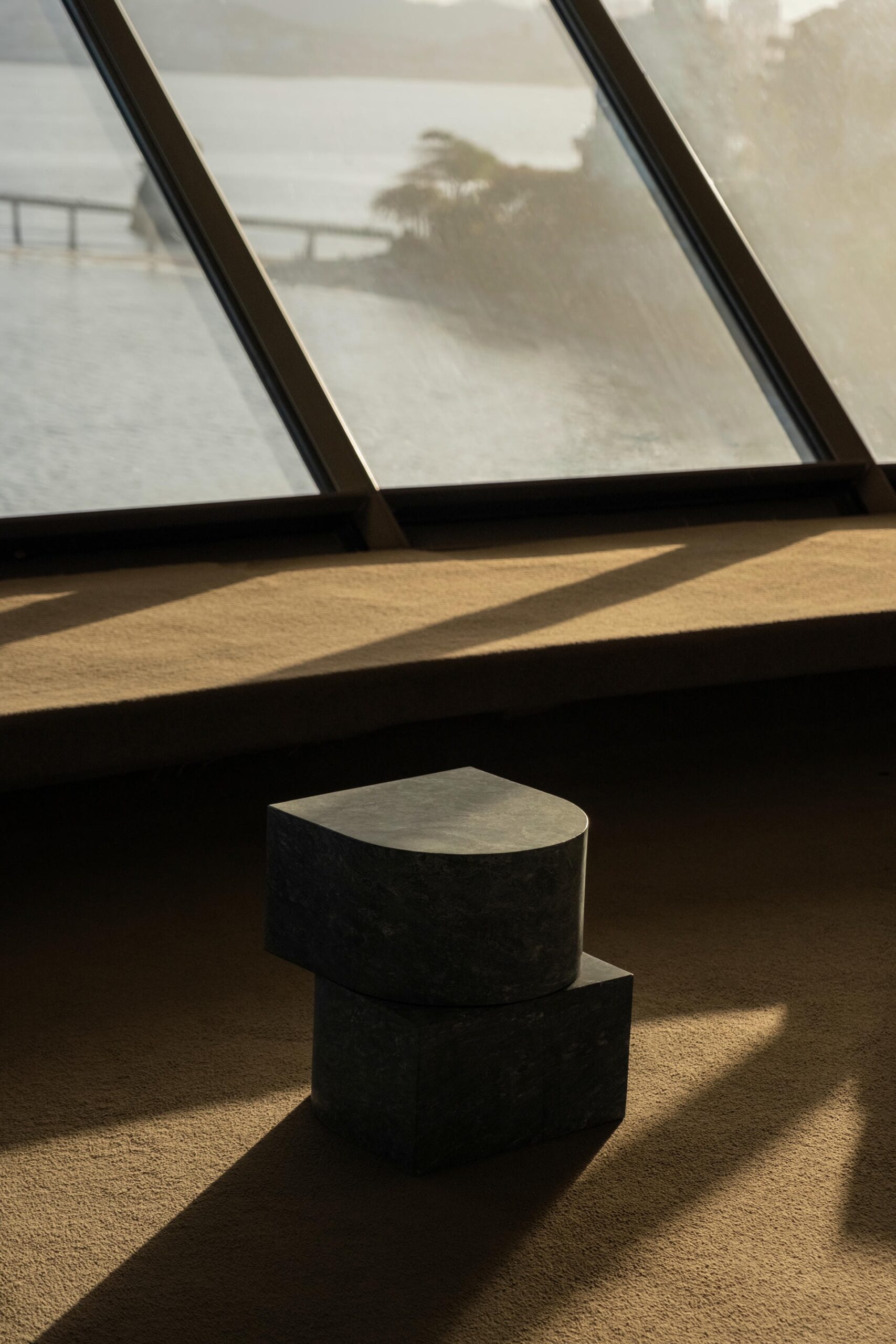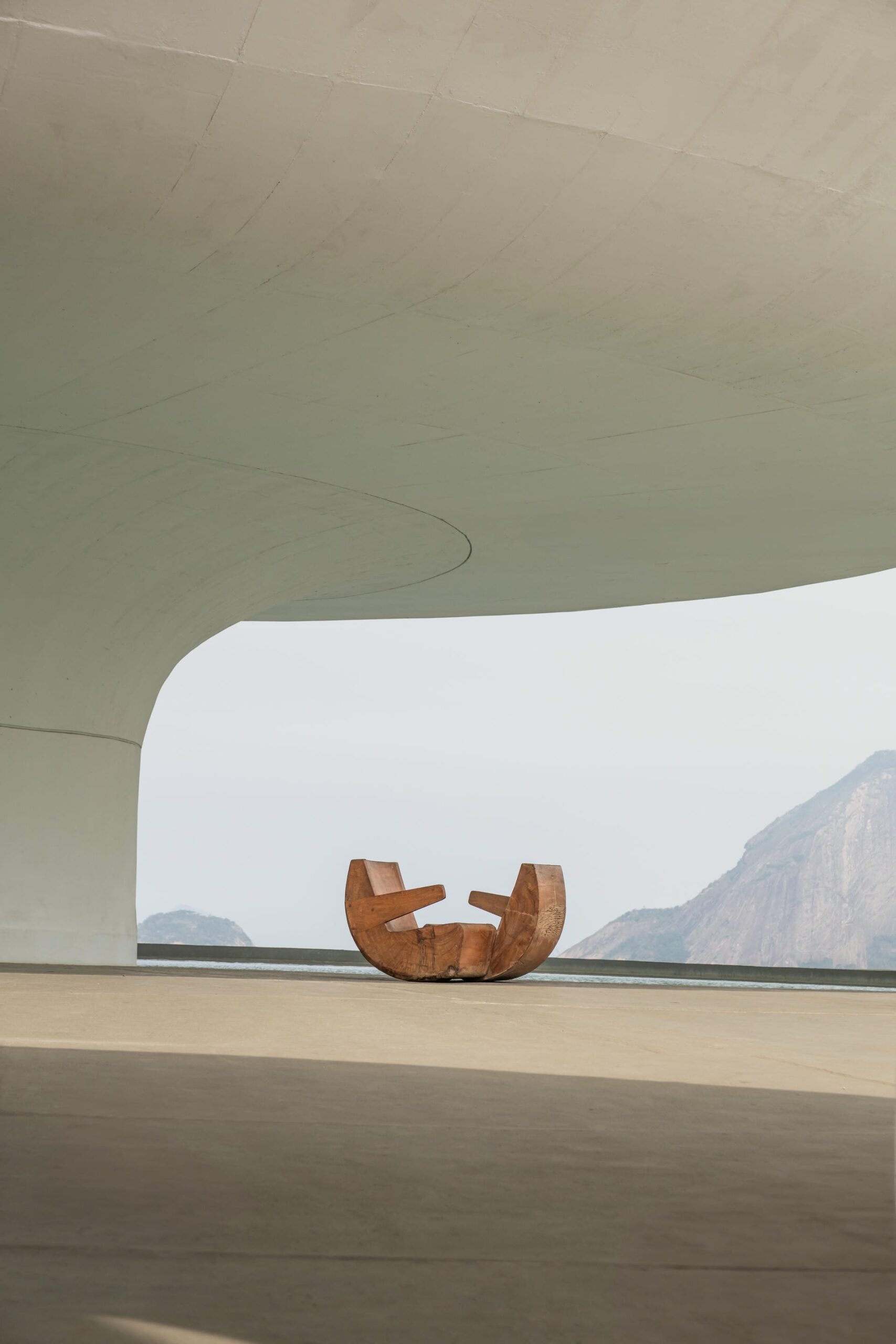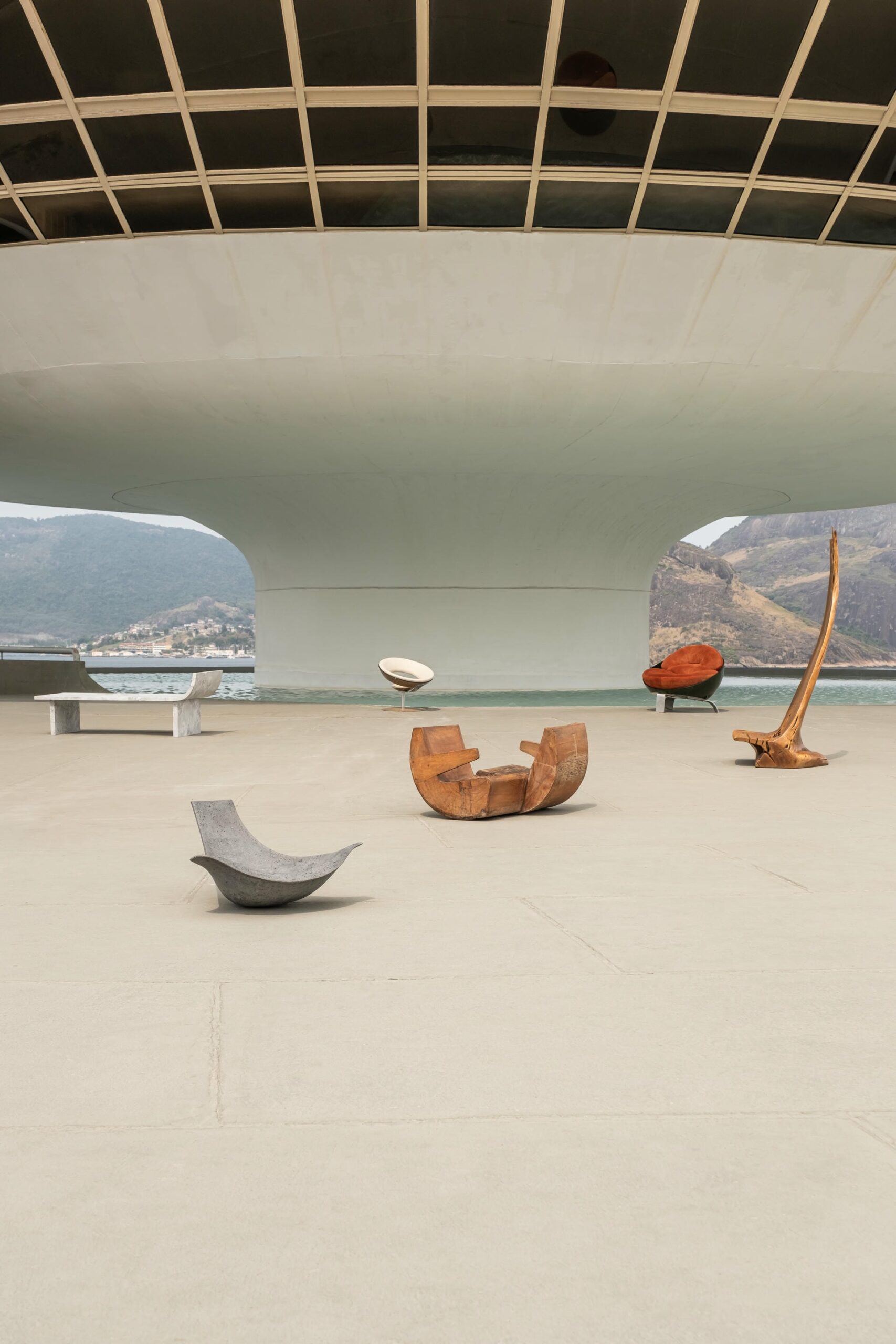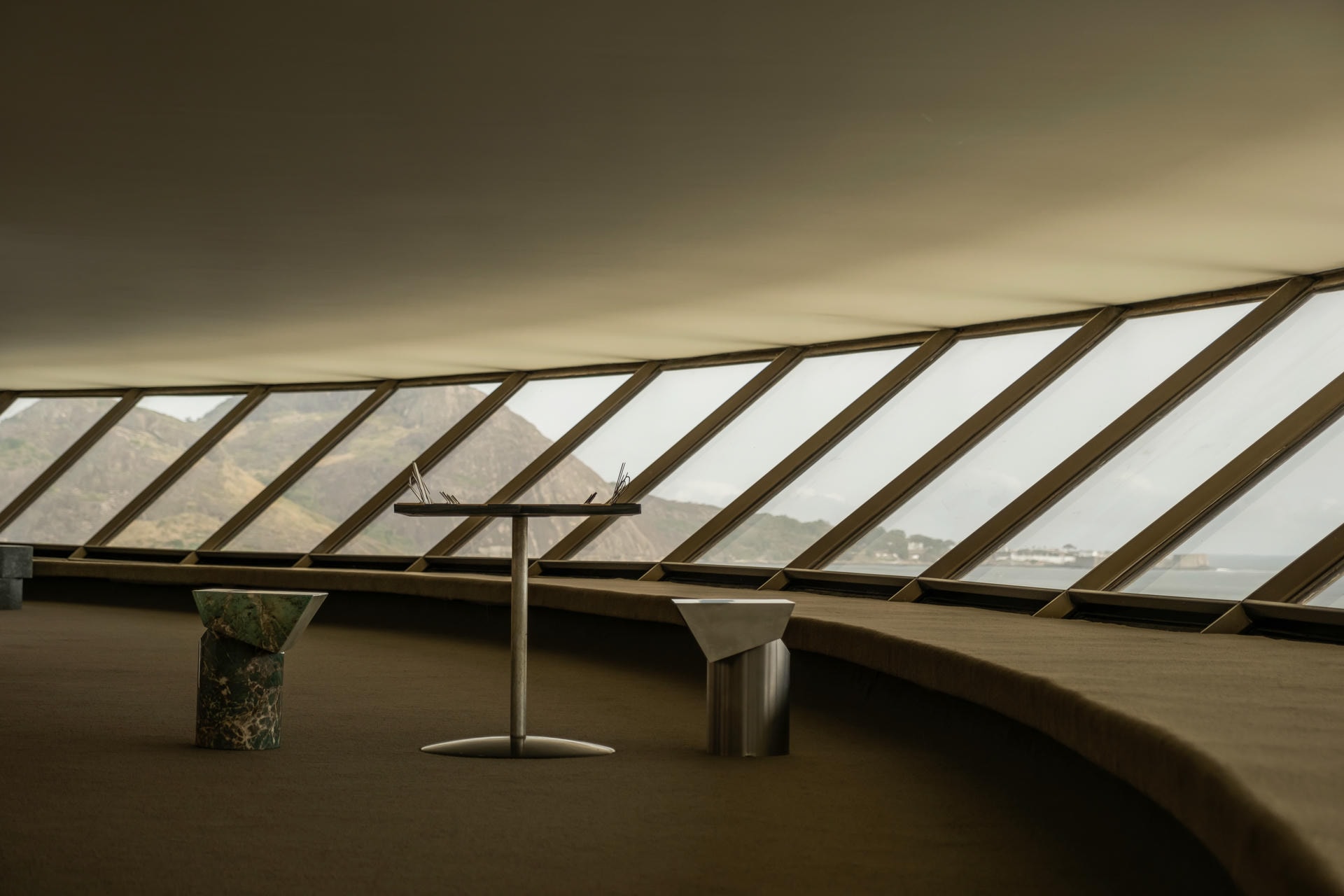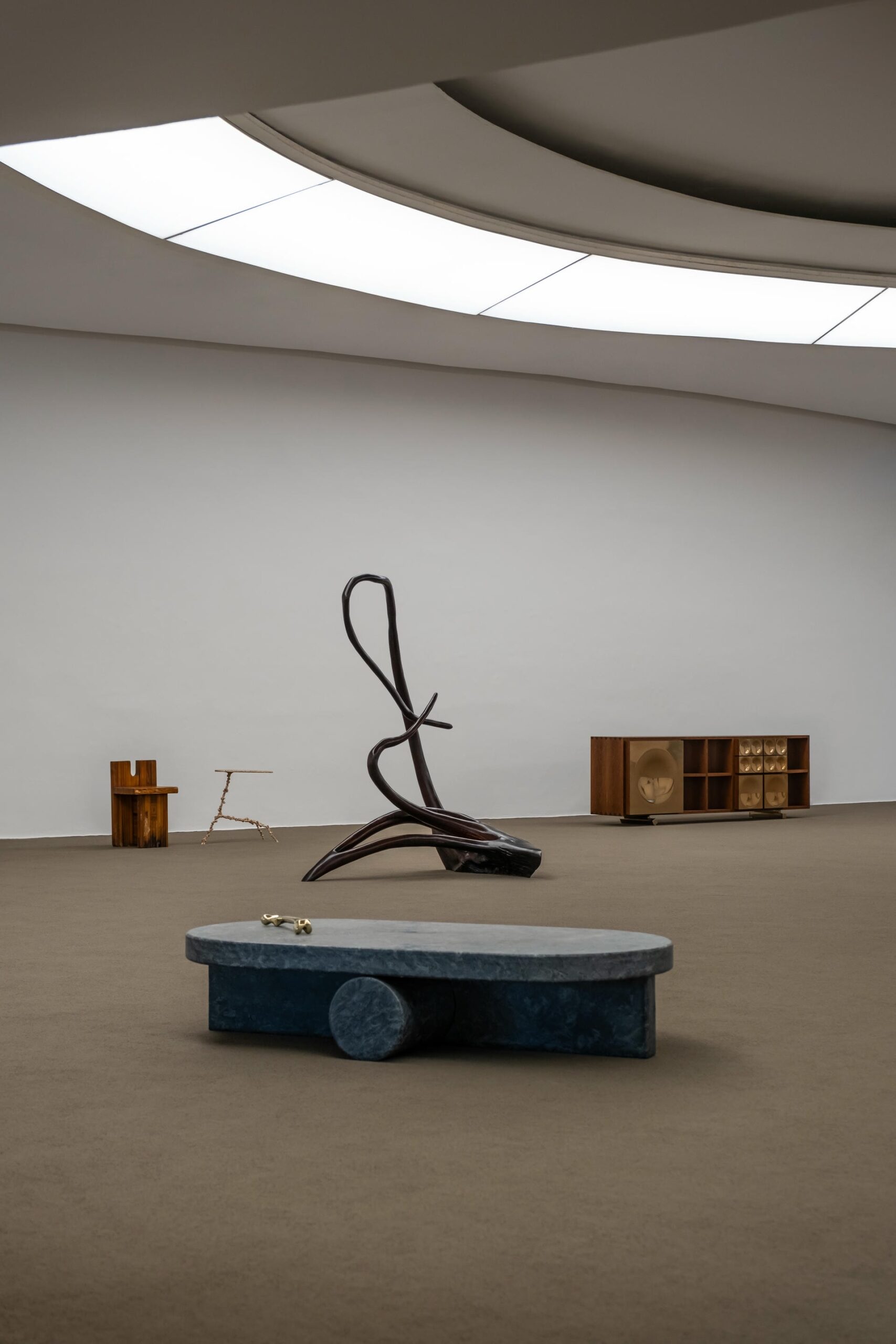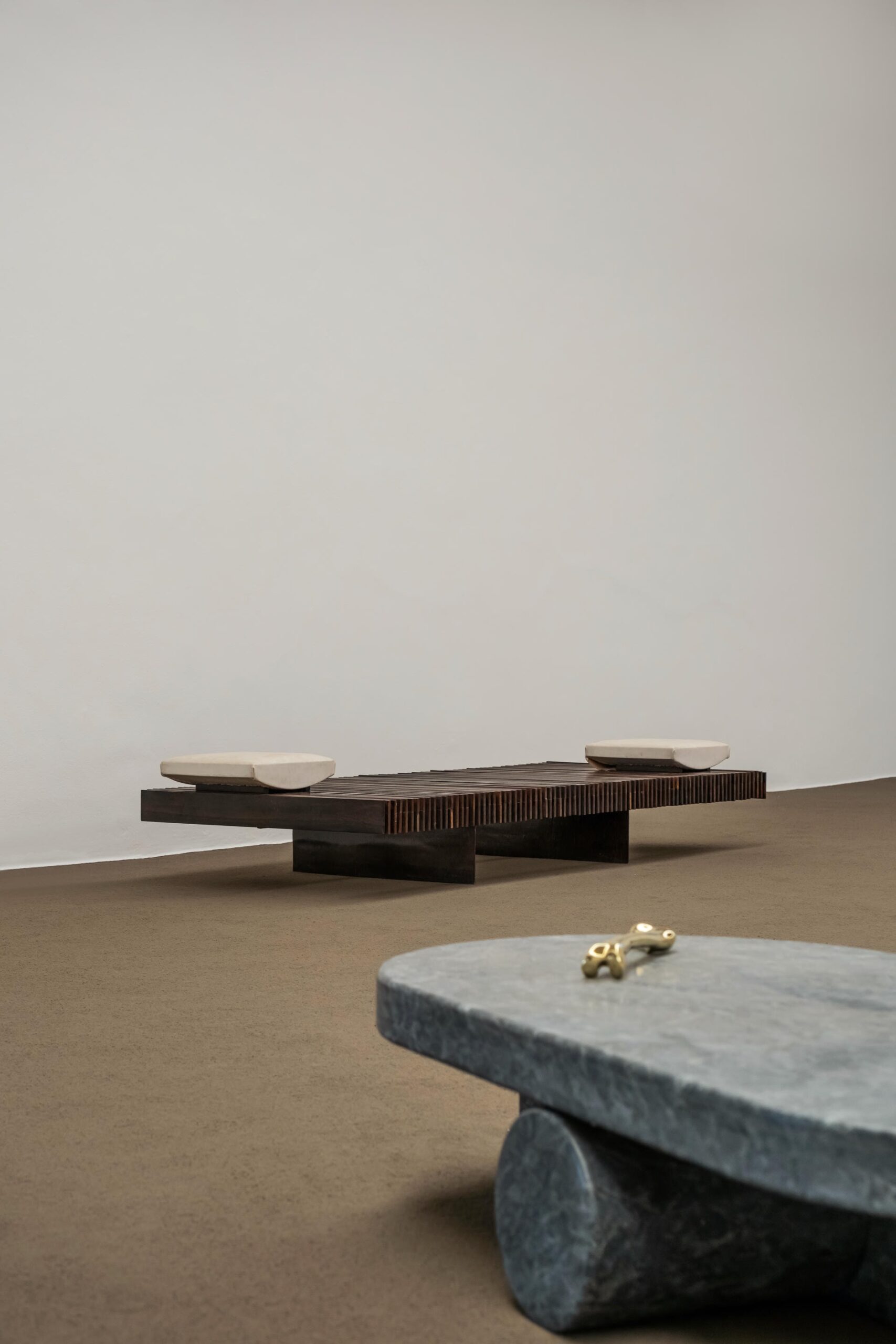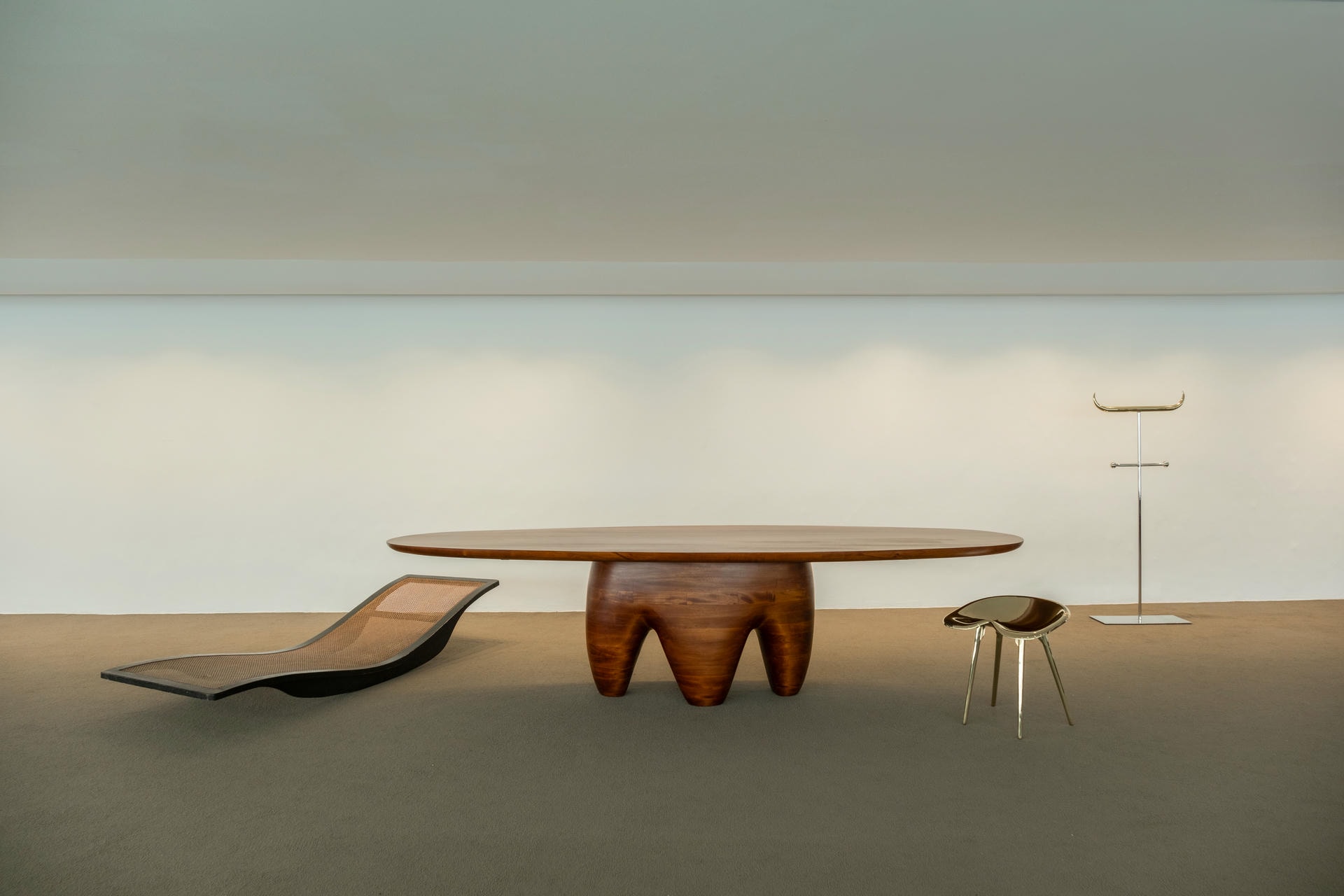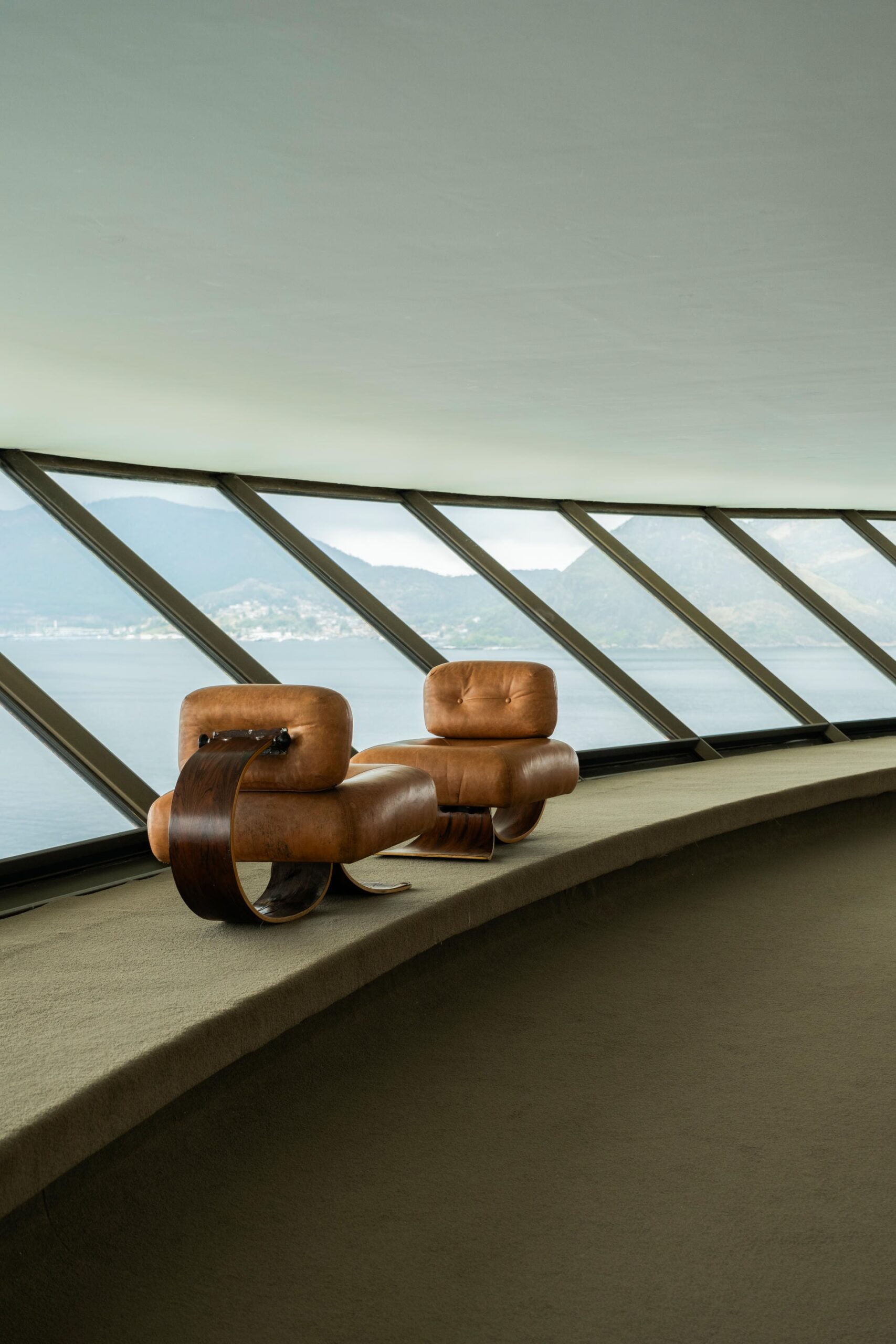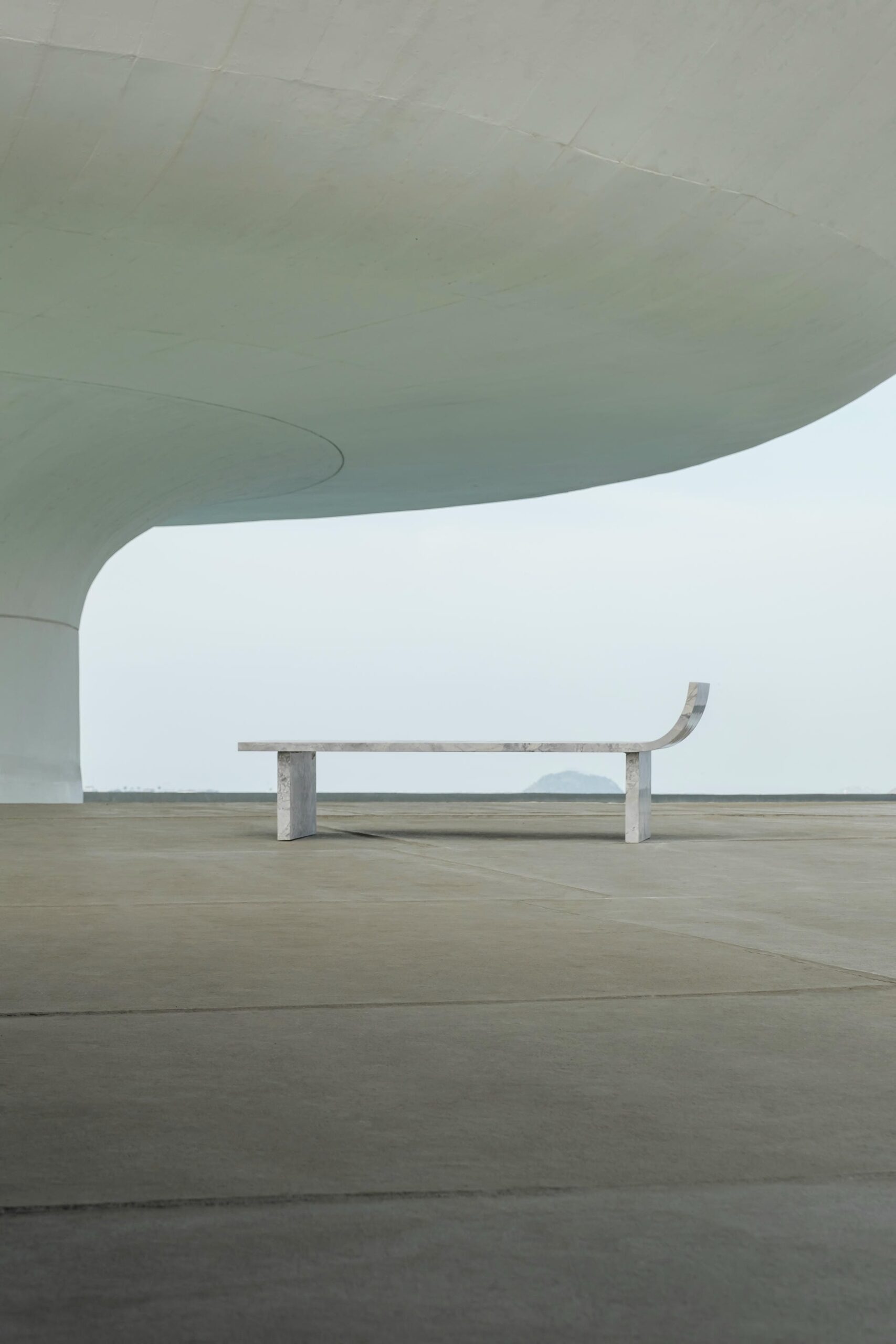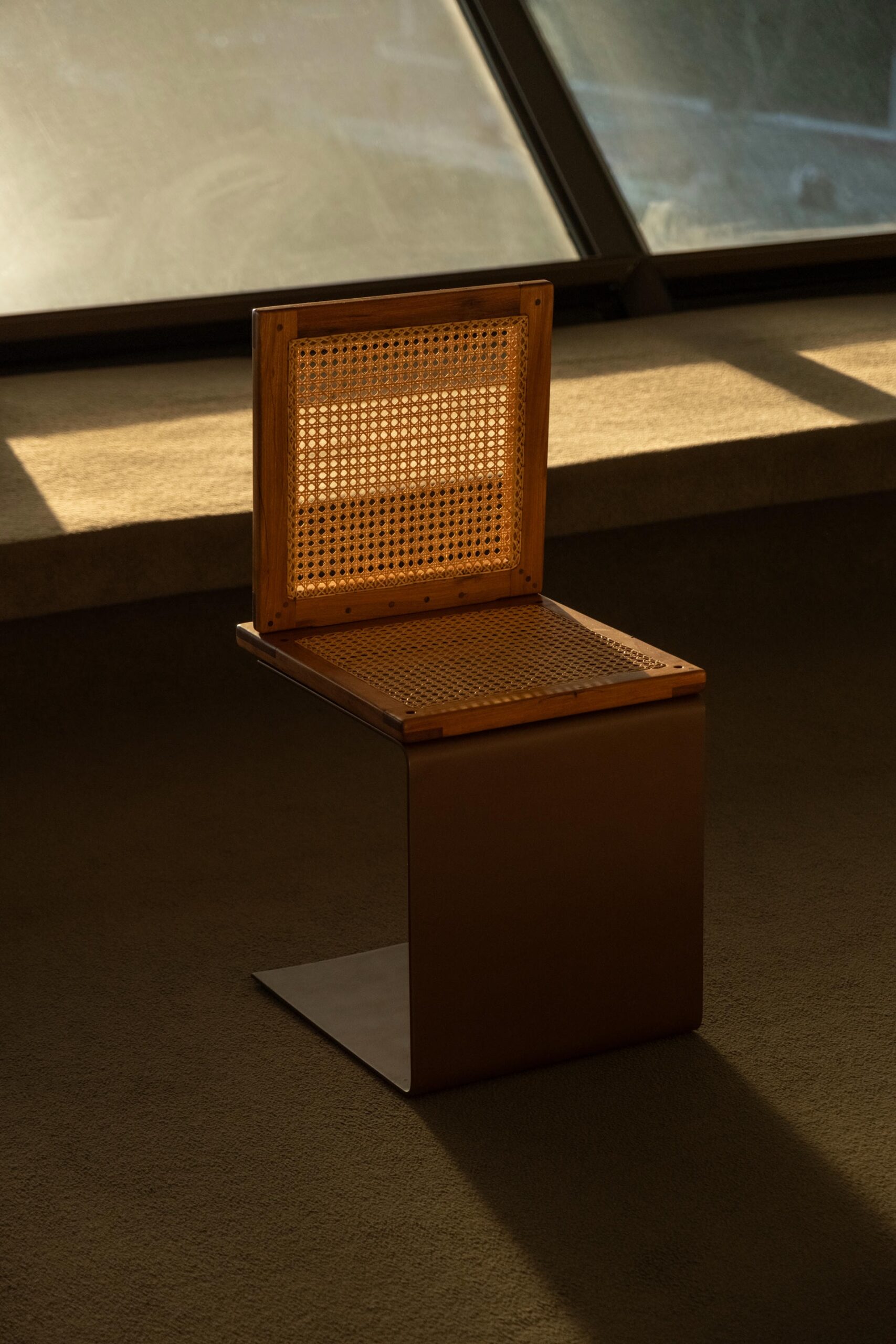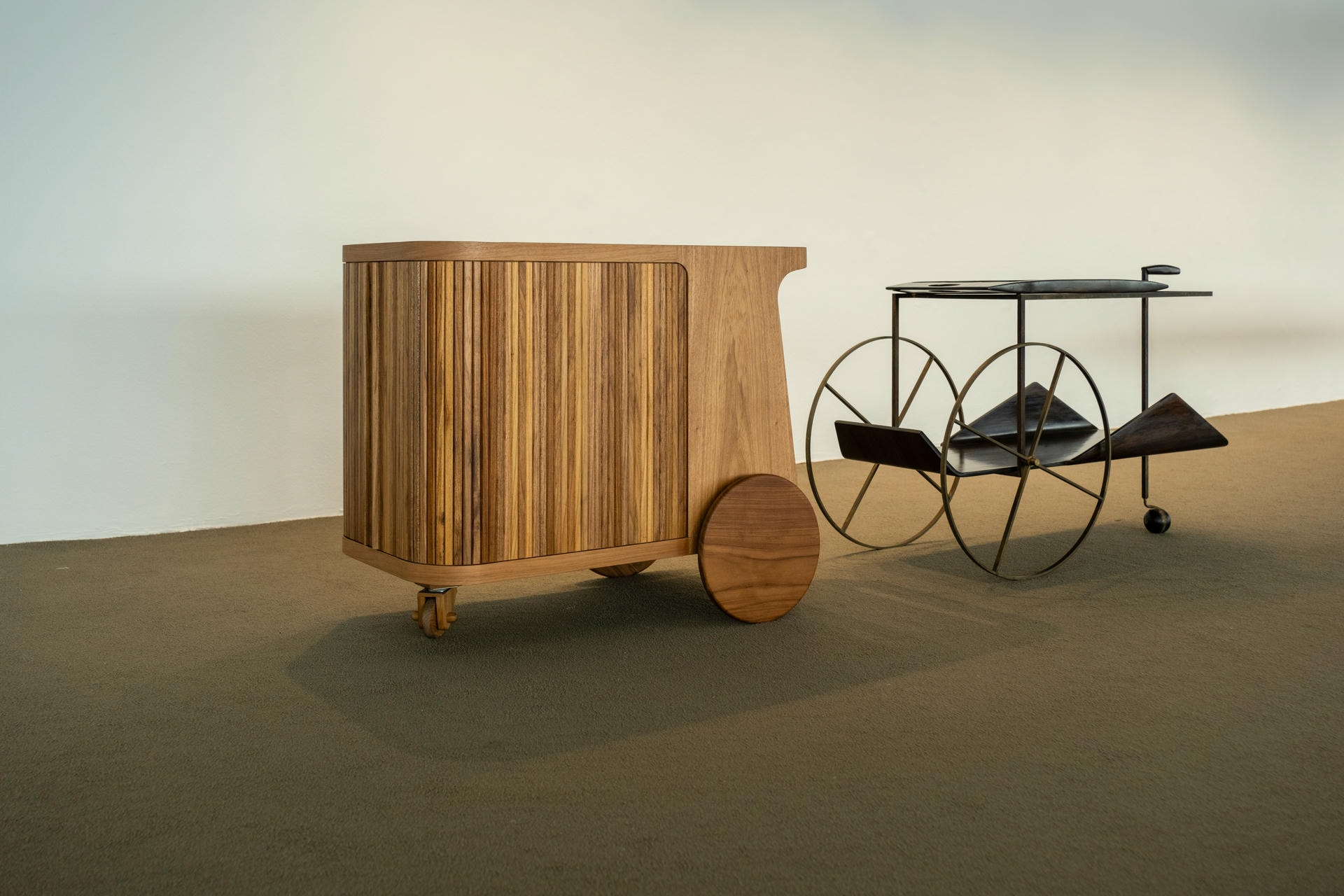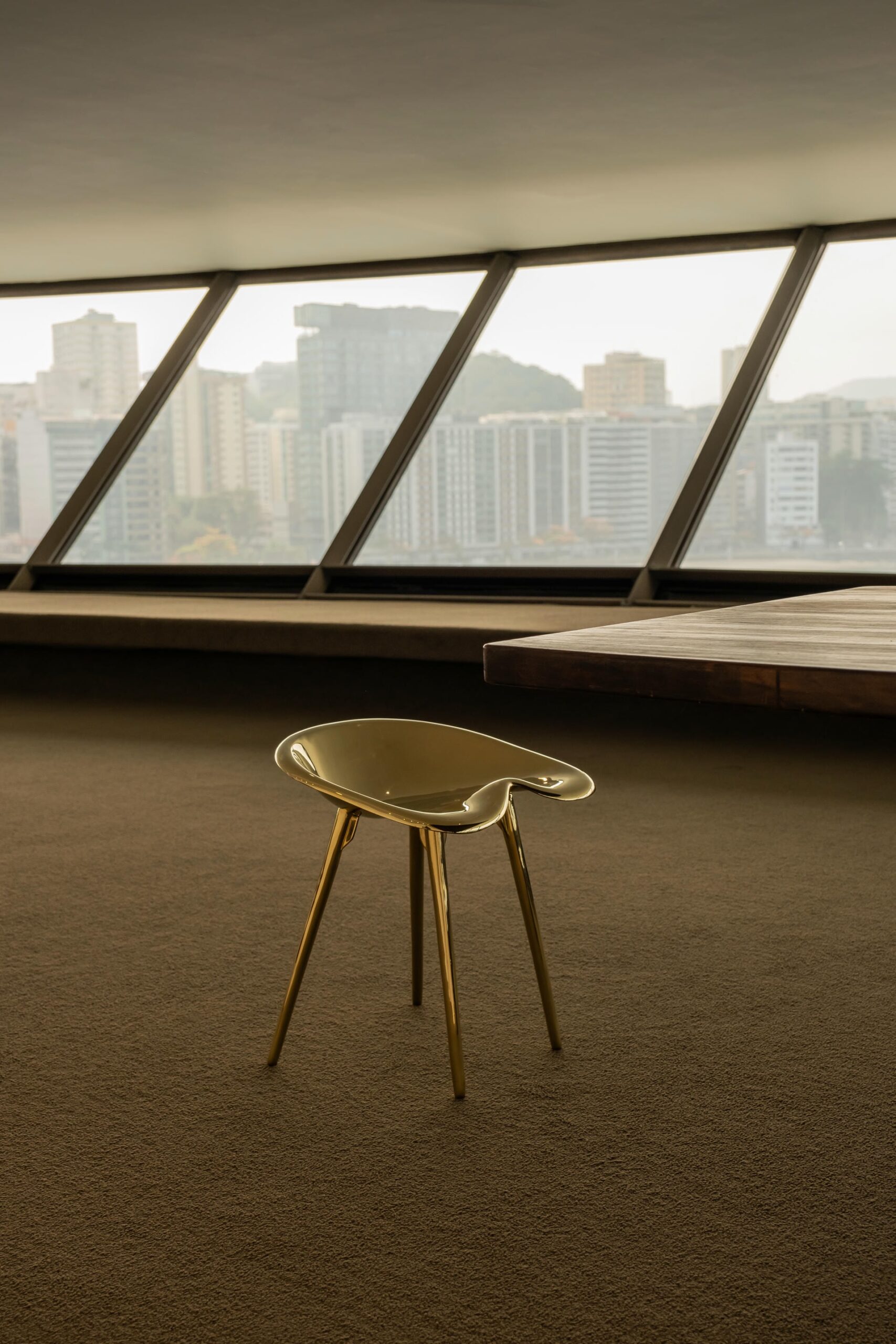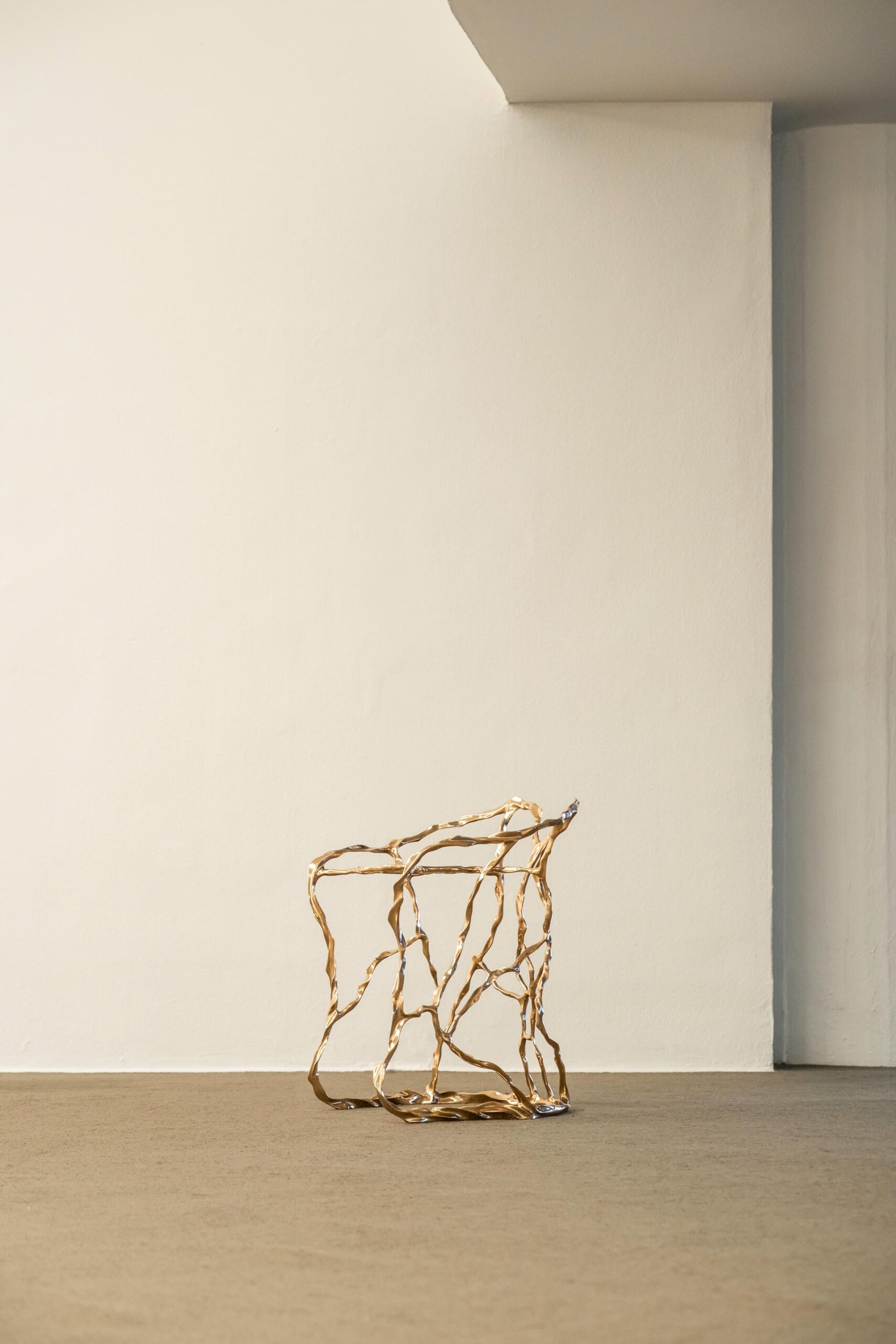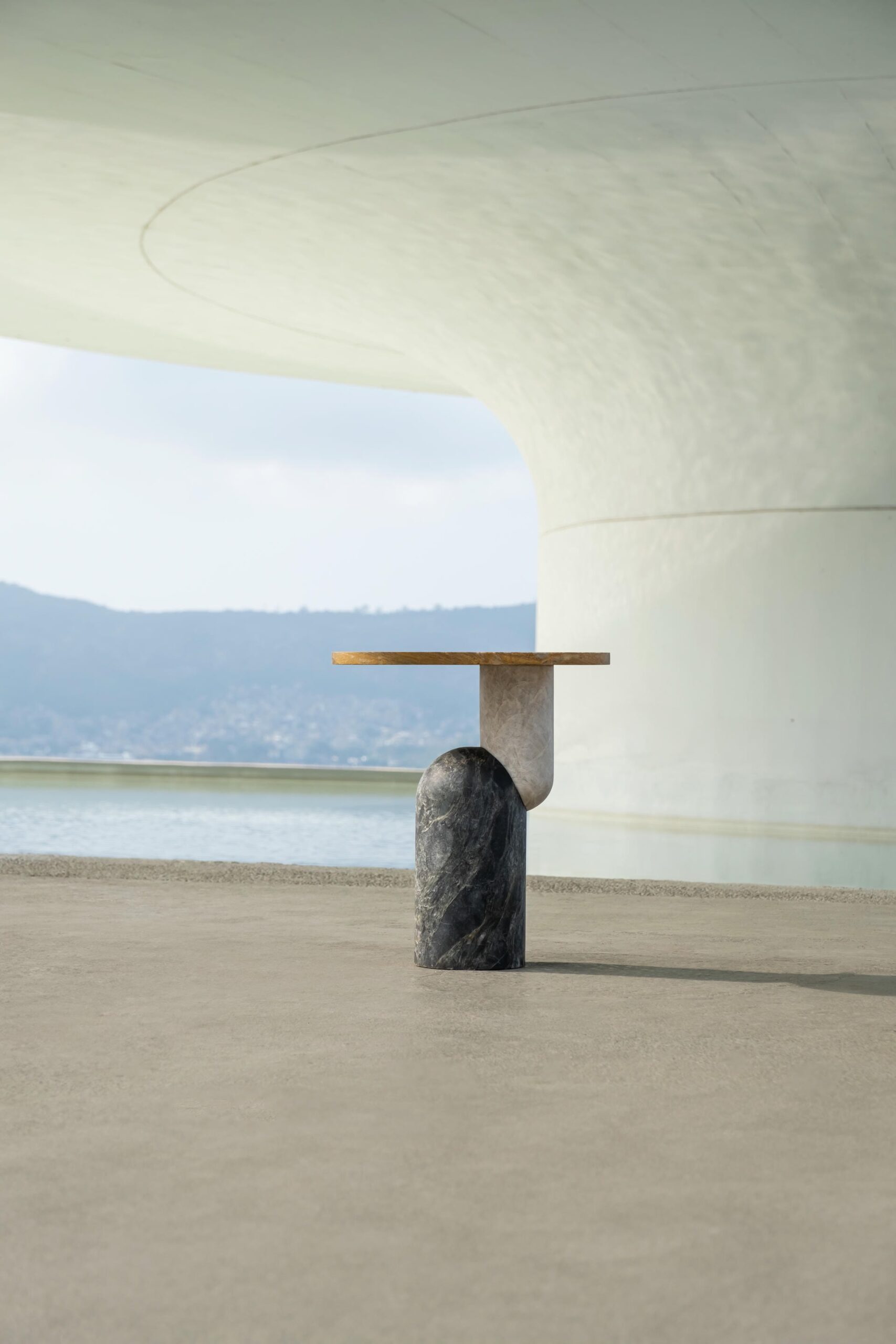
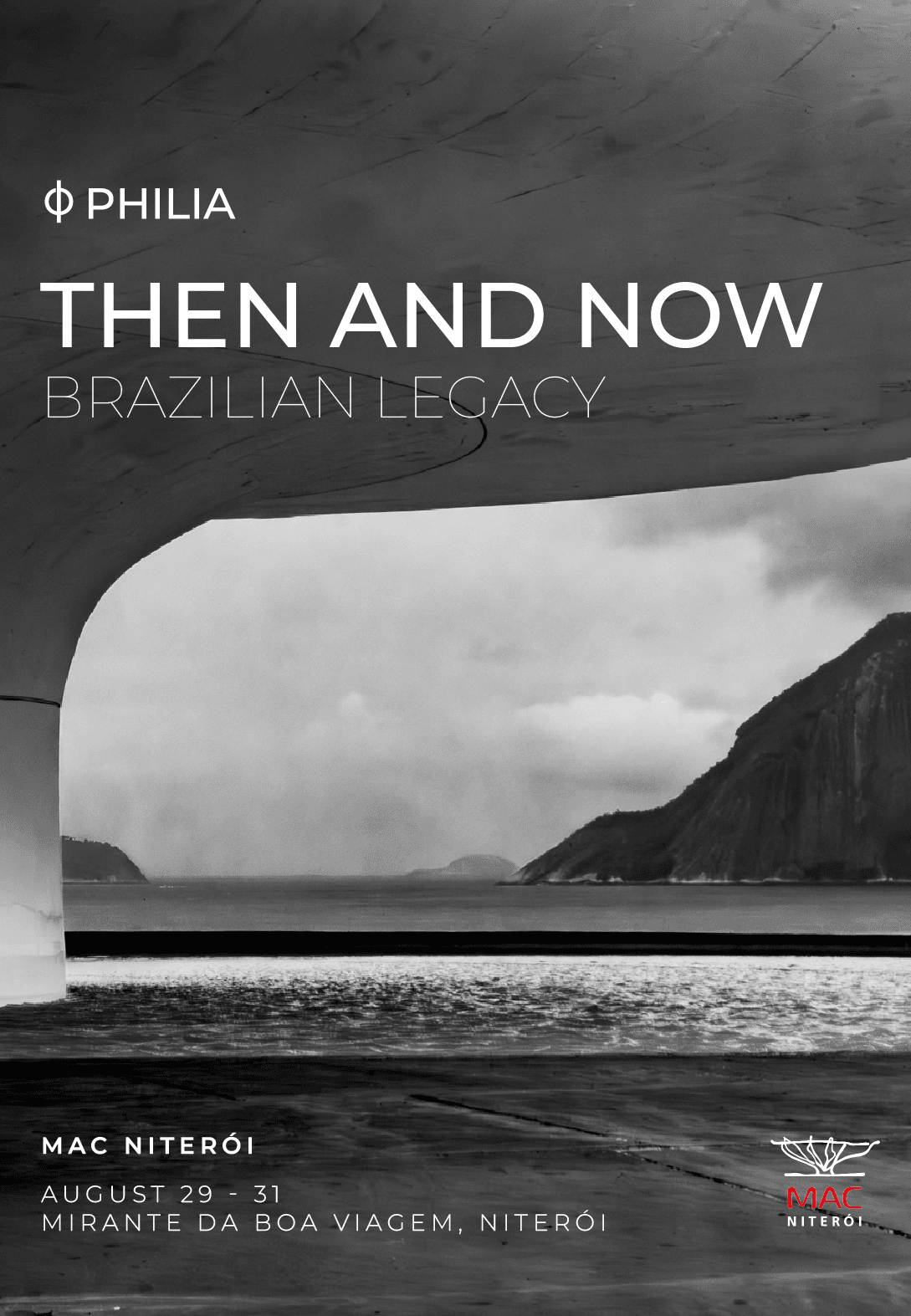
Then and Now – Brazilian Legacy is a landmark design exhibition organized by Galerie Philia, bringing together over sixty iconic works by modern and contemporary Brazilian
Set against the panoramic backdrop of Guanabara Bay, the exhibition creates a dialogue between pioneering mid-century modernists—such as Joaquim Tenreiro, José Zanine Caldas, Ricardo Fasanello, Jorge Zalszupin, Sergio Rodrigues, and Oscar Niemeyer—and a vibrant new generation of contemporary talents.
From sculptural woodwork to experimental glass, the pieces on display explore Brazil’s unique contributions to global design—rooted in craft, material innovation, and cultural hybridity. The show marks the largest of its kind ever held in Brazil, offering an unprecedented perspective on the continuity, transformation, and reinvention of the Brazilian design legacy.
A View Across the Bay
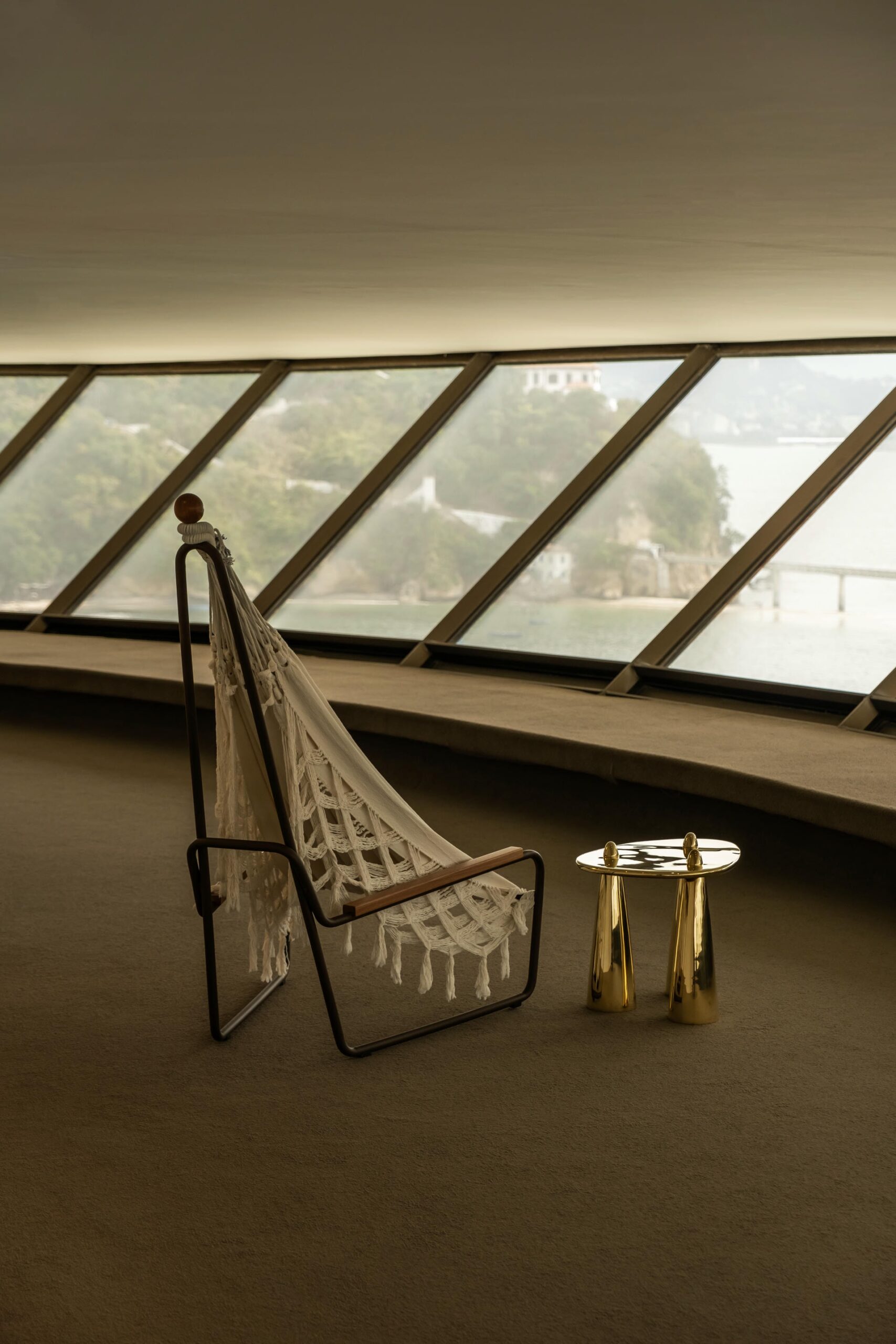
From the curve of Oscar Niemeyer’s Niterói Contemporary Art Museum, the city and the sea meet in an unbroken horizon. The building itself is a statement — a modernist dream in concrete, lifted from the ground like a flower on a stem, open to the air and light.
Curated by Ygaël Attali, co-founder of PHILIA, the exhibition reflects a decade-long commitment to bridging eras, geographies, and disciplines in sculptural design. Known for staging dialogues between established masters and emerging voices across continents in original architectural contexts, PHILIA brings to MAC Niterói the curatorial approach that has made it an international platform for cross-cultural narratives.
It is a fitting stage for Then and Now – Brazilian Legacy, where more than sixty works speak across decades, across materials, across visions. Here, modernism is not a distant chapter; it is a living presence. But it is no longer the sole language of Brazilian design. Today, the forms of the past are reinterpreted, challenged, or left behind, as contemporary designers work in a world of ecological urgency, cultural multiplicity, and digital fluidity. The result is a dialogue between two generations — one that shares certain values, yet diverges in aim, scope, and meaning.
Modern Language
Brazilian modernism did not emerge in isolation. In the 1930s and 40s, the country was undergoing rapid industrialisation, urbanisation, and political transformation. European modernist ideas arrived largely through immigrant architects and designers — many fleeing war or persecution — and through Brazilian artists returning from study abroad. These ideas took root in a tropical climate, among vernacular crafts and abundant natural resources, producing something at once global and unmistakably local.
Joaquim Tenreiro was central to this invention. His furniture stripped away the weight of colonial styles, replacing them with light, open structures in native woods. For Tenreiro, “lightness” was both visual and functional, suited to Brazil’s climate and way of life.
In architecture, Oscar Niemeyer embodied the national ambition to project a modern identity. His curves blended the rationality of modernism with a sensuality rooted in the landscape. Niemeyer’s work was both monumental and poetic, a fusion of structure and sculpture.
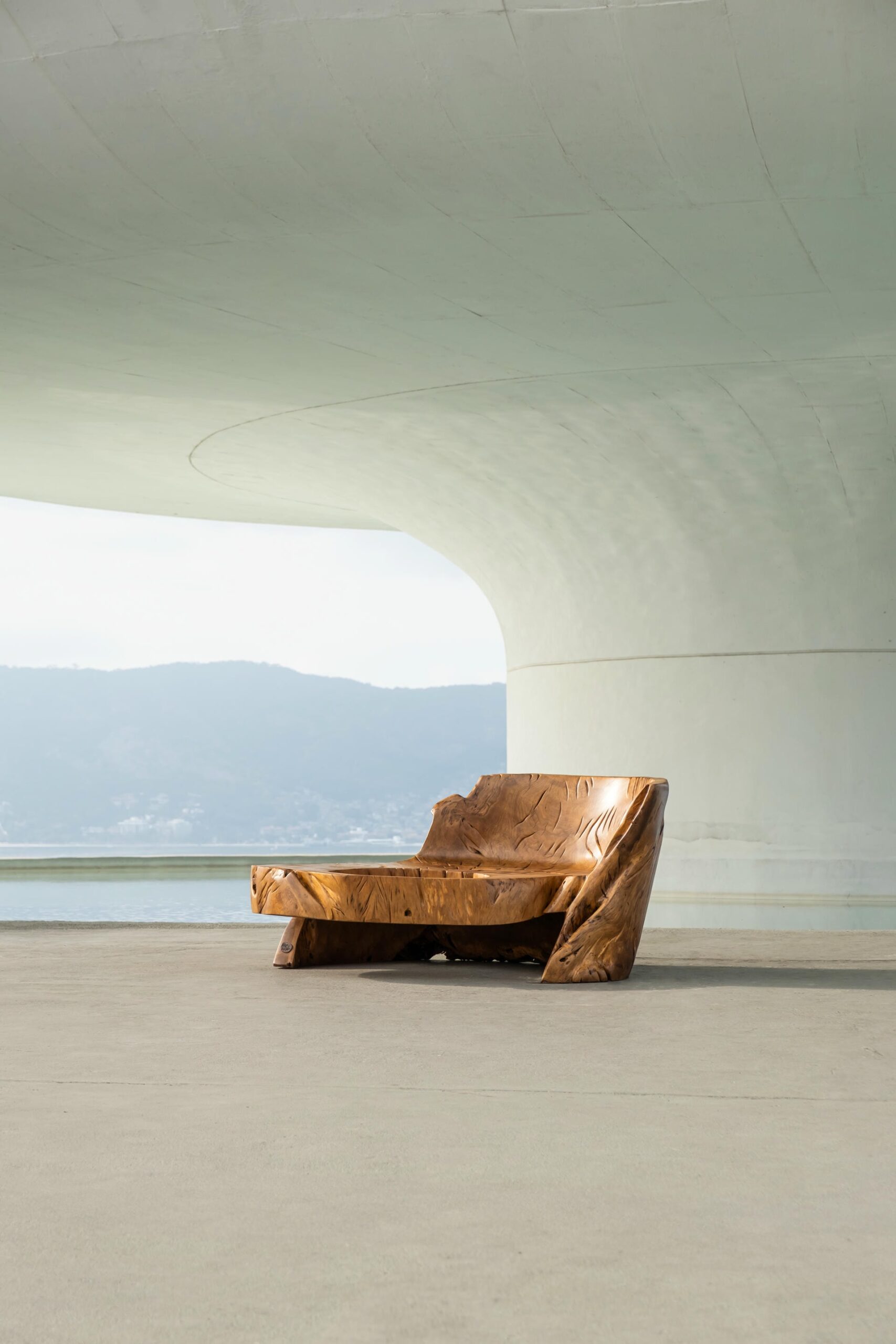
Other figures enriched and diversified this modernist vocabulary. José Zanine Caldas moved between industrial design and handcrafted protest furniture carved from salvaged trunks, calling attention to environmental destruction. Sergio Rodrigues, whose Poltrona Mole became a national icon, infused modernist form with Brazilian informality and sensuality. Jorge Zalszupin, leading L’Atelier, married European refinement to Brazilian materials, innovating in modularity and production. Giuseppe Scapinelli blended modernist principles with lyrical elegance, bending wood into fluid, airy curves.
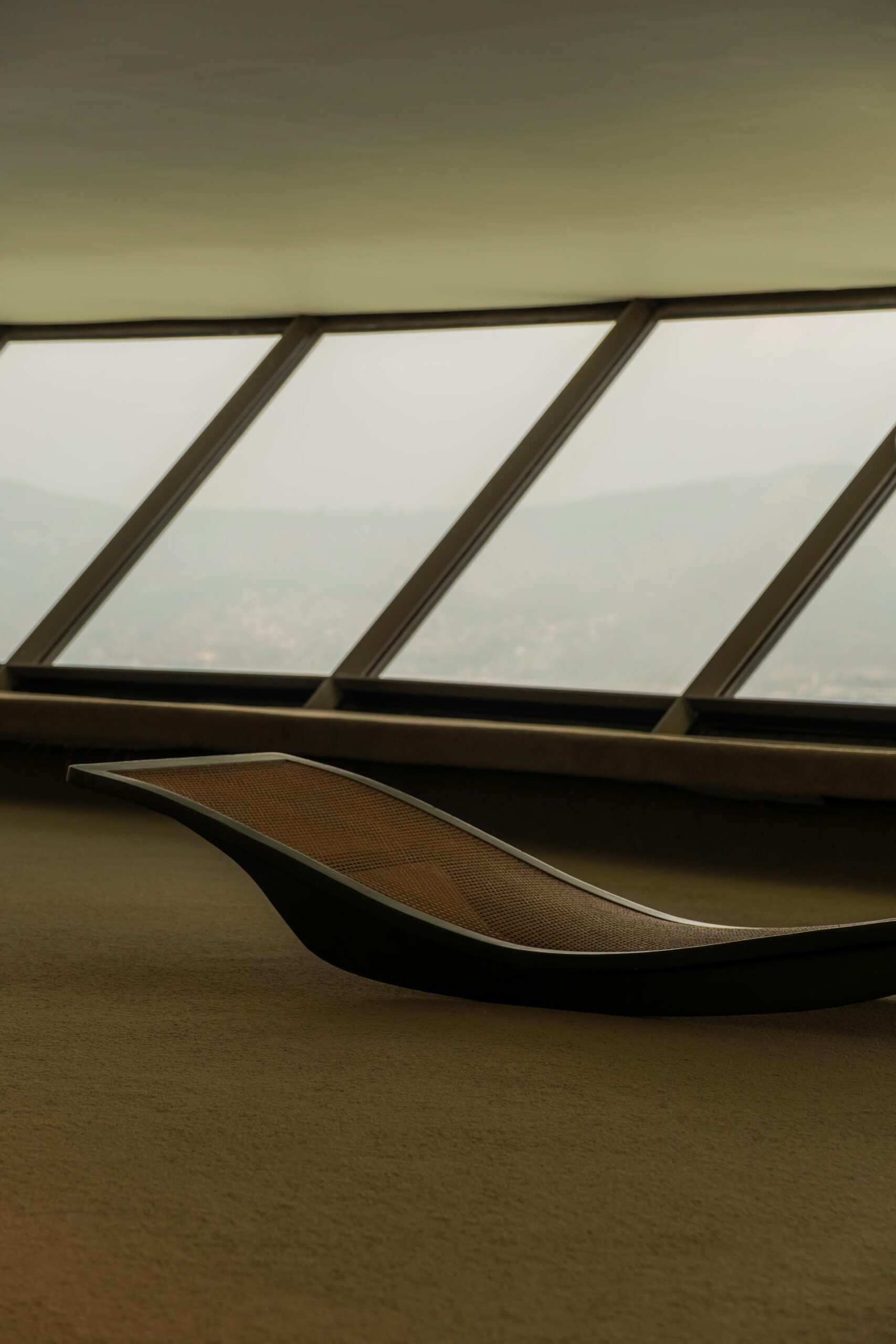
By the 1970s, a younger generation began to shift the tone. Ricardo Fasanello, working in fiberglass and resin, introduced an organic futurism that pointed toward new sensibilities. His sculptural forms, tactile and welcoming, captured a Brazil looking forward while still rooted in craft traditions.
For these modernists, design was more than an aesthetic practice. It was a project of national invention — an assertion that Brazil could stand at the forefront of global design on its own terms. Yet by the close of the Brasília era, political dictatorship, economic instability, and shifting global currents tempered the optimism. The grand narratives of nation-building gave way to more intimate, plural, and sometimes militant approaches.
Contemporary Brazilian Design – Resonances and dissonances
Sustainability and Material Memory
The ecological consciousness that José Zanine Caldas wove into his practice finds renewed life in Hugo França’s monumental sculptures from rejected trunks, now scaled to confront the viewer with the drama of environmental loss. Zanini de Zanine extends his father’s ethos transforming demolition wood and industrial offcuts into finely finished, collectible pieces. Gustavo Dias pursues a sculptural geometry in wood that recalls the structural clarity of modernism, while Tunico Lages, through decades of work with the fallen trees of the Cerrado, embodies a continuity of devotion to material. Alva Design brings an architectural precision to reclaimed resources, proving that restraint — so valued by the modernists — can heighten expressive power.
Narrative and Identity
The narrative sensibility of Oscar Niemeyer, who dissolved boundaries between disciplines and celebrated cultural multiplicity, reverberates in Gabriela Campos’ storytelling objects inspired by history of architecture and art. Carol Gay transforms everyday materials into tactile narratives rooted in São Paulo’s urban fabric, while Suka Braga’s systemic approach to design weaves memory, emotion, and social connection into her pieces. Dimitrih Correa crafts works where form and narrative intertwine, often drawing from Brazilian landscapes and personal heritage to create objects that speak as much to memory as to material. Jay Boggo merges personal mythology with contemporary form, creating works that function as sculptural memoirs — intimate in scale, yet resonant with the timeless search for identity.
Experimentation and Material Innovation
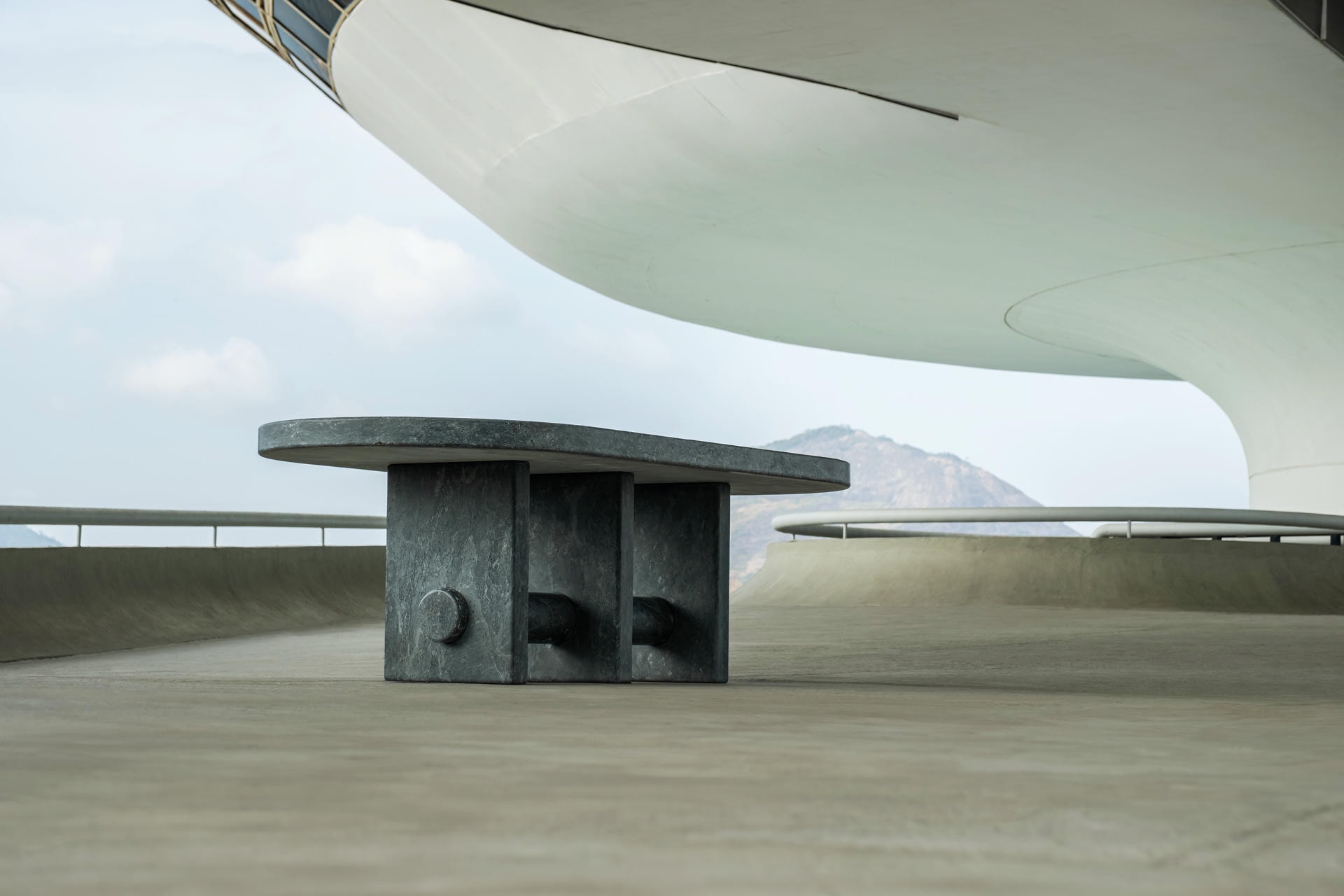
Where Ricardo Fasanello once expanded the material vocabulary of Brazilian design through fiberglass and resin, today Estúdio Orth departs from modernism’s clarity, embracing brutalist masses of original stones imbued with spiritual symbolism. Atelier Dutré tests the limits of form and structure, much as the modernists once did with industrial techniques, while Fakasaka combines industrial innovation with artisanal precision, creating forms that appear engineered yet retain the irregular warmth of the handmade.
Craft Lineages
Fernando Mendes extends Sergio Rodrigues’ woodworking legacy with his own refinements, preserving an unbroken chain of material knowledge. Andre Ferri merges the discipline of modern carpentry with a contemporary sculptural language. Ronald Sasson channels Jorge Zalszupin’s balance of industrial method and artisan touch, while Guilherme Sass works reclaimed wood into forms laden with generational memory. Gisela Simas, through kinetic and modular designs, mirrors the inventive spirit of the modernists while projecting it into future possibilities.
Global Hybrids
Arthur Casas integrates the rationalist discipline once valued by Oscar Niemeyer and Lúcio Costa with a sensitivity to site and context, designing for place as much as for form. Giorgio Bonaguro’s fusion of diverse materials and minimalist elegance recalls Giuseppe Scapinelli’s mastery of proportion, albeit stripped of mid-century ornament. Hanna Englund marries Scandinavian minimalism with Brazilian tactility, creating a dialogue between climates and cultures. Mauricio Arruda blends Brazilian vernacular references with modernist clarity, translating local materials and traditions into designs that resonate globally. Maximiliano Crovato collages Art Déco, Pop, and maximalist references into bold statements, while Estudio Prosa fractures the smooth geometries of modernism into deliberate irregularity, reconfiguring them for a pluralist present.
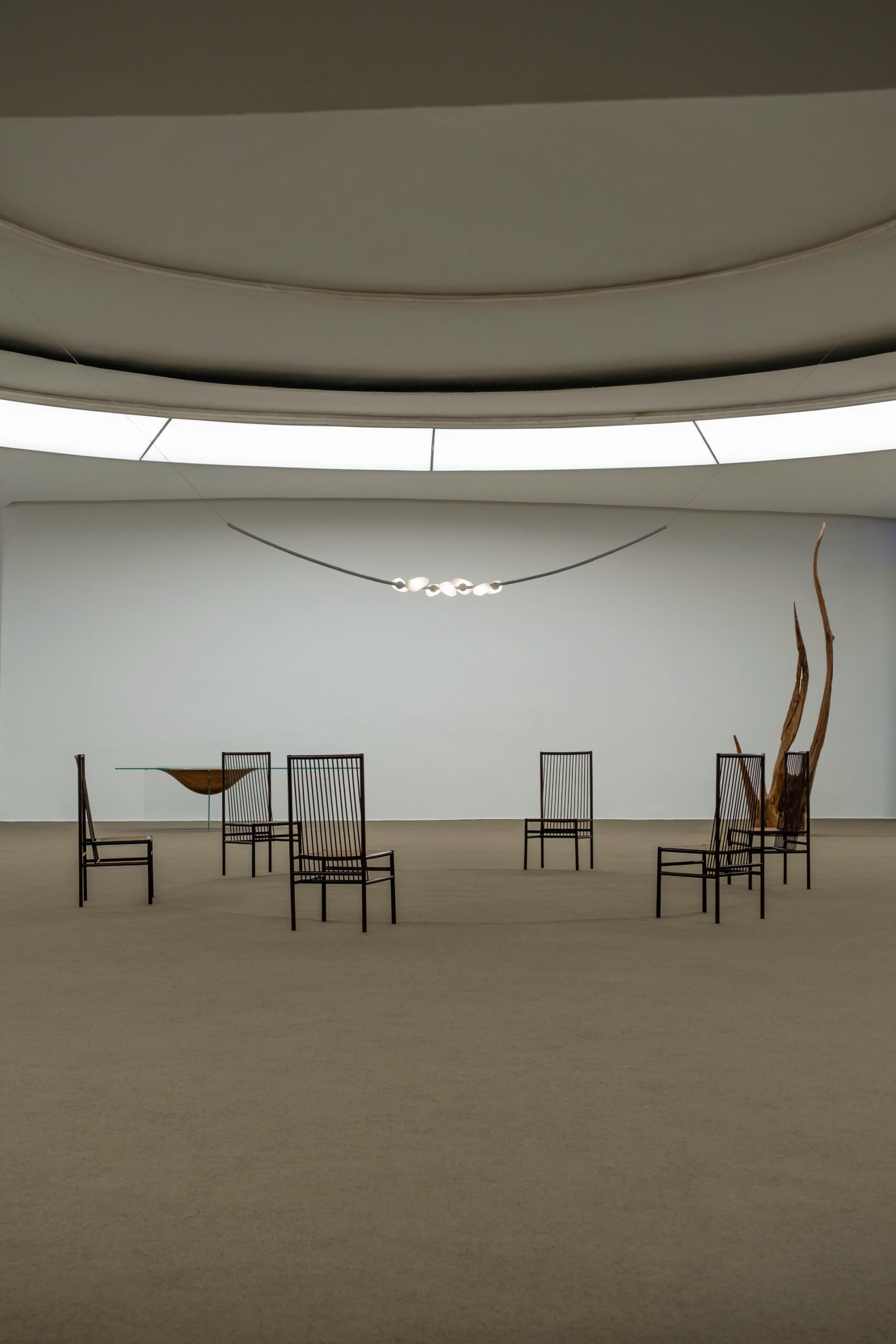
In Then and Now – Brazilian Legacy, the visitor does not walk through a hall of relics followed by a hall of novelties. Instead, the works are interwoven, so that a Tenreiro chair might stand below a monumental Aver light — the latter known for blending architectural clarity with sculptural warmth — a curve here, a joinery detail there — but also collisions: differences in material, scale, and intention that speak of a changed world.
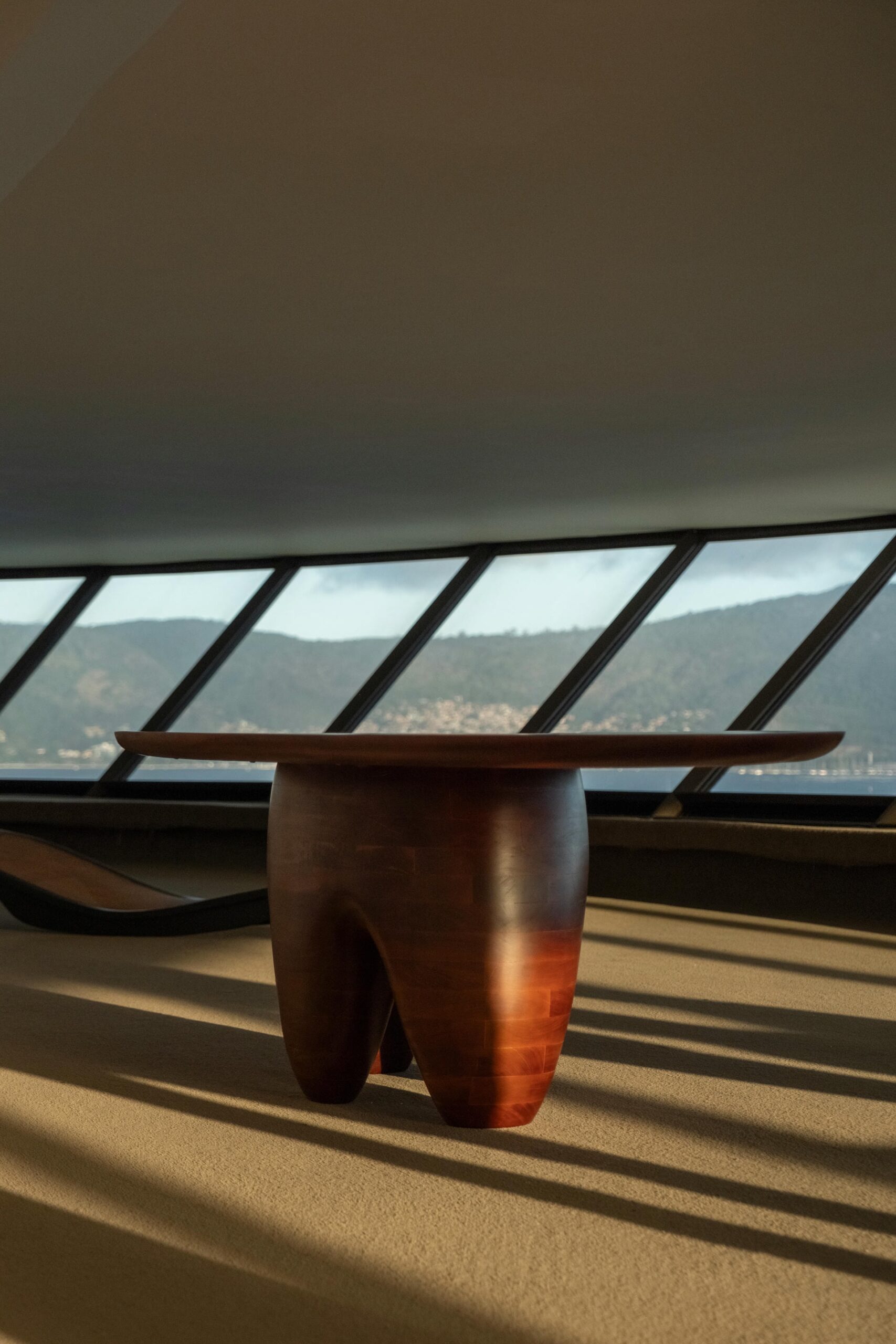
In Niemeyer’s circular galleries, these conversations take on a rhythm. The bay outside becomes part of the exhibition — a reminder of continuity, of change, of the unbroken yet ever-shifting line between past and present.
The legacy persists not as a fixed relic, but as an ongoing question posed to contemporary sculptural design’s ethos.