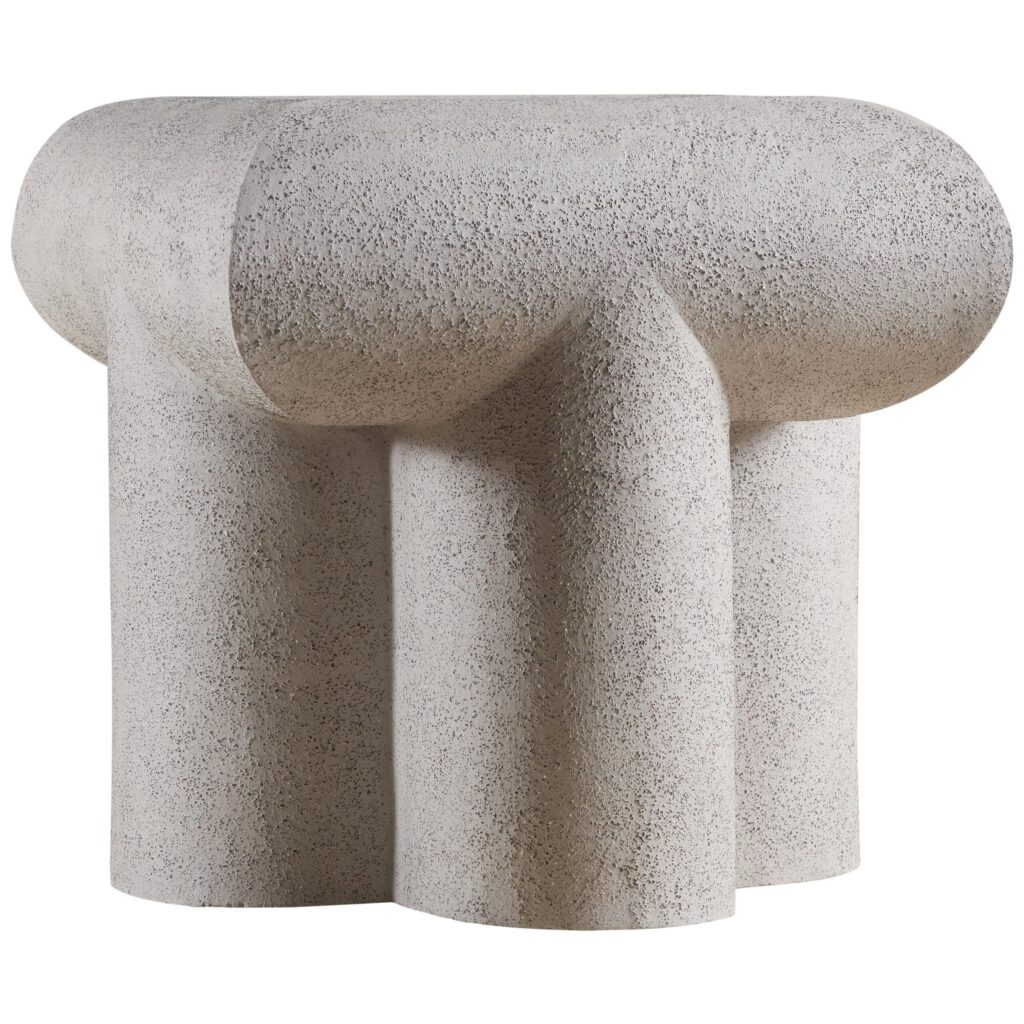
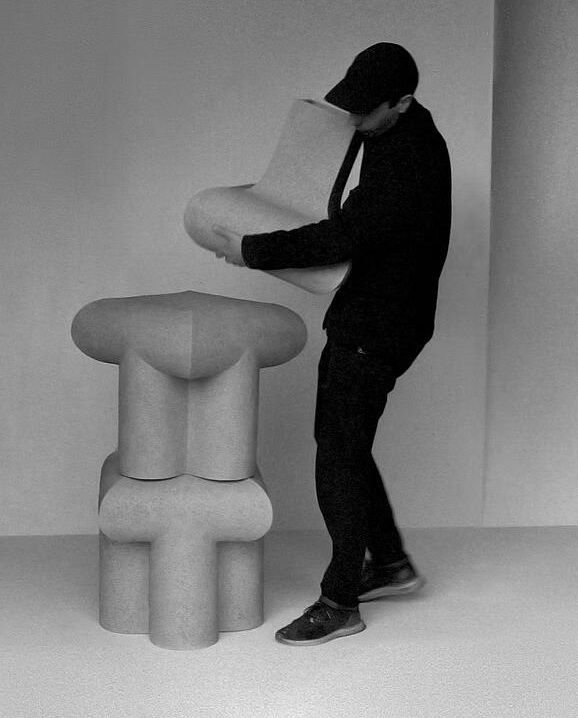
Rino Claessens (b. 1994) is an Eindhoven-based designer whose practice is grounded in material exploration and process-driven inquiry. A graduate of the Public & Private department at the Design Academy Eindhoven, Claessens has developed a methodology in which making itself becomes a form of research. The workshop functions as his primary creative domain, where experimentation with materials and techniques forms the conceptual and physical foundation of his work.
Ceramics occupies a central position within Claessens’ practice, valued for its tactile richness and seemingly limitless expressive potential. Deeply engaged with the medium’s long and layered history, he approaches clay with a contemporary sensibility, seeking to reinterpret traditional processes through new forms, gestures, and applications. His work reflects a careful balance between intuition and control, allowing material behavior to actively inform the final outcome.
While ceramics remains his principal focus, Claessens’ curiosity extends beyond a single medium. He regularly experiments with cast bronze and hand-carved wood, broadening his material vocabulary and enriching his understanding of form, weight, and surface. Through this materially led approach, Claessens creates objects that foreground process, craftsmanship, and a renewed dialogue between historical techniques and contemporary design thinking.

Rino Claessens (b. 1994) is an Eindhoven-based designer whose practice is grounded in material exploration and process-driven inquiry. A graduate of the Public & Private department at the Design Academy Eindhoven, Claessens has developed a methodology in which making itself becomes a form of research. The workshop functions as his primary creative domain, where experimentation with materials and techniques forms the conceptual and physical foundation of his work.
Ceramics occupies a central position within Claessens’ practice, valued for its tactile richness and seemingly limitless expressive potential. Deeply engaged with the medium’s long and layered history, he approaches clay with a contemporary sensibility, seeking to reinterpret traditional processes through new forms, gestures, and applications. His work reflects a careful balance between intuition and control, allowing material behavior to actively inform the final outcome.
While ceramics remains his principal focus, Claessens’ curiosity extends beyond a single medium. He regularly experiments with cast bronze and hand-carved wood, broadening his material vocabulary and enriching his understanding of form, weight, and surface. Through this materially led approach, Claessens creates objects that foreground process, craftsmanship, and a renewed dialogue between historical techniques and contemporary design thinking.